Why Bihar and Uttar Pradesh are emerging as India’s new women enterprise credit hubs
 by Sonal Jaitly and Ankita Bhat
 Jul 21, 2026
 4 min
4 min


Women’s access to enterprise credit has expanded significantly in Bihar and Uttar Pradesh. This op-ed examines the ecosystem shifts that drive this transformation and the roles of policy, partnerships, and financial innovation in creating opportunities for women entrepreneurs.
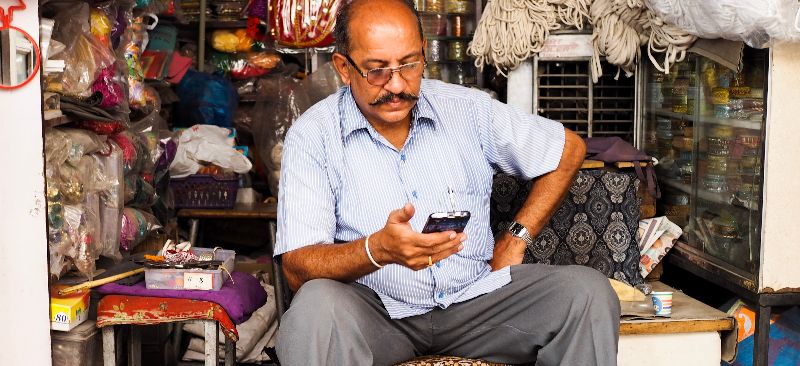
Between 60% and 70% of rural women nano-entrepreneurs now accept digital payments. This suggests that formal financial participation is no longer limited to a small group of borrowers, but is spreading across a broader base of women-led economic activity.
For years, finance for women in India followed a familiar map. Southern states built some of the country’s strongest ecosystems for women’s participation in formal finance through self-help groups, cooperative lending, and deeper integration with the banking system. As a result, discussions on women’s financial inclusion often looked south for examples of what worked. The map no longer looks the same.
The fastest growth in women’s enterprise credit now comes from Bihar and Uttar Pradesh. This development is significant, as it signals a rapid expansion of women-led enterprise activity. For years, the focus of women’s finance was access. While that challenge has not disappeared, it looks different today. Women’s credit penetration has risen from 19% in 2017 to 36% in 2025, and India now has 16 crore credit-active women borrowers. The latest data points to a new question. Where will the next phase of enterprise growth come from?
The numbers are difficult to ignore. Between 2022 and 2025, lending to women for business purposes grew the fastest in Bihar and Uttar Pradesh, with a CAGR of 59% and 42%, respectively, while the national commercial credit growth stood at 17%. These figures challenge long-held assumptions about where growth can likely come from.
Discussions on Bihar and Uttar Pradesh traditionally focused on bringing more women into the formal financial system. Today, they are among the fastest-growing markets for women’s enterprise lending. The change did not happen because Bihar and Uttar Pradesh replicated the southern model of financial inclusion. It happened because the barriers to formal finance changed.
For decades, several small businesses, especially women-owned, operated largely in cash and outside formal recordkeeping systems. A tailor, food vendor, or shop owner could earn a steady income and support their household without providing the documents that banks typically relied on to assess creditworthiness.
Without formal business records, credit histories, or significant assets in their own names, lenders struggled to evaluate borrowers. Banks, therefore, relied heavily on branch networks, field verification, and long-standing borrower relationships to assess risk.
Digital public infrastructure (DPI) fundamentally altered many of those constraints. Digital payments, Aadhaar-enabled onboarding, smartphones, and retail lending products made it easier for first-time borrowers to establish a financial footprint.
Transaction histories opened new ways for lenders to assess borrowers who previously remained outside formal finance. As a result, participation could expand without waiting for decades of branch-led institution-building.
The impact is visible in the profile of new borrowers. Gold loans remain the most popular entry-level product gateways into formal finance. These accounted for 23% of new-to-credit women borrowers in 2025, up from 16% in 2022. During the same period, women’s share among new-to-credit retail borrowers rose from 28% to 38%.
These trends suggest that many women now enter the formal financial system through smaller, more accessible credit products before they progress to larger borrowing relationships. As those entry points expanded, participation grew in markets that historically had lower levels of formal credit penetration.
Between 60% and 70% of rural women nano-entrepreneurs now accept digital payments. This suggests that formal financial participation is no longer limited to a small group of borrowers, but is spreading across a broader base of women-led economic activity. That success creates a new challenge: Rapid growth does not automatically translate into deeper financial participation. Nationally, 19% of active microfinance borrowers also hold an individual retail or commercial loan. Tamil Nadu stands at 27%, while Bihar and Uttar Pradesh remain below 12%.
The gap highlights an important distinction. Access brings borrowers into the formal financial system. The ability to graduate from first-time borrowing to larger productive credit determines whether they can move into larger credit products, expand businesses, and build assets over time.
This matters because the fastest-growing markets for women’s enterprise credit are not always the markets with the strongest pathways for credit progression. If the first phase of financial inclusion sought to bring women into the system, the next phase must help them advance within it.
The broader lesson is that the geography of women’s enterprise growth map is changing. The South remains home to some of India’s most mature financial ecosystems. Yet the fastest expansion in women’s enterprise credit is occurring in Bihar and Uttar Pradesh. Together, they account for 12% of India’s credit-active women business borrowers. The institutions that support that growth should evolve as quickly as the map itself.
India’s women’s credit story is entering a new phase. It is broader, deeper, and increasingly geography-agnostic. The South built the foundation, but states like Bihar and Uttar Pradesh, once considered laggards, are scaling it. The institutions must recognize this shift early and invest where the next generation of women borrowers, savers, and entrepreneurs is already emerging.
This was first published on 20th July 2026 by Financial Express.
Written by
Sonal Jaitly
Associate Partner
Ankita Bhat
Senior Manager
Leave comments