From access to inclusion: How GeM is reshaping public procurement in India
 by Vikram Sharma, Kushagra Harshavardhan and Allina Tiwari
- Nov 2, 2026
- 5 min
 by
 Nov 2, 2026
 5 min


The Government e-Marketplace (GeM) has expanded public procurement access for small businesses, women-led enterprises, and startups. Yet financial, operational, payment, and inclusion-related barriers can limit sustained participation. This blog examines these frictions and identifies opportunities to strengthen inclusive procurement on GeM.
Can the Government e-Marketplace (GeM) turn digital access into sustained participation for Indian small sellers?
India’s annual public procurement market is estimated at around USD 570 billion. The system has evolved from a manual, centralized model under the Directorate General of Supplies and Disposals (DGS&D) in the 1950s to the Central Public Procurement Portal (CPPP) in 2012, which increased transparency. Yet established vendors who understood complex tendering procedures, paperwork, and bureaucratic processes dominated procurement for decades. The launch of GeM in 2016 marked a further shift. It created a national digital marketplace where government buyers and suppliers could transact directly. Figure 1 traces this journey from DGS&D to GeM 4.0:
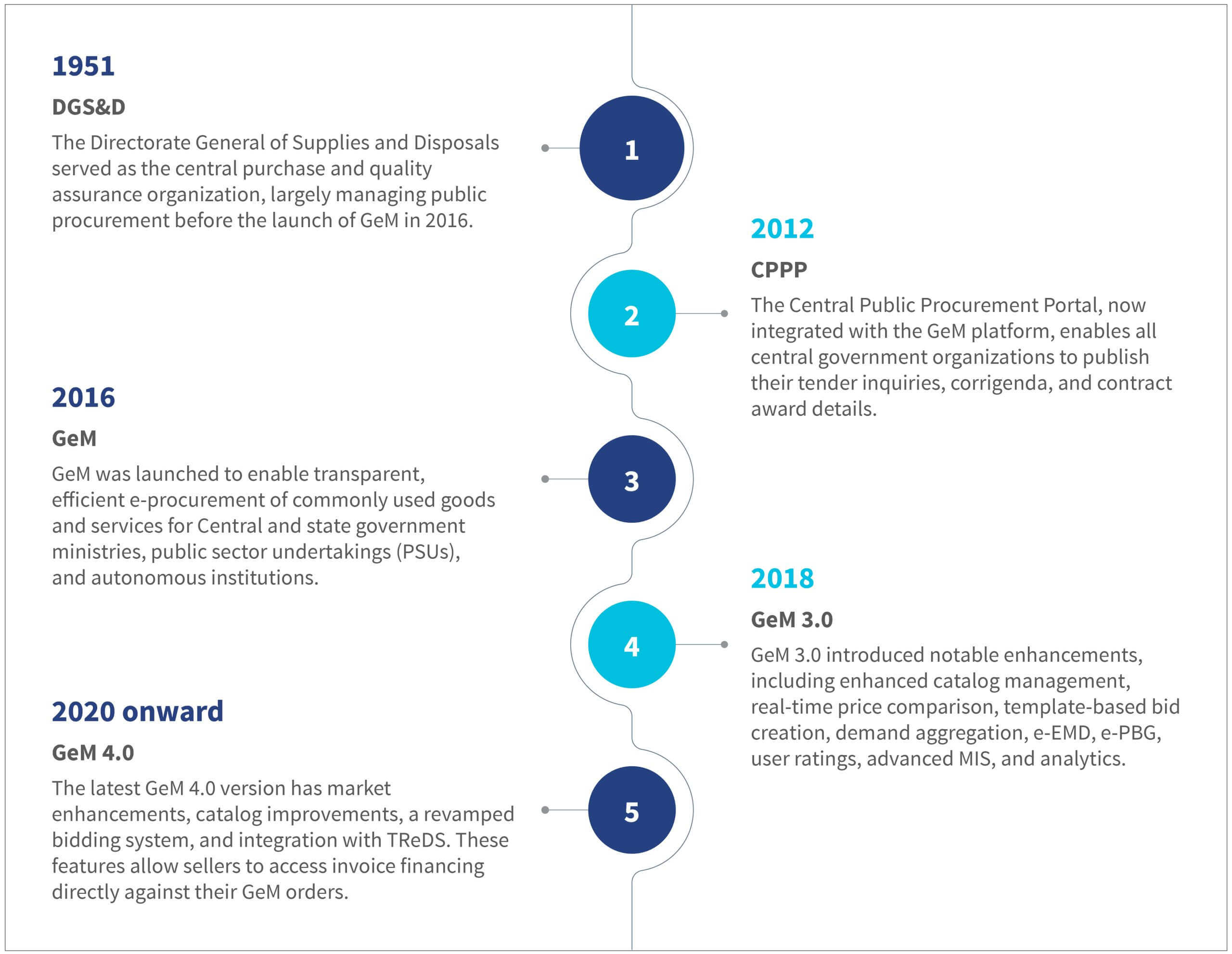
Figure 1: Evolution of India’s public procurement landscape
Since its launch, GeM has expanded in transaction value and seller diversity. Its participants now include micro and small enterprises (MSEs), women-led enterprises, and startups.
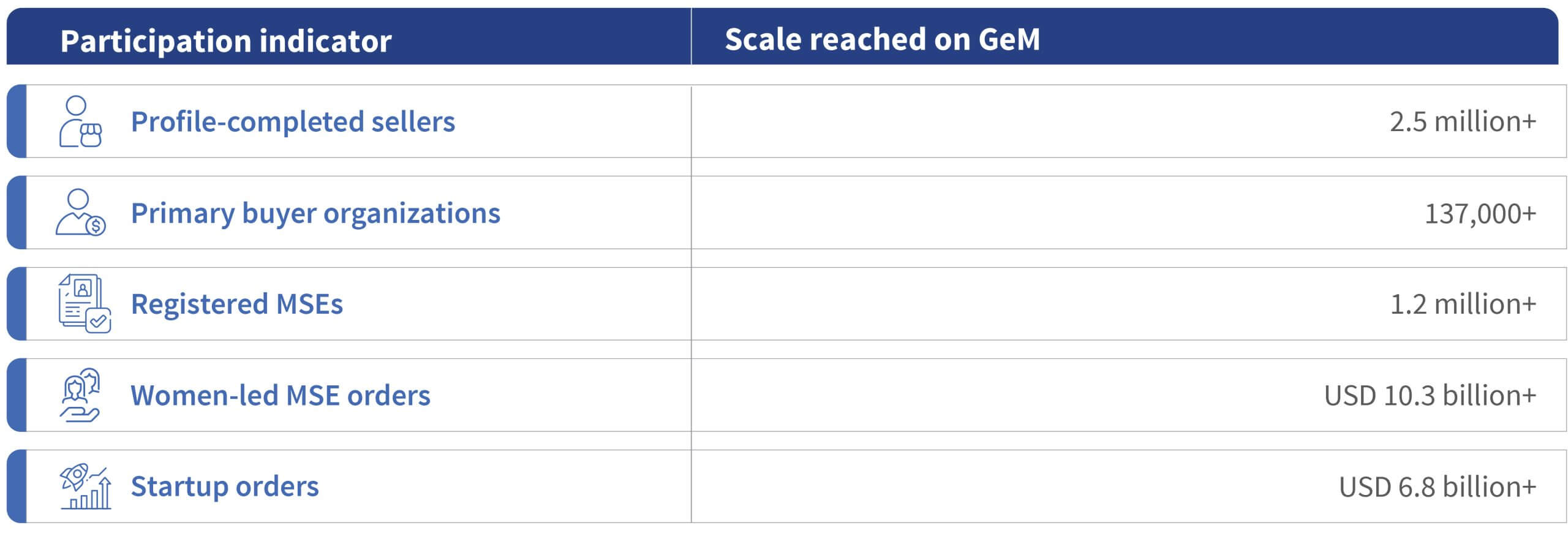
These numbers show that GeM has done more than digitize procurement: it has widened access to government markets for MSEs, women-led enterprises, startups, self-help groups (SHGs), artisans, and micro-enterprises. Yet access alone does not deliver inclusion. Smaller sellers must also manage deposits and guarantees, list products, fulfill orders, track approvals, and receive payments predictably. These less visible financial and operational frictions determine whether digital access leads to sustained participation. This blog examines them.
How GeM has expanded access
GeM reimagined public procurement as a single, end-to-end digital journey. The process has five stages. Buyers and sellers first register and complete verification. Sellers then list products, and buyers search the “marketplace”. A buyer defines its requirements, chooses a procurement route, and places an order. “Contracting” establishes payment milestones and other financial requirements. After the seller “fulfills” the order under the agreed terms and service levels, the buyer accepts it and proceeds to “payment processing”. Figure 2 provides a high-level overview of these stages, along with the key stakeholders and interactions involved.
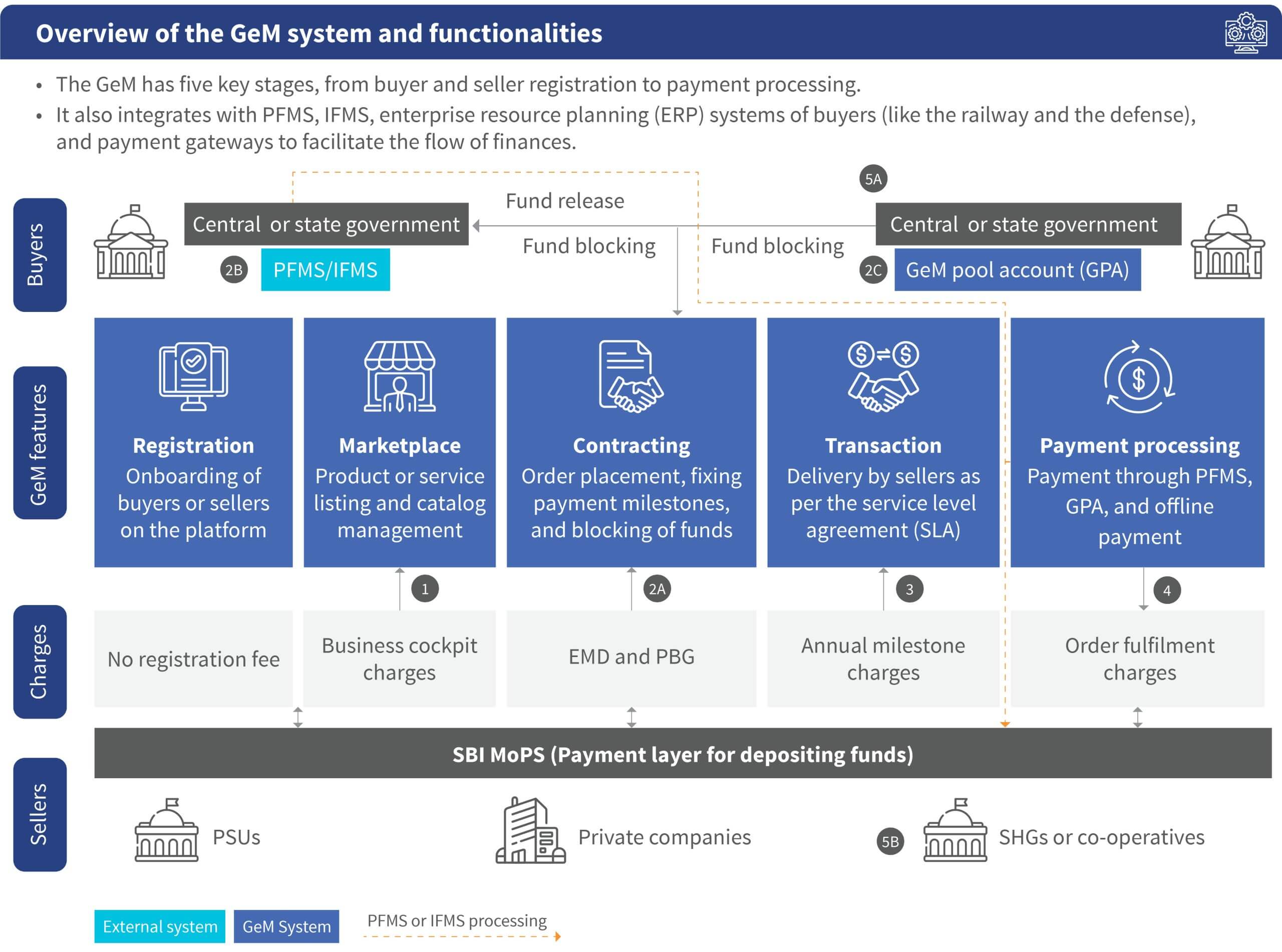
Figure 2: Overview of the GeM system and functionalities
A parallel layer of financial flow supports this journey. At various stages, sellers may pay charges or provide financial instruments. These include business cockpit charges for advanced analytics, earnest money deposits (EMDs) to participate in bids, performance bank guarantees (PBGs) after winning a contract, and annual milestone charges linked to sales. Buyers’ main financial obligation is to pay the seller’s invoice after order fulfillment and acceptance.
GeM has addressed several initial barriers. Its New Revenue Policy has reduced transaction costs. The platform has also discontinued caution money, set time-bound payment requirements linked to the Consignee Receipt and Acceptance Certificate (CRAC), and launched inclusion-focused initiatives such as SWAYATT, Startup Runway, and #VocalForLocal outlet stores.
But what happens when small sellers join the platform? A set of less visible financial and operational processes then shapes their experience. Deposits, guarantees, product categorization, fulfillment requirements, buyer approvals, and payment flows determine whether access translates into sustained participation. They also define the next phase of inclusion on GeM.
Where participation still breaks down
MSC (MicroSave Consulting) conducted a dipstick diagnostic study in 2024-25 to assess GeM’s end-to-end digital procurement system. It found challenges beyond onboarding that run throughout the procurement journey. A report by SEWA Bharat identified similar constraints, including onboarding difficulties, government-mandated pricing, and process design that remains inaccessible to small sellers. Building on these findings, MSC’s assessment highlights three areas where GeM can strengthen participation and build seller trust, as depicted in Figure 3:
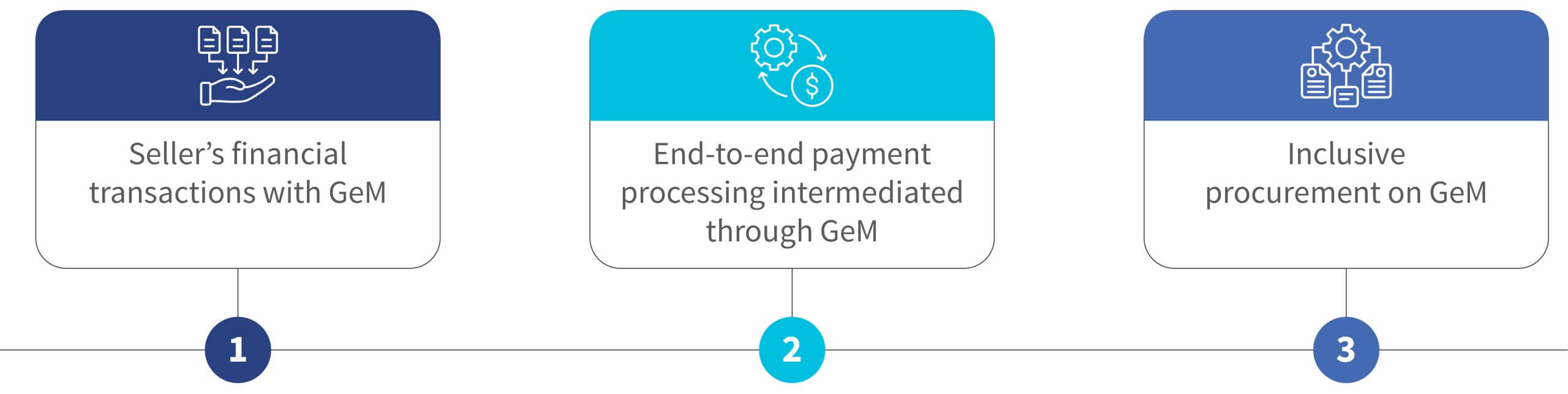
Figure 3: Three identified areas of improvement
First, sellers continue to face friction in providing deposits and platform charges on GeM.
Small businesses encounter several financial processes on GeM, including transaction charges, annual milestone charges, EMDs, and PBGs. Many still rely on manual workflows, offer limited traceability, and operate across disconnected systems. For an EMD, for example, the seller must upload a scanned copy to GeM and submit a hard copy to the buyer. The financial interaction therefore extends beyond the portal.
Second, payment to sellers still involves multiple approval points.
Timely payments are critical for small businesses. GeM has set payment timelines, but the end-to-end journey still spans several systems, stakeholders, and approval processes. After delivery, payment depends on generating CRACs, obtaining buyer approvals, completing verification, and coordinating across GeM, the Public Financial Management System (PFMS), and state-level integrated financial management system (IFMS) platforms. These sequential steps require substantial manual intervention. Sellers therefore have limited visibility into approval status, who is responsible for the next action, and expected payment timelines. A delay at any stage can create a bottleneck that sellers struggle to track and resolve. The process does not earmark funds when government buyers place orders. Even after successful delivery, sellers must wait for downstream approvals and available funds before payment. For MSEs, these delays increase participation costs and weaken trust in the ecosystem.
Third, broader barriers to inclusive procurement remain.
Digital literacy, internet access, language barriers, and complex GeM onboarding continue to affect entrepreneurs in rural and semi-urban areas. According to the MSME Samadhaan portal’s Age-Category Amount Wise Pendency Report, as of 20th October 2026, MSEs have filed 28,503 delayed-payment applications worth USD 1.65 billion. Of these, 54% involve central government buyers. Unclear product categorization and inconsistent enforcement of procurement quotas can also reduce participation by women-owned and micro-enterprises. Inclusion therefore requires more than opportunities. Enterprises also need the capabilities and support to participate effectively.
Has GeM translated digital access into sustained participation? It has widened the marketplace, but the answer depends on how effectively it removes the frictions that small sellers face across participation and fulfillment through payment.
GeM can take a two-step approach. First, it can make near-term improvements within existing systems and processes to simplify participation and make payments more predictable. Blog 2 in this series examines these practical improvements and the frictions that GeM can address within its existing architecture. The second step is a longer-term shift that extends beyond system-level improvements to address the institutional changes needed to strengthen the broader procurement ecosystem. Blog 3 in this series explores this direction by drawing on global best practices in public procurement and considering future pathways for GeM’s evolution.
Written by




Leave comments