Unlocking finance for Tanzania’s fisheries value chain
 by Safarani Seushi, Elizabeth Gathu and Ramadhani Katunda
- Nov 5, 2026
- 6 min
 by
 Nov 5, 2026
 6 min


Tanzania’s fisheries value chain holds significant potential, yet many micro, small, and medium enterprises (MSMEs) struggle to access suitable finance. This blog explores how digital finance, alternative credit assessment, insurance, partnerships, and movable collateral can unlock investment and inclusive growth.
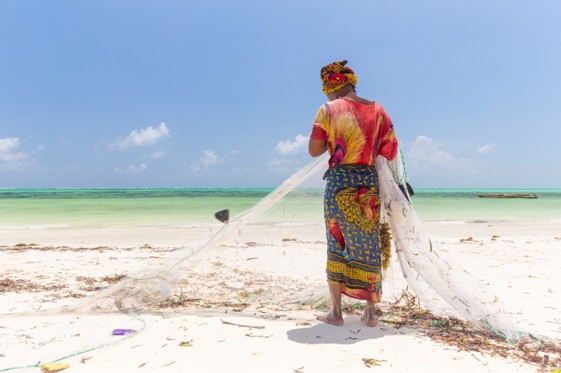
How can Tanzania’s fisheries businesses access finance although they own productive assets, serve established markets, and receive limited attention from financial institutions?
Across Tanzania’s coastline and lakeshores, millions of livelihoods depend on nearshore fisheries and aquaculture. Most participants are micro, small, and medium enterprises (MSMEs), as highlighted in the Fisheries Sector Masterplan 21/22-36/37. These include fishers and boat owners, fish traders and processors, pond and cage farmers, seaweed farmers, hatcheries, and fish feed producers and distributors.
Although most businesses operate informally, they own productive assets such as boats, cages, nets, and cold-storage facilities. The fisheries value chain contributes 2.2% to Tanzania’s national Gross Domestic Product (GDP). Yet, financial institutions rarely serve these businesses.
The state of Tanzania’s fisheries sector
Tanzania’s fisheries sector grew from 1.4% in 2024 to 6.3% in 2025. Fish production from natural water bodies reached 519,454 metric tons in 2025, compared with 522,788 metric tons in 2024. Despite the slight decline in production, the value of fish products rose by 4.6%, from TZS 4.36 trillion (USD 1.68 billion) in 2024 to TZS 4.56 trillion (USD 1.75 billion) in 2025. Under the Fisheries Sector Master Plan for 2021/22–2036/37, the government aims to raise the sector’s contribution to GDP to 10% by 2037. This target requires higher production, stronger processing capacity, greater exports, and more investment across the fisheries value chain.
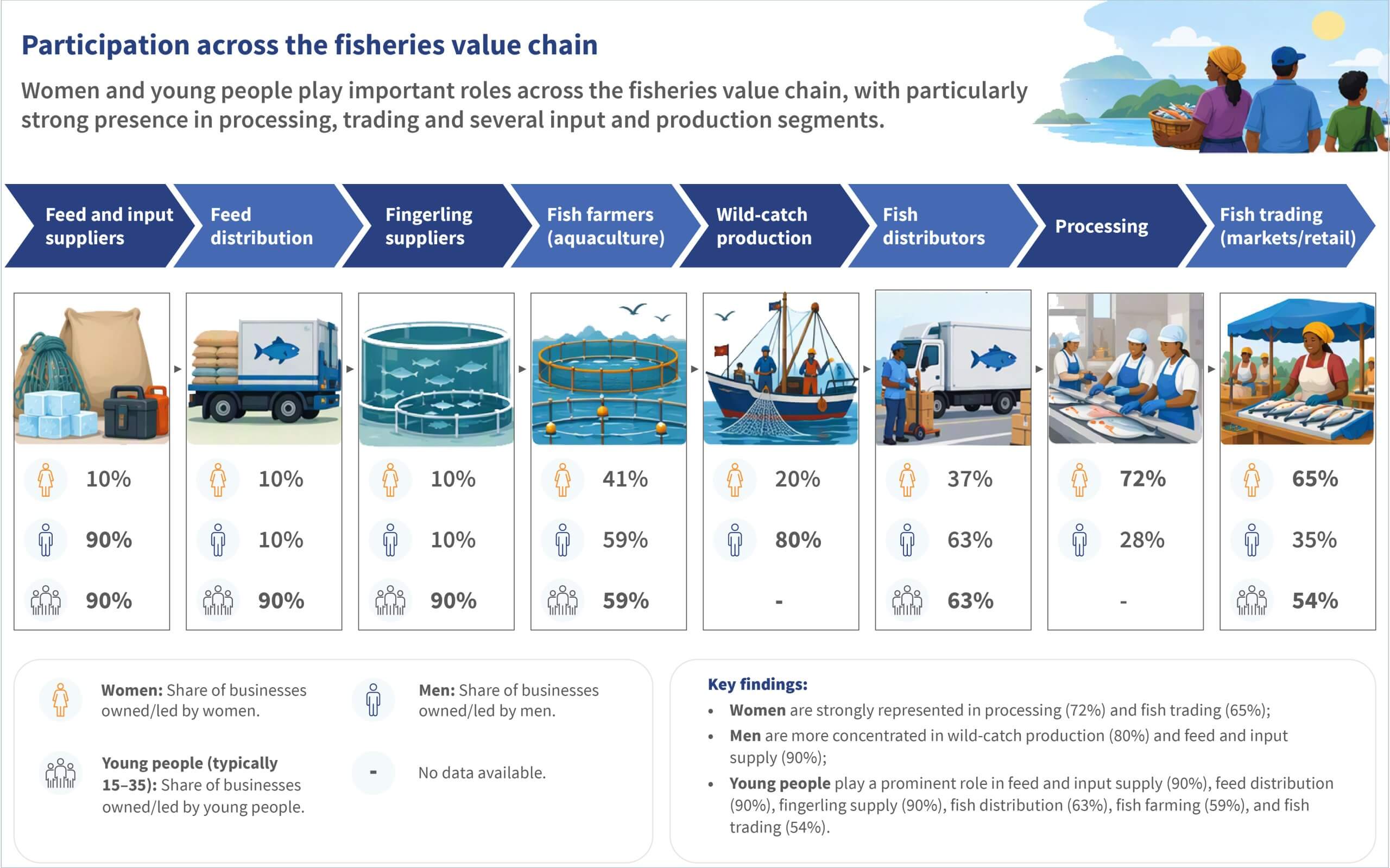
Several programs support this agenda. One is the Women and Youth Economic Empowerment in Fisheries through Inclusive Market Access Programme. TradeMark Africa and the African Continental Free Trade Area (AfCFTA) Secretariat implement this program in partnership with the Mastercard Foundation. As part of this partnership, MSC leads the access-to-finance component. The program supports 5,224 fisheries actors as they prepare to access finance. Women lead 52% of these businesses, while men lead 48%. Youth lead 55% of these businesses, and women lead 51% of them.
MSC conducted a behavioral study to understand the roles of women and young people across the fisheries value chain. The findings revealed a significant financing opportunity.
A significant financing opportunity
The foundations for financial inclusion already exist across the sector. The behavioral study found that 91% of respondents save, 82% maintain financial records, and 97% have access to mobile phones. Yet, 47% have never borrowed. Low borrower readiness, unsuitable financial products, and risk perceptions contribute to this gap. These findings point to an untapped customer base for financial institutions and investors.
Digital access offers an affordable way to reach these enterprises. Financial institutions can use digital channels to build transaction histories, assess customers, and offer suitable financial products. The opportunity extends beyond loans. Businesses need working capital, asset finance, leasing, savings, payments, insurance, and other financial solutions that address the specific needs of the fisheries value chain. How can financial institutions translate this opportunity into practical solutions?
MSC hosted a knowledge dissemination and financial partnership workshop to support Tanzania’s fisheries value chain on 16th September 2026. The workshop formed part of the Women and Youth Economic Empowerment in Fisheries through Inclusive Market Access Programme. The Financial Sector Deepening Trust (FSDT) joined financial service providers at the workshop. These included CRDB Bank, FINCA Microfinance, and the Tanzania Agricultural Development Bank (TADB). Nyanza Cooperative Union also participated. A panel discussion explored how the financial sector could expand access to finance and insurance across the fisheries value chain.
What will it take to expand finance?
The panel discussion identified several priorities that can help financial institutions develop services for fisheries businesses.
Better data and market intelligence: Financial service providers need a stronger understanding of the fisheries value chain. This can help them identify viable financing opportunities and develop products that reflect the needs of businesses at different stages of the chain.
Stronger partnerships and risk-sharing mechanisms: Credit guarantee schemes, blended finance, and other affordable risk-mitigation mechanisms can help address sector-related risks. These mechanisms can also encourage financial service providers to expand their engagement across the fisheries value chain.
Potential in alternative approaches to credit assessment: Many fisheries MSMEs have thin credit files, which means short or insufficient credit histories. Alternative data and credit-scoring models can help financial service providers assess businesses that struggle to meet conventional lending requirements.
Financial literacy among MSMEs: Stronger financial literacy can promote responsible borrowing, improve understanding of loan terms, and encourage the productive use of finance.
Digitization: Digital transactions across the fisheries value chain can reduce reliance on cash, strengthen financial records, generate useful business data, and improve product traceability. Over time, these records can help MSMEs demonstrate their financial activity and improve access to formal financial services.
Insurance: Fisheries businesses need insurance products that are accessible, affordable, and relevant to their needs. Financial service providers can bundle insurance with other financial products, such as loans, to improve affordability and uptake while protecting businesses against risks.
A new opportunity through movable collateral
Limited collateral ownership remains a major barrier to finance for fisheries MSMEs. The recently passed Secured Transactions (Movable Property) Act 2026 could help address this challenge. The Act establishes a framework for the use of movable property as security for financing. It also provides for a Collateral Registry administered by the Bank of Tanzania. Eligible movable assets include equipment, vehicles, inventory, receivables, and other forms of movable property. This framework could benefit fisheries MSMEs, particularly women- and youth-owned businesses. Many enterprises own productive assets but lack land or other conventional forms of collateral. Businesses with fish cages, boats, processing equipment, cold storage facilities, vehicles, or inventory could use these assets to support financing applications. Financial service providers must assess these assets against their requirements and the applicable legal framework.
A broader range of eligible collateral could help fisheries businesses access working capital, finance business expansion, purchase equipment, and pursue value-added activities. The framework could also give lenders greater certainty about the registration, priority, and enforcement of security interests. This could strengthen their confidence in lending to fisheries MSMEs.
FSDT views the passage of the Secured Transactions (Movable Property) Act 2026 as an opportunity to expand productive credit for underserved businesses, particularly women and youth who lack adequate collateral. FSDT also contributed to the act’s development. It worked with the Ministry of Finance and provided demand-side insights and technical support during drafting. The next step is to operationalize the framework. FSDT now works with the Bank of Tanzania to establish the Collateral Registry and develop the required regulations.
Building on existing and upcoming FSDT initiatives
The workshop also highlighted opportunities to build on FSDT’s existing and planned initiatives. These efforts can help address barriers that limit MSME access to finance.
FSDT’s alternative credit scoring initiative is currently under a pilot in the Kilombero sugarcane value chain. The initiative demonstrates how alternative data can complement traditional credit assessments and address collateral constraints and limited credit histories. Lessons from this initiative could guide similar approaches in other value chains, including fisheries.
The FinScope MSME Tanzania 2026 Survey, which is expected to launch this financial year, will provide critical demand-side data on MSMEs in Tanzania, including those in the fisheries value chain. The findings can help financial institutions understand the MSME sector, identify viable financing opportunities, and develop products that reflect business needs at different stages of the value chain.
Similarly, the recently launched EU-funded Impact Grant Fund (IGF) offers an opportunity to support innovative approaches. These approaches can help financial service providers expand financing for women- and youth-led MSMEs while addressing risks associated with lending to underserved segments.
The IGF provides grants and business growth support to MSMEs in climate-smart and inclusive growth sectors. These include sustainable fisheries and aquaculture, marine resource protection, and sustainable food cold chains. All these areas are directly linked to the fisheries value chain.
Beyond catalytic financing, the IGF uses an integrated model to reduce financing risks for youth- and women-owned MSMEs. It builds partnerships with financial service providers, asset financiers, business development service providers, and enterprise support organizations.
Moving from opportunity to action
The knowledge dissemination and financial partnership Workshop on Supporting the Fisheries Value Chain in Tanzania highlighted the importance of partnerships, evidence, innovation, and appropriate financial solutions to unlock the potential of Tanzania’s fisheries value chain.
Expansion of access to finance requires collaboration among the financial sector, government, development partners, and the wider fisheries ecosystem. Financial solutions must address the realities of fisheries businesses, including limited collateral and financial records, seasonal cash flows, and operational risks.
Tanzania’s fisheries businesses already generate economic value, employ thousands of people, and support productive enterprises across the country. The priority is to ensure that financial services reach these businesses with products and approaches that reflect their operational realities.
FSDT and MSC will continue to work with stakeholders across the financial sector and fisheries ecosystem. Together, they can develop practical solutions that expand access to finance, strengthen resilience, and support inclusive growth for women, youth, and MSMEs across Tanzania’s fisheries value chain.
Written by

Safarani Seushi
Inclusive MSME Finance Manager - FSDT
Elizabeth Gathu
Manager
Ramadhani Katunda
Manager - Inclusive Financial Ecosystem
Leave comments