The price and geography of financial absence
 by Lois Eva Adongo
- Oct 27, 2026
- 5 min
 by
 Oct 27, 2026
 5 min


This blog explores how fisheries businesses around Kenya’s Lake Victoria struggle to access affordable, accessible, and suitable formal finance, relying instead on costly informal loans and short-term digital credit.
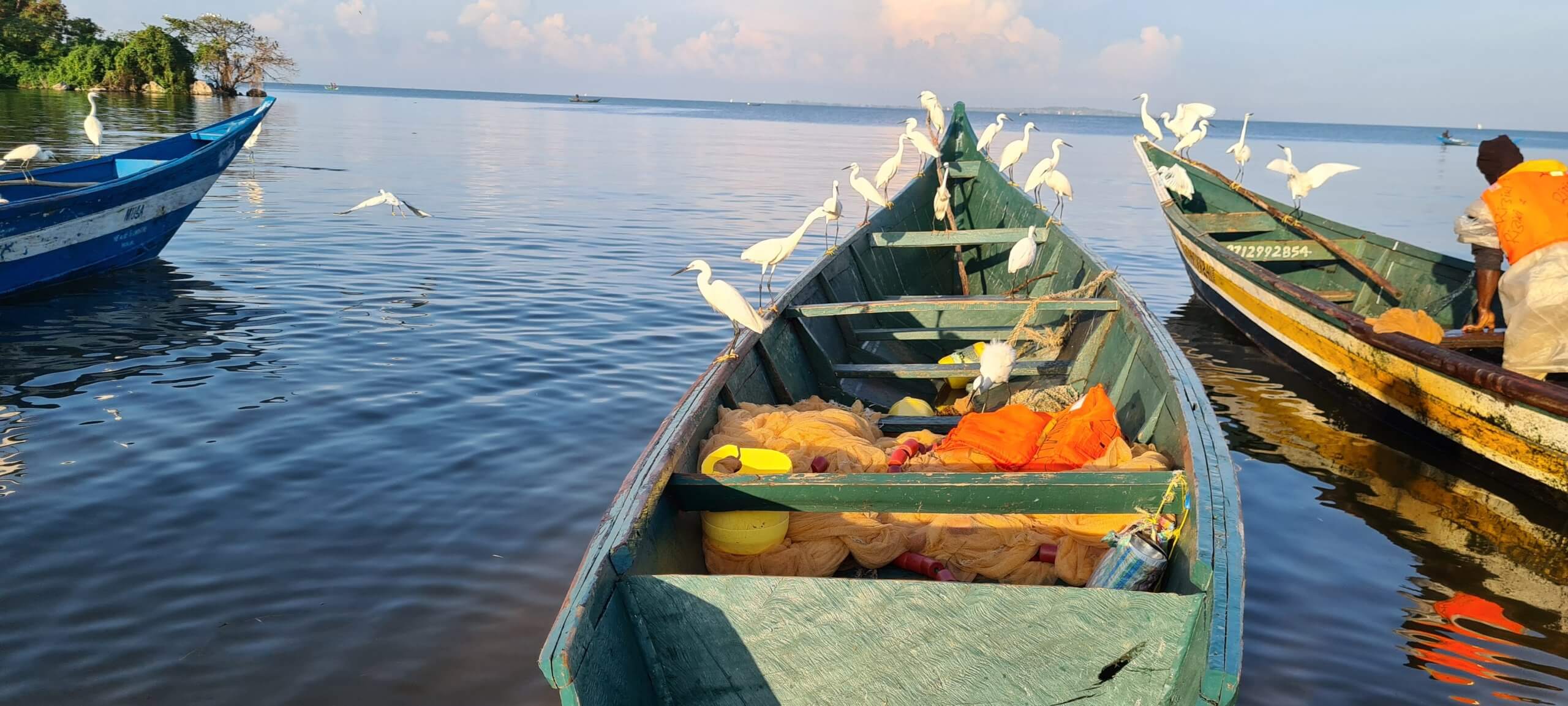
At Nyakwara beach in Kenya, Adhiambo starts her day before dawn. By mid-morning, she may have turned over stock worth thousands of shillings. By afternoon, a significant share of her earnings can go toward repaying a loan from an informal lender that charges 10% interest per day. On a simple, non-compounded basis, that is equivalent to 3,650% per annum.
Adhiambo’s experience is not unique. MSC’s (MicroSave Consulting’s) fieldwork around Lake Victoria, conducted under the Women and Youth Economic Empowerment in Fisheries through Inclusive Market Access (WYEEFIMA) program, found many similar cases of fisheries businesses relying on expensive informal credit to finance their daily operations.
The important question, then, is not simply why an informal lender can charge so much. It is why that lender may still be the most accessible source of working capital available to a fish trader. And why the phone in her pocket, which was supposed to make formal finance easier to access, may offer credit that is convenient, but still too costly, too small, or too short-term for the business she runs.
Both are part of the price of financial absence.
The geography of absence
To understand what this absence looks like around Kenya’s Lake Victoria region, it helps to start with a place. Let us begin at Kendu Bay.
Kendu Bay was once an important commercial center. Traders, shops, steamships connecting passengers and cargo to ports in Uganda and Tanzania, and the Kendu Show brought people and commerce to the town. Over time, Kendu’s affluence declined, Llake transport declined, road networks redirected activity, and much of the commercial center shifted elsewhere.
Today, abandoned buildings with rusty iron-sheet roofs, collapsing stone walls, and empty streets mark the old commercial center. Fishers now use the old pier to watch the lake’s weather. Occasionally, a content creator turns up there to pose for a selfie.
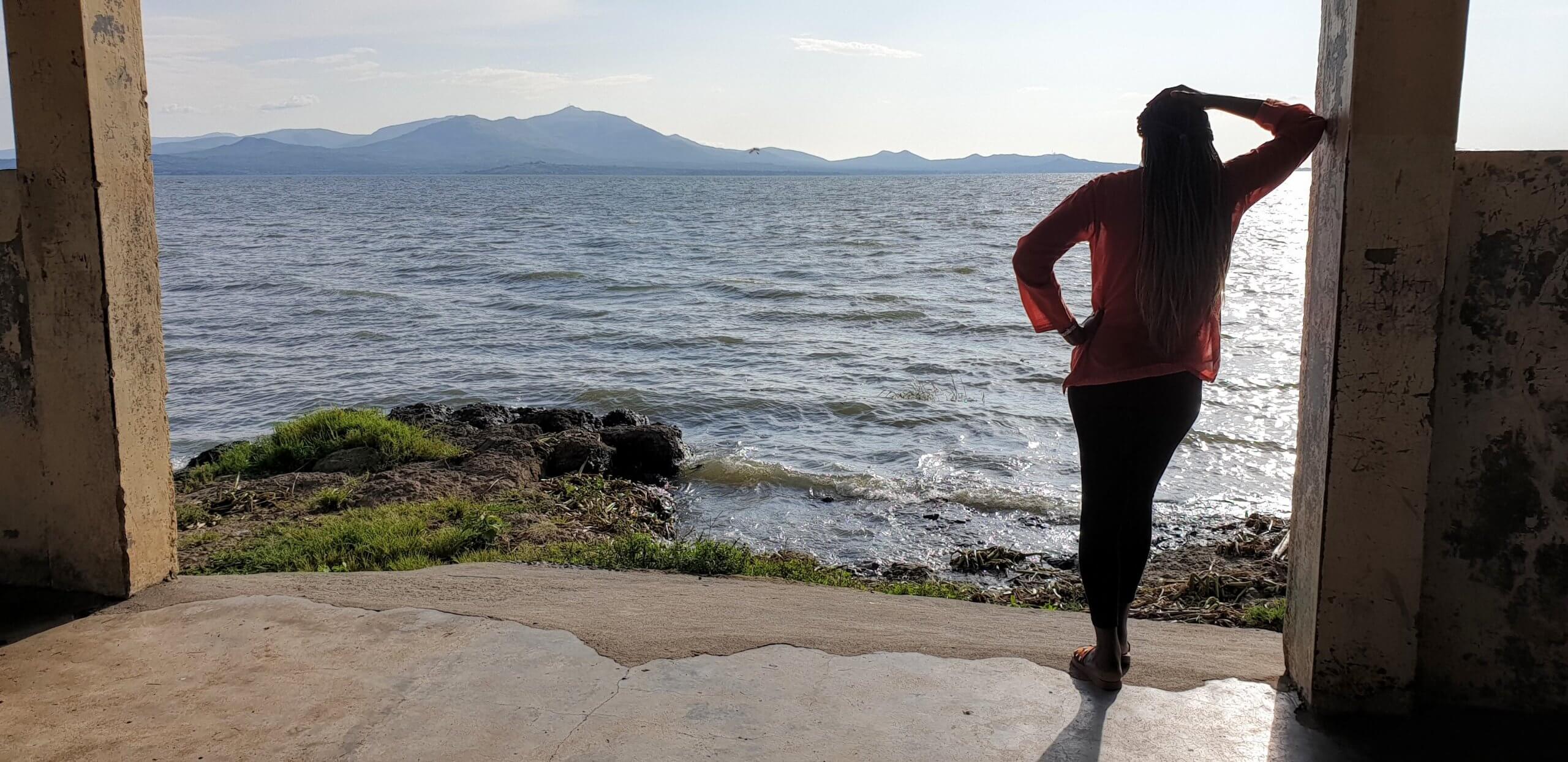
But Kendu Bay’s history matters for a different reason: financial absence cannot be easily explained by a lack of commerce.
The same tension is visible across fisheries communities along Lake Victoria, which is a major source of fish and livelihoods. Yet, many businesses around its landing sites remain far from financial institutions.
In 2024, fishers on Lake Victoria landed 67,575 metric tons of fish. Along Kenya’s approximately 550 km of shoreline, hundreds of landing beaches support fishers, traders, processors, transporters, and other businesses whose incomes depend on moving fish from the lake to consumers.
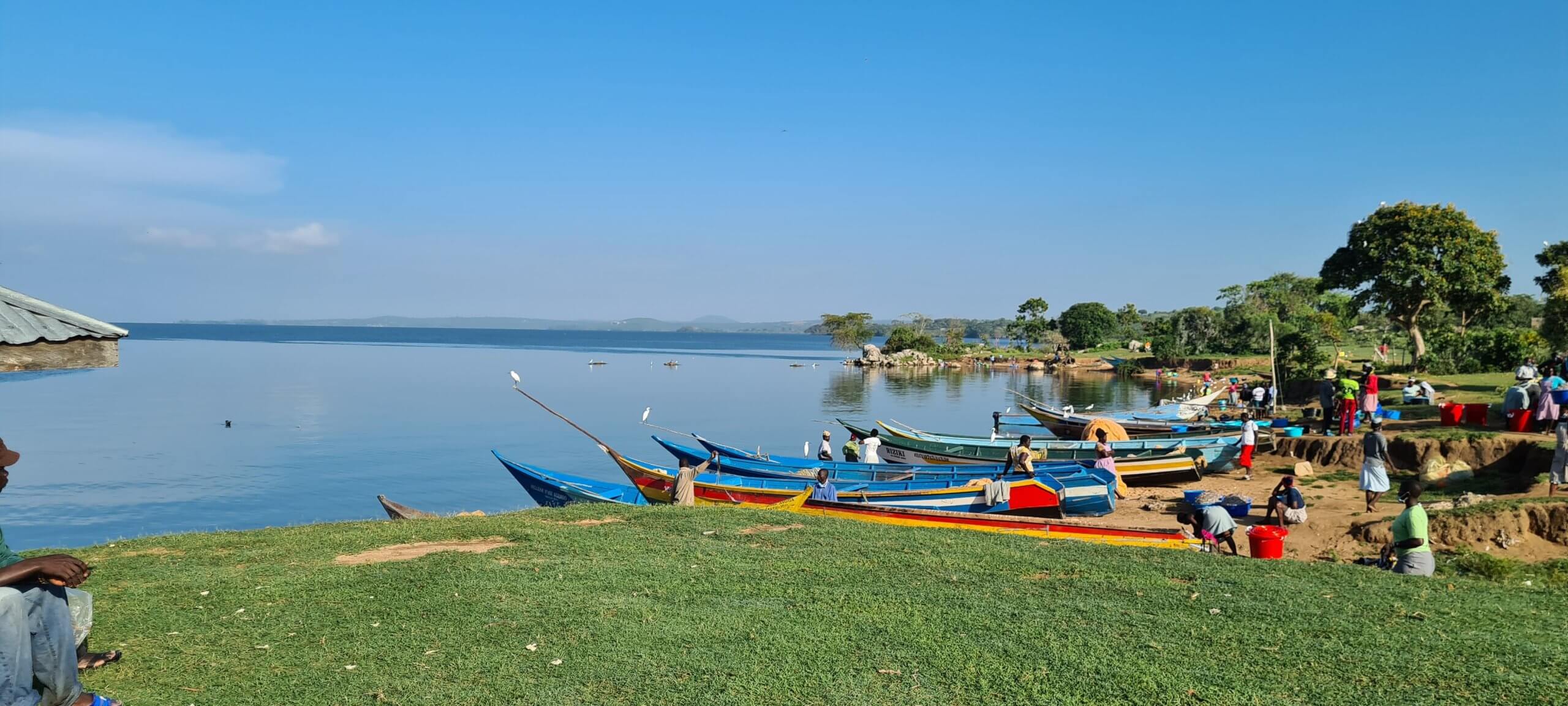
A few examples suffice. Consider Sindo, a landing site and trading center in the Lake Victoria region which has no bank branch, Savings and Credit Cooperative office, or microfinance desk. Nearby island communities such as Rusinga, Mfangano, and Remba face even greater geographic constraints because access depends on boat or ferry transport. For fisheries businesses along this corridor, reaching a commercial bank branch means traveling to Mbita or Homa Bay, paying for transport costs, and losing hours that would otherwise be spent trading.
County-level financial inclusion statistics may classify these communities as “served.” On the ground, their experience tells a different story. Even where economic activity is vibrant, access to formal finance often stops well short of the beach.
Physical distance is only part of the problem.
A fish trader may have no formal employment record, limited conventional collateral, or little transaction history a bank recognizes. She may also doubt whether a financial institution understands how her business works.
This matters because the financing challenge is substantial. Ironically, discussions about closing Africa’s estimated USD 12 billion annual aquaculture financing gap often focus on product design, loan sizes, repayment schedules, collateral, and tenor. Those questions matter. Yet another comes first: where would a fish trader in Sindo or Nyakwara access such a product, even if it existed?
MSC’s fieldwork under the WYEEFIMA program reveals the same disconnect: the fish, traders, and commercial activity are present, while suitable financial services are often absent.
Many communities around Lake Victoria have no nearby physical financial presence. This absence also weakens trust. MSC’s research on cash-in/cash-out agents shows that access alone does not determine whether customers use financial services. Convenience, trust, and the quality of human support also shape adoption and continued use. A mobile app alone may not give a fish trader with little experience of formal finance the confidence or context she needs.
However, digital credit has helped bridge some of this gap.
Affordable device financing and fast approvals based on mobile money transaction histories have made digital credit one of the first formal financial services that many Kenyan households encounter. By May 2026, 252 licensed digital credit providers had issued 8.37 million loans worth KES 150.56 billion (USD 1.16 billion).
Yet greater access has not always brought greater affordability, especially when borrowers repeatedly use short-term digital credit. For example, M-Shwari, a mobile savings and loan service offered through M-PESA, charges a 7.5% loan fee plus 1.5% excise duty for a one-month loan. In contrast, Fuliza, M-PESA’s overdraft service for completing transactions when a customer has insufficient funds, charges an access fee and tiered daily charges that vary with the amount borrowed and the repayment period.
Cost is only one part of the mismatch. Many fisheries businesses need more capital and longer repayment periods than standard mobile credit offers. A wild-catch business with an annual turnover of KES 600,000 (USD 4,618) needs working capital aligned with its trading cycle. An omena trader may need credit through a three-week lean season. A pond farmer may need finance for an eight-month production cycle, allowing fish to reach harvest before repayments peak.
Larger enterprises have different needs. Hatcheries and aquaculture small and medium-sized enterprises (SMEs) need structured working capital, asset finance, or trade finance, while processors may need cold-chain equipment. A small, short-term, standardized mobile loan cannot meet all these needs.
This points to a broader challenge: access alone is not enough.
Digital channels can reduce distance. Yet lenders must understand fisheries businesses’ seasonality, production cycles, price and input risks, trading relationships, cash flows, and limited conventional collateral before they can provide higher-value products. These include working-capital loans, asset finance, insurance, and longer-term production finance.
The challenge combines access and fit. MSC’s research on gender-intelligent banking in Kenya reaches a similar conclusion: products must reflect how customers earn, borrow, and manage money.
Lenders and their partners can close this product and distribution gap through trusted local intermediaries, better use of transaction data, and financial products that reflect fisheries cash flows and production cycles. The commercial opportunity is clear: these businesses already generate revenue and pay for capital, often at considerable cost, yet formal finance still underserves them.
The second blog in this series will examine the size of that opportunity and where capital can go. For now, Adhiambo’s experience offers a clear answer to the opening question: access must combine reach, trust, and financial fit. Without all three, formal finance remains absent from the businesses it is meant to serve.
Written by

Lois Eva Adongo
Senior Manager
Leave comments