Why school sanitation in Odisha deserves our urgent attention
 by Swadesh Sritam Das, Mansi Sharma, Diganta Nayak, Kamal Chhabra and Kruthi Onteddu
 Dec 31, 2025
 5 min
5 min


At MSC, our assessment reveals how unsafe school sanitation silently undermines education, health, and dignity for girls. Read on as we take a deeper look at how a combination of poorly maintained toilets, neglect, and underfunding disrupts learning, confidence, and equal opportunity.
“When women are educated, their countries become stronger and more prosperous.” –– Michelle Obama
Meera’s story echoes a million unheard voices
Meera, an inquisitive 12-year-old, dreams of becoming a science teacher. Yet, every few days, she misses school because the toilets are not functional. There is no water, no lock, and no privacy. What begins as an occasional absence slowly erodes her confidence. Meera is one of the many voices for whom unsafe sanitation is a hidden barrier to opportunity. Behind her struggle lies a system crippled by irregular cleaning, delayed repairs, and chronic under-funding. Toilets, when they exist, are often locked, filthy, or unusable. Sanitation is not just about toilets. It ensures safety, dignity, and freedom to access public places without fear.
A sanitation crisis hidden in plain sight
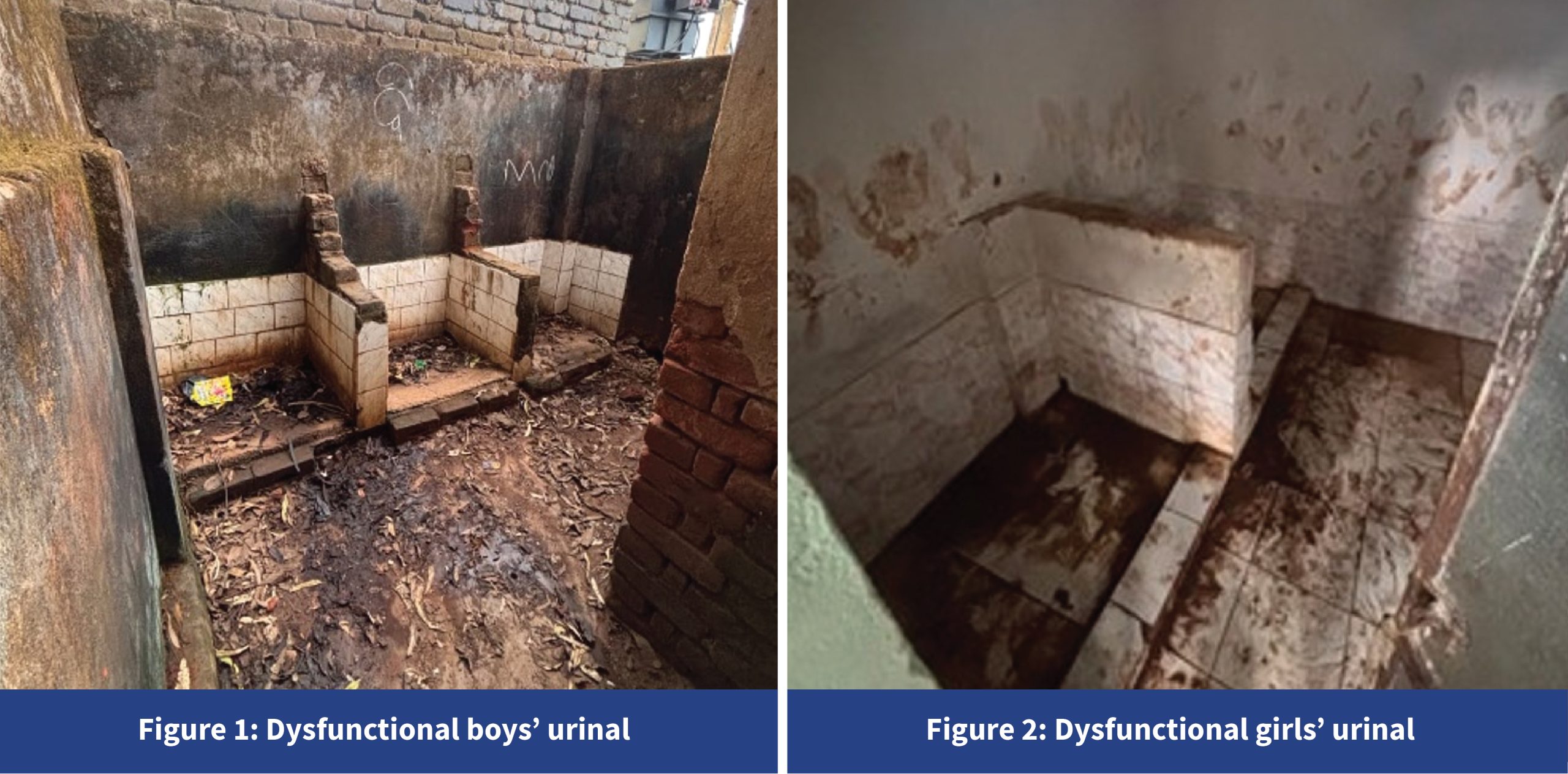
The dire situation of the sanitation facilities in government schools across Odisha needs immediate attention. MSC’s recent assessment for Water.org uncovered stark and unsettling realities in Odisha’s public schools. The truth behind dysfunctional bathrooms often remains hidden behind classroom walls. Based on the primary data collected from the field, more than half of the schools clean their toilets only once a week, while about one in 10 do so just once a fortnight or even less. Two-thirds face long delays in toilet repairs, which leave facilities unusable for months. Many toilets that are officially marked as functional are locked. Students must relieve themselves in the open. For girls, the situation is even more alarming. Though 85% of schools have separate toilets for them, 50% lack a water supply, and nearly 33% of them do not have a functional latch, which makes these spaces unsafe and unusable. Additionally, 43% of students reported that there are not enough toilets to meet the needs of all learners. These statistics signify an alarming truth. They tell a story of interrupted childhoods, lost confidence, and diminishing dreams.
The far reach of the bathroom access
Poor sanitation in schools has a ripple effect on the entire community. It quietly erodes health, learning, and community well-being.
The short-term consequences of poor sanitation in schools are as follows:
- Health hazards: Unhygienic facilities spread diarrhea, UTIs, and skin infections, which lead to absenteeism and higher medical costs.
- Disrupted learning: When students feel anxious about using toilets, their focus and confidence plummet.
- Extra burden on teachers and staff: Teachers and midday-meal workers often double up as cleaners, which compromises teaching quality.
Consequently, poor sanitation in schools has a lasting impact on both children and society. Some of the long-term consequences are as follows:
- Gender disparities in education: The lack of adequate WASH facilities has a direct impact on girls’ education. Many girls miss school during menstruation due to poor sanitation and hygiene support, and in some cases, this leads to them dropping out altogether.
- Relapse to open defecation: Broken school toilets drive a return to defecation, undoing the gains from the Swachh Bharat program.
- Perpetuation of poor hygiene practices: Children grow up to believe that unhygienic conditions are normal.
The apathy and misplaced priorities of regulatory bodies
The fundamental issue behind Odisha’s school sanitation crisis is not merely a shortage of resources, but a deeper lack of intent and prioritization. Clean and functional toilets continue to be treated as a secondary concern rather than a basic necessity by the concerned authorities. School administrators operate under tight budgets and competing pressures, often prioritizing academic performance and visible infrastructure projects over hygiene and sanitation. This sustained de-prioritization creates a cycle of neglect, where poor sanitation becomes normalized, compromising students’ dignity, health, and ability to learn.
Why policies alone do not deliver
There are policies in place that seek to ensure proper sanitation in schools, but two major roadblocks hinder their effectiveness:
Inadequate funding: Inadequate funding remains a major challenge. Authorities allocate only about 5 to 10% of the overall composite grant, which amounts to roughly INR 50,000 (USD 557.5) per school each year, for sanitation-related activities. However, in many schools, this limited amount also must cover several other essential expenses, which leaves very little specifically for cleaning supplies, worker salaries, and minor repairs. As a result, schools struggle to maintain even the most basic hygiene standards.
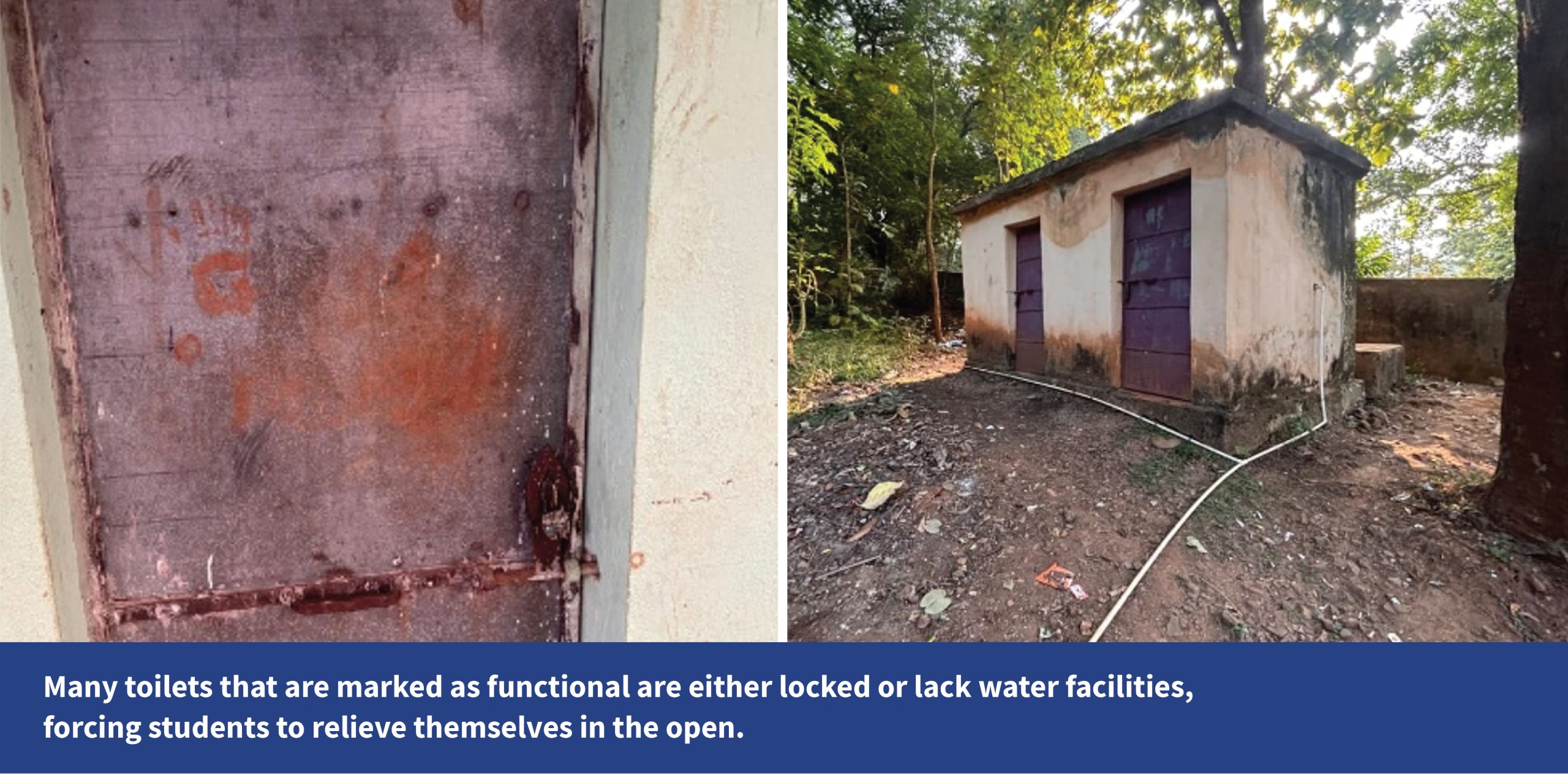
Poor implementation and weak monitoring: Guidelines require twice-daily cleaning, yet most schools manage once a week. Schools rarely maintain separate accounts for sanitation spending, and water shortages remain chronic.
A policy without funding and accountability is a promise unkept.
Odisha’s challenge mirrors a national challenge
While the situation in Odisha is alarming, it is far from an isolated issue. Across India, schools struggle with broken toilets, weak hygiene education, and indifferent monitoring. The lessons from Odisha serve as a microcosm of a nationwide challenge that requires urgent attention and systemic solutions.
India must treat school sanitation as a non-negotiable to truly advance its education and gender-equality goals. A classroom without a functional toilet can never be a place of learning. It is a symbol of how we collectively fail vulnerable children in their basic rights.
How can we turn intent into action?
Odisha has piloted innovative approaches to address these challenges. These include engaging child cabinets and student clubs to monitor daily hygiene practices. However, we need to implement more targeted interventions:
- Institutionalize sanitation financing: Schools should introduce a dedicated sanitation budget within school accounts. This ensures structured financial planning, transparency, and consistent funding for sanitation infrastructure and maintenance, which reduces ad-hoc spending and underfunding.
- Professionalize the sanitation workforce: School authorities need to implement a certification program for sanitation workers through accredited training institutes, with a focus on cleaning techniques, minor repairs, and waste management. Schools should also provide the certified candidates with uniforms and toolkits, among other items, and enable their deployment across nearby schools for regular work. This will enhance professionalism and improve overall facility maintenance.
- Establish hygiene education hubs: Schools should create interactive hygiene learning spaces within schools where students can engage with practical lessons on cleanliness and health. This encourages a hands-on understanding of hygiene and builds lifelong habits.
- Implement digital monitoring and accountability: Schools could deploy digital tools for real-time monitoring of sanitation facilities and establish school-level “sanitation warrior” committees. These committees will promote accountability, data-driven maintenance decisions, and active participation from students and staff.
- Integrate hygiene into curricula: School administrative bodies should embed hygiene education into the formal curriculum using age-appropriate materials and interactive teaching methods. This helps cultivate sustainable hygiene practices and reduces absenteeism due to preventable illnesses.
- Adopt low-maintenance, sustainable sanitation infrastructure: Schools must modernize sanitation infrastructure with biodigesters, twin-pits, or composting systems to minimize maintenance needs and environmental impact. They should also emphasize durable, gender-inclusive, and climate-resilient designs that support continuous functionality.
A question of dignity and equity that lies beyond toilets A clean, safe, private toilet can decide whether a child learns today or stays home tomorrow. Schools do not just build and maintain toilets. They build the bedrock of the nation. Girls, such as Meera, deserve classrooms where their dreams are not disrupted by the absence of basic dignity. It is time to break the cycle of neglect and build a system where no child must choose between education and the fundamental right to safe sanitation, and where every student can pursue their aspirations safely.
Written by

Swadesh Sritam Das
Assistant Manager
Mansi Sharma
Assistant Manager
Diganta Nayak
Manager
Kamal Chhabra
Senior manager
Leave comments