Scaling trust: A transaction-level observability framework for national ID programs
 by Debarshi Chakraborty, Swastik Das, Mohak Srivastava and Rahul Gupta
 Feb 17, 2026
 4 min
4 min


At MSC (MicroSave Consulting), we examine the challenges of the national ID authentication failures. We propose a transaction-level observability framework to enhance transparency and accountability. This framework ensures better governance, data analysis, and proactive actions to improve access and inclusion for citizens.
Like every week, Rakesh Sengar arrived at his neighborhood ration shop just after it opened. For years, he used his national ID to get staple foods from the same shop. Yet, the authentication failed this time. The operator retried, but an error code flashed on the device, which is one of thousands generated across the system each hour. Rakesh had to leave and was asked to return later.
At the national level, the identity platform reports strong performance. It records Rakesh’s failed attempt, but as one among millions of daily transactions, it disappears into averages that suggest everything is working as intended.
National ID systems have become the primary gateway to both public and private services worldwide. India’s Aadhaar system has processed more than 150 billion authentication transactions with nearly 550 entities, which span banking, telecom, and government services that rely on it daily. On average, more than 90 million authentications occur each day. The World Bank reports that digital identity enables individuals to securely authenticate themselves remotely, which is essential as services move online. The World Economic Forum describes national ID as part of the shared infrastructure that enables economic and social activity at scale. Yet, this centrality creates a vulnerability: when national ID authentication fails, citizens lose access to essential services.
Global attention centered on enrollment during the past decade. Enrollment is essential, but this is no longer sufficient. Today, exclusion most often occurs during authentication and use, not at enrollment. In a country that processes 100 million transactions monthly, an authentication system with 90% accuracy would still produce around 10 million false matches in a comprehensive search. These systems also erroneously deny essential services to potentially several million individuals.
Privacy International documents how national ID systems, designed for efficiency and fraud prevention, are often riddled with logistical failures that exclude vulnerable populations. The World Bank acknowledges that failures in biometric authentication mechanisms can lead to people being excluded from access to related services. Without transaction-level visibility, these failures remain invisible.
This blog proposes a novel transaction-level observability framework for national ID programs. This framework is a governance architecture that enables authorities to see, diagnose, and act on authentication failures at the point where inclusion or exclusion occurs. The transaction-level observability framework is more than a dashboard or a reporting tool. It serves as a governance capability enabled by data architecture, institutional workflows, and decision rights, which can be visualized as dashboards at an interface layer.
The framework: Eight layers of observability
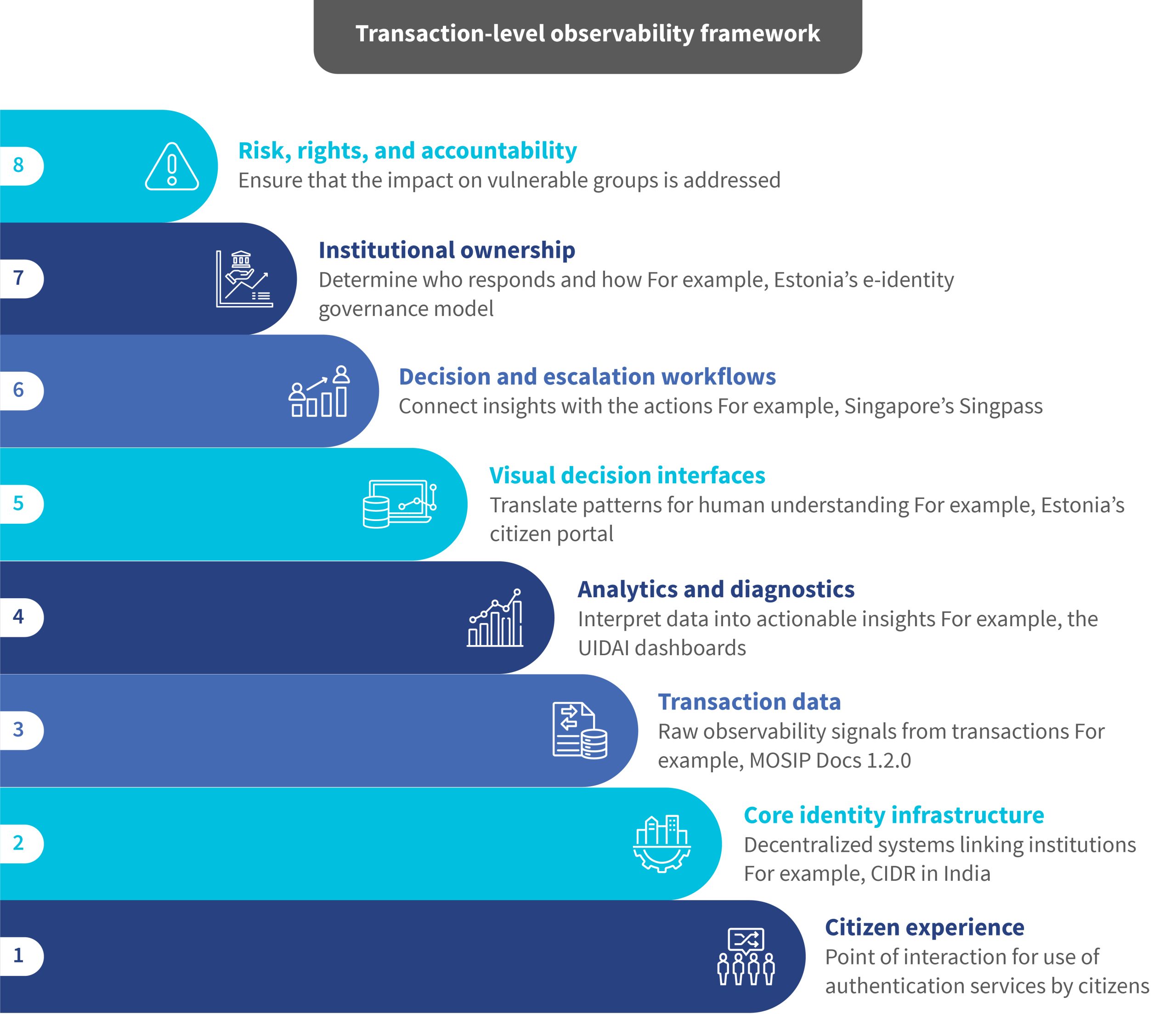
Figure 1: Stages of the proposed transaction-level observability framework
We can understand the transaction-level observability framework as eight interlinked layers that run from the point of use to the point of accountability. At the base is the citizen experience, where real inclusion or exclusion unfolds. Whether a farmer seeks an agricultural subsidy, a patient accesses a health clinic, or a person buys food at a ration shop. Above this lies the core identity infrastructure, such as India’s Aadhaar Central Identities Data Repository (CIDR), with its massive daily transaction volumes and decentralized systems, or Estonia’s X-Road, which links hundreds of institutions.
These systems store transaction data that form raw observability signals, which are then analyzed to generate diagnostics and actionable insights. Visual decision interfaces translate patterns and trends for human understanding, while decision and escalation workflows connect insights to actions. At higher governance levels, institutional ownership determines who responds and how, while an overarching layer of risk, rights, and accountability ensures that differential impact is recognized and addressed rather than hidden behind averages, especially among vulnerable groups.
Each layer exists because a framework must address all dimensions of system success and failure. Citizen experience without verified data lacks accountability, data without analysis obscures root causes, analytics without workflows fail to change outcomes, and workflows without governance can be ignored or misused. Estonia’s digital ID ecosystem shows how decentralized exchanges and logged access contribute to public trust by enabling citizens to track who accesses their data. Conversely, large centralized systems, such as India’s Aadhaar, have revealed profound exclusion risks when authentication failures result in denied benefits or service delays, which highlights why rights and risk governance must cap any observability architecture.
For implementors, this framework is a lens for interpretation and action. It asks where failures occur, what patterns they reveal, who is responsible, and what corrective pathways exist. It also means to embed real escalation pathways that connect frontline feedback to policy review and institutional oversight. This framework is more than a roadmap to dashboards as it is a blueprint for people, processes, and policies that ensure observability drives equitable outcomes.
Dashboards as the interface layer
Visualizations appear at the interface layer, as a bridge between complex systems and human decision-makers. Dashboards can expose patterns, establish benchmarks at the national, regional, or institutional level, and help decision-makers move from symptoms to root causes. Below, we present an illustrative architecture to show how transaction-level observability can support data-driven interventions, drawn from our work with a national ID authority.
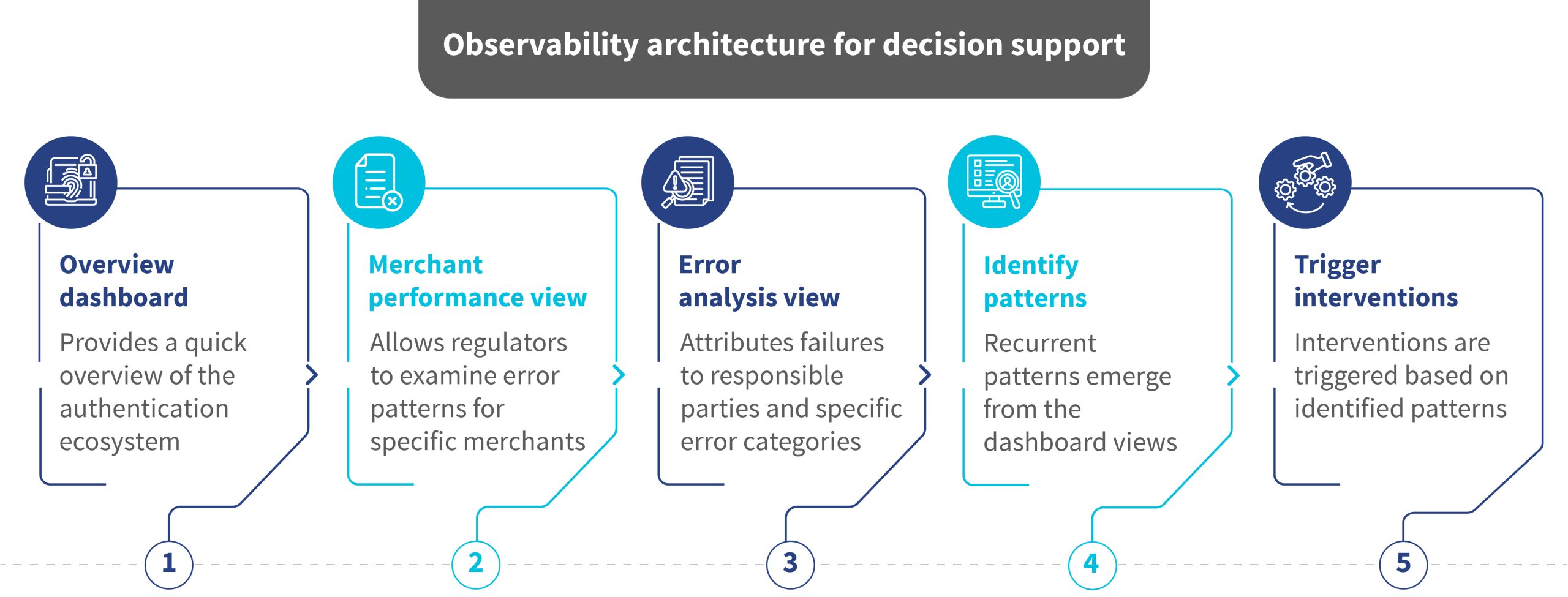
This overview represents only the architecture of the visual layer. In the next blog, we explore detailed analytical views that start from the overview to individual merchant performance and error analysis dashboards to enable drill-down diagnosis and evidence-based intervention. Together, these frameworks and architecture enable transaction-level observability to transform national ID governance from reactive oversight to proactive, accountable stewardship of digital identity infrastructure.
Written by

Debarshi Chakraborty
Senior Principal Architect
Swastik Das
Senior Manager
Mohak Srivastava
Manager
Leave comments