
What we do
MSC (MicroSave Consulting) is a global consulting firm that enables social, financial, and economic inclusion for everyone in the digital age.
3.7B
people benefitted by MSC-supported interventions
25M
people engaged with the MSC library content
4000
projects implemented
600
clients served
Clients and partners


















































































































































Latest events
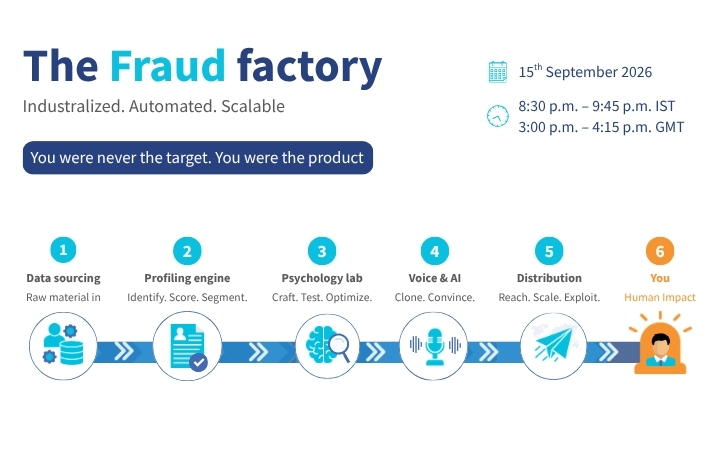
Explore how fraud tactics evolve and the behavioral vulnerabilities that fuel them. Understand why consumers remain exposed despite greater awareness, and test your own fraud blind spots through an interactive fraud-exposure game.
15th September 2026
Our network
-
329
Recent Projects
-
881
Blogs
-
78
Presentations
-
995
Publications
-
575
Videos
Careers
Here’s your opportunity to drive meaningful social change!
Join our team of talented and passionate professionals who work in a learning and fun environment.

Join the conversation
At #AFSForum2026 in Kigali, Kunjbihari Daga, Chief Architect at MSC, joined a panel on Africa’s digital infrastructure for sustainable #agrifood systems. The discussion focused on disconnected solutions, shared standards & interoperable systems.
#DigitalAgriculture #FoodSystems
At #AFSForum2026 in Kigali, TVS Ravi Kumar delivered a keynote on youth in fragile agrifood systems. Around 82% of working youth in crisis settings rely on agrifood for employment, so finance & support must reflect their livelihood realities.
Stay tuned for more insights.
Scammers use familiar tactics to make fraudulent messages, calls, & requests seem legitimate.
Would you spot the red flags?
Play Fraud Factory to test your instincts:
- Spot the scam
- Understand the deception
- Test yourself
Join us on 15th September:
Fraud affects more than consumers. It tests the systems that support them. Responsibility is often fragmented across banks, telecom providers, platforms, & regulators.
Join global experts on 15th September to discuss the future of consumer protection: https://tinyurl.com/2hpc3633
India already has one of the world’s largest LPG networks, reaching nearly every household. The next step is real-time intelligence layered on existing cylinders, distributors, & infrastructure.
Explore how digital technology could transform LPG: https://tinyurl.com/ycv4ek5z
India built Aadhaar for digital identity, UPI for real-time payments & smart meters for power distribution.
Cooking gas serves hundreds of millions of Indian homes, but its digital transformation remains overdue.
Find out why:

Beyond LPG access: Reimagining the future of clean cooking in India - MicroSave Consulting (MSC)
This blog explores the challenges that persist beyond access to liquefied petroleum gas (LPG) in India, including af...
tinyurl.com
What happens when LPG runs out mid-meal? How do you know how much gas remains in
the cylinder? What if an upfront payment for a refill is hard to manage?
These are daily realities for millions of households in India.
Read our blog for insights: https://zurl.co/ZETwI
Has India moved beyond the LPG access challenge?
An LPG connection is only the beginning. For households, affordability, timely delivery, safety, & reliable information shape the real experience.
Read MSC’s latest blog to explore the gaps: https://zurl.co/HZVkB
#LPG
Why do viable rural women entrepreneurs get turned down for enterprise loans? Missing GST bills, informal land records, & other documentation gaps can make viable businesses look ineligible for formal credit.
Read our blog to see how banks can fix this: https://tinyurl.com/5fuepnfr
When women in rural India gain access to finance, communities grow. JEEViKA & MSC’s Enterprise Finance Initiative hashelped 27,000+ women access nearly USD 34.6 million in bank loans to grow their businesses.
Watch how it works.
#FinancialInclusion #WomenEntrepreneurs #SHG
When rural women entrepreneurs access formal credit, the impact speaks for itself. Together with @GatesFoundation, we have helped 518K+ self-help group women access USD 372M+ in enterprise loans.
Learn more: https://tinyurl.com/5yas74cc
#FinancialInclusion #WomenEntrepreneurs
How do you get large government systems to adopt new ideas?
In Episode 2 of GovTech Talks, Dr. Charity Moore explains why digital reform depends on finding internal champions who value data & want to solve real bottlenecks.
Watch now: https://tinyurl.com/3pz4asy5
#govtech
How can digital tools help public officials deliver social protection more effectively?
In Episode 2 of GovTech Talks, Ritika Singh & Dr. Charity Moore discuss how technology can help reduce payment delays and improve public service delivery.
Watch now: https://tinyurl.com/3pz4asy5
India generates 62 million tons of municipal solid waste each year, a figure that could rise to 165 million tons by 2030. The challenge is to build systems that track, verify, & recover value from waste.
See how #SWMRules2026 can drive this shift
The future of sanitation goes beyond pipes, pumps, & treatment plants. Digital systems can help cities monitor performance, reduce downtime, & extend infrastructure life.
Read our blog on how innovation can support India’s sanitation journey:
Beyond the construction of toilets: The missing innovation layer in India’s sanitation sector -...
This blog explores how India can move beyond building sanitation infrastructure toward sustained service delivery. It ...
tinyurl.com