Beyond LPG access: Has the LPG ecosystem reached an inflection point?
 by Himanshu Singh, Kartikeya Singh and Kushagra Harshavardhan
 Aug 31, 2026
 5 min
5 min


This blog examines challenges beyond LPG access in India, such as affordability, refill reliability, delivery delays, demand fluctuations, diversion, and safety concerns. It highlights the need for a smarter, more responsive LPG ecosystem.
It is just after sunrise when Sarita begins her day. Breakfast is on the stove, lunch boxes need packing, and three school-going children must get ready for the day ahead. A liquefied petroleum gas (LPG) connection has made these mornings easier. She no longer spends hours collecting firewood, and cooking no longer means breathing smoke in a cramped kitchen.
Yet the LPG cylinder in her kitchen has not eliminated uncertainty. Will the refill arrive on time? Has the booking gone through? If a delivery is delayed, how long will she have to wait? For Sarita, as for millions of Indian households, access to clean cooking fuel was a major milestone, but it was only the first step.
Through initiatives such as PAHAL, GiveItUp, and the Pradhan Mantri Ujjwala Yojana (PMUY), LPG connections grew from 145 million in 2014 to nearly 330 million today. This expansion has transformed millions of kitchens across India, making cooking cleaner, safer, and more convenient.
Women spend less time collecting firewood, indoor pollution has declined, and cooking has become safer and more convenient. However, as India’s LPG ecosystem has expanded, a new question has emerged: has access translated into a seamless experience for all stakeholders across the value chain?
The economics of sustained LPG use remain challenging. Each refill costs nearly INR 900 (USD 9.5) upfront. As a PMUY beneficiary, Sarita receives the subsidy directly in her bank account. However, she often struggles to arrange the full amount at the time of purchase because her household depends on uncertain daily wages.
As a result, she learned to make each cylinder last as long as possible. She cooks at a lower heat, prepares fewer dishes at a time, and postpones refills whenever possible. Like many households, she keeps firewood as a backup because it remains a reliable option when she cannot refill her LPG cylinder.
The contrast reflects one of the biggest hurdles in India’s clean cooking transition. Although access to LPG has expanded rapidly, sustained and exclusive use remains irregular. PMUY households refill only 3.9 cylinders on average each year, compared with 6.5 cylinders among non-PMUY households. This suggests that many families continue to rely on traditional fuels alongside LPG.
One morning, Sarita’s cylinder unexpectedly ran out of gas while she was cooking. Such incidents were not unusual. What frustrated her most was the sudden shortage and her inability to know when the cylinder would run out. She relied on experience and guesswork, as she sometimes lifted and shook the cylinder to estimate how much gas remained and how many days it would last. Until the replacement cylinder arrived, she returned to cooking with traditional firewood.
This uncertainty is not limited to households. Distributors learn about refill demand only after consumers place orders, which gives them limited visibility into future demand. As a result, cylinder deliveries remain reactive rather than proactive. This creates unpredictable wait times for consumers and operational inefficiencies for distributors.
When the replacement cylinder eventually arrived, Sarita saw another side of the same problem. For LPG distributors and delivery personnel, daily demand can fluctuate significantly. Some days require only a few deliveries. On other days, the number of orders exceeds what the available workforce can comfortably fulfill. LPG agencies struggle to optimize delivery routes, deploy their workforce efficiently, and forecast refill requirements without reliable insights into household consumption patterns.
The domino effect extends across the supply chain. Consumers face delayed deliveries, distributors incur higher logistics costs, and oil marketing companies (OMCs) face challenges with demand forecasting and inventory planning.
What appears to be a minor inconvenience in a household kitchen forms part of a much larger operational challenge.
While waiting for her refill, Sarita discovered another obstacle that affects LPG availability. The large price difference between subsidized and commercial cylinders creates incentives for diversion. Domestic LPG costs around USD 0.7 (INR 65) per kg, while commercial LPG costs around USD 1.7 (INR 167) per kg. Small-scale commercial establishments often prefer subsidized domestic cylinders because they cost substantially less than commercial cylinders. This practice may reduce operating costs for businesses, but it also puts greater pressure on domestic supplies and can lengthen waiting periods for households.
This challenge has long concerned policymakers. Once cylinders leave the bottling plant and enter the last-mile distribution network, visibility into their end use declines. This limited visibility makes it difficult to detect diversion, track consumption, and ensure that subsidized cylinders reach their intended beneficiaries.
Consumer confidence in the LPG system depends on more than affordability and availability. Many households remain unsure whether their cylinders contain the full quantity of gas they paid for. However, households have limited practical ways to verify the quantity. Safety awareness around LPG has also improved over the years, but households still rely on periodic inspections and personal vigilance to detect gas leaks or faulty regulators. These concerns can weaken consumers confidence in the LPG ecosystem. They can also encourage households to keep traditional fuels as a backup and limit their reliance on LPG.
Each of Sarita’s experiences may appear disconnected when viewed separately. A high upfront payment creates affordability challenges. Sudden LPG shortages disrupt cooking routines. Unpredictable delivery schedules create difficulties for consumers. Demand fluctuations make distribution planning more complex. Diversion creates supply chain inefficiencies. Limited visibility into end use affects subsidy targeting and market oversight. Safety concerns weaken consumer confidence. Together, these challenges reveal a much larger issue.
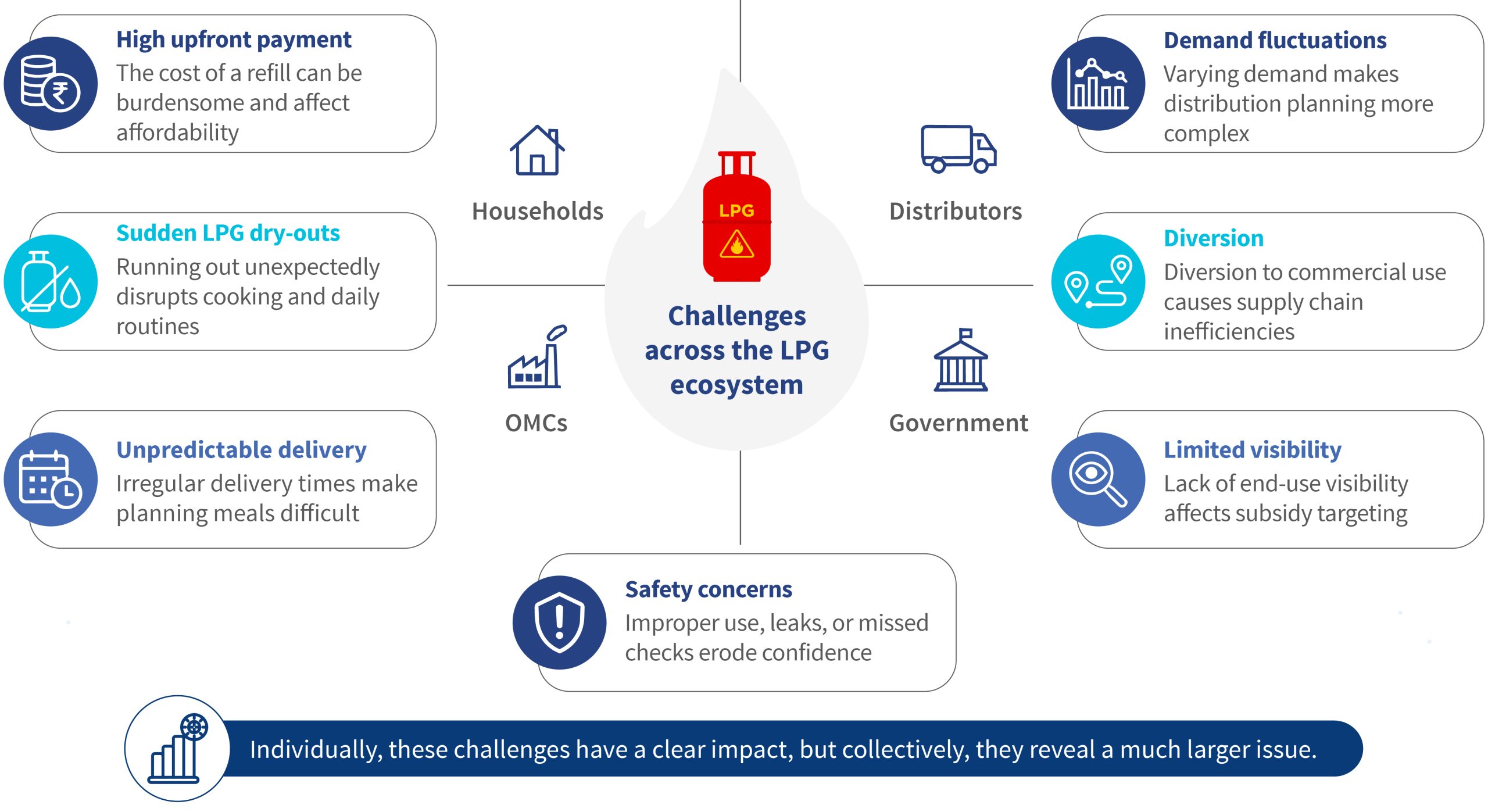
Figure 1: Challenges faced by various stakeholders in the LPG value chain
Each stakeholder in the LPG value chain faces distinct challenges. However, most of these issues stem from one common problem: a lack of real-time visibility across the LPG supply chain, particularly at the last mile. Consumers have limited information about their consumption. Distributors have limited visibility into future demand. OMCs lack insight into consumption trends after cylinders leave bottling plants. Governments have limited visibility into the end use of subsidized LPG.
Although India’s LPG landscape has evolved and expanded in recent years, most stakeholders still rely on limited data and make reactive decisions.
India’s LPG reforms have addressed access for almost every household in the country. The next phase of this journey requires a different approach. The focus now needs to shift from expanding access to improving the ecosystem for all stakeholders across the value chain. As the LPG network expands and global energy markets become more volatile, transparency, responsiveness, and resilience across the value chain become essential.
Sarita’s story, therefore, reflects more than the experience of one household in India. It reflects the experiences of millions of households, distributors, delivery personnel, OMCs, and policymakers across the same ecosystem.
The question is no longer whether India can deliver LPG to households. The question is whether the system can become smarter and more responsive.
In the second blog of this series, we explore how digital reforms can address these structural barriers. We also examine why the next chapter of India’s clean cooking transition may depend on transforming the last mile of the LPG ecosystem.

Written by




Leave comments