Beyond LPG access: Reimagining the future of clean cooking in India
 by Himanshu Singh, Kartikeya Singh and Kushagra Harshavardhan
 Sep 2, 2026
 6 min
6 min


This blog explores the challenges that persist beyond access to liquefied petroleum gas (LPG) in India, including affordability, reliability, safety, and distribution. It examines how digitalization can improve last-mile visibility, strengthen governance, and build a smarter, more resilient LPG ecosystem.
For millions of Indian households, access to liquefied petroleum gas (LPG) is no longer the primary challenge. The bigger challenge is ensuring that households can use it regularly, reliably, and safely.
Sarita, a Pradhan Mantri Ujjwala Yojana (PMUY) beneficiary, experienced this gap firsthand. Her story, featured in the first blog in this series, reflects the everyday challenges that many households face after they gain access to LPG.
Consumers face affordability, constraints, sudden dry-outs, uncertain delivery timelines, and safety concerns. Delivery personnel encounter unpredictable demand, distributors deal with inefficient logistics, and oil marketing companies (OMCs) lack visibility into actual consumption patterns. The government also faces challenges with subsidy targeting and curbing diversion.
Although these challenges appear disconnected, they stem from a common underlying issue. India’s LPG ecosystem has expanded significantly, but its last mile remains largely invisible.
The question, therefore, is not whether India needs more LPG cylinders or more distributors, but rather, what if the missing layer in India’s LPG ecosystem is digital?
Over the past decade, India has shown how digital infrastructure can transform large-scale public systems. Aadhaar provided a trusted digital identity that enabled targeted service delivery. The Unified Payments Interface (UPI) transformed payments through real-time, interoperable transactions. More recently, smart electricity meters have improved power distribution through real-time consumption data and remote meter readings. These digital transformations have improved transparency, efficiency, and inclusion. They have also created a digital layer that enables seamless information exchange across complex ecosystems.
The same principle can apply to LPG. Digital tools and Internet of Things (IoT)-enabled sensors across the LPG value chain can provide real-time insights into distribution, payments, and usage patterns.
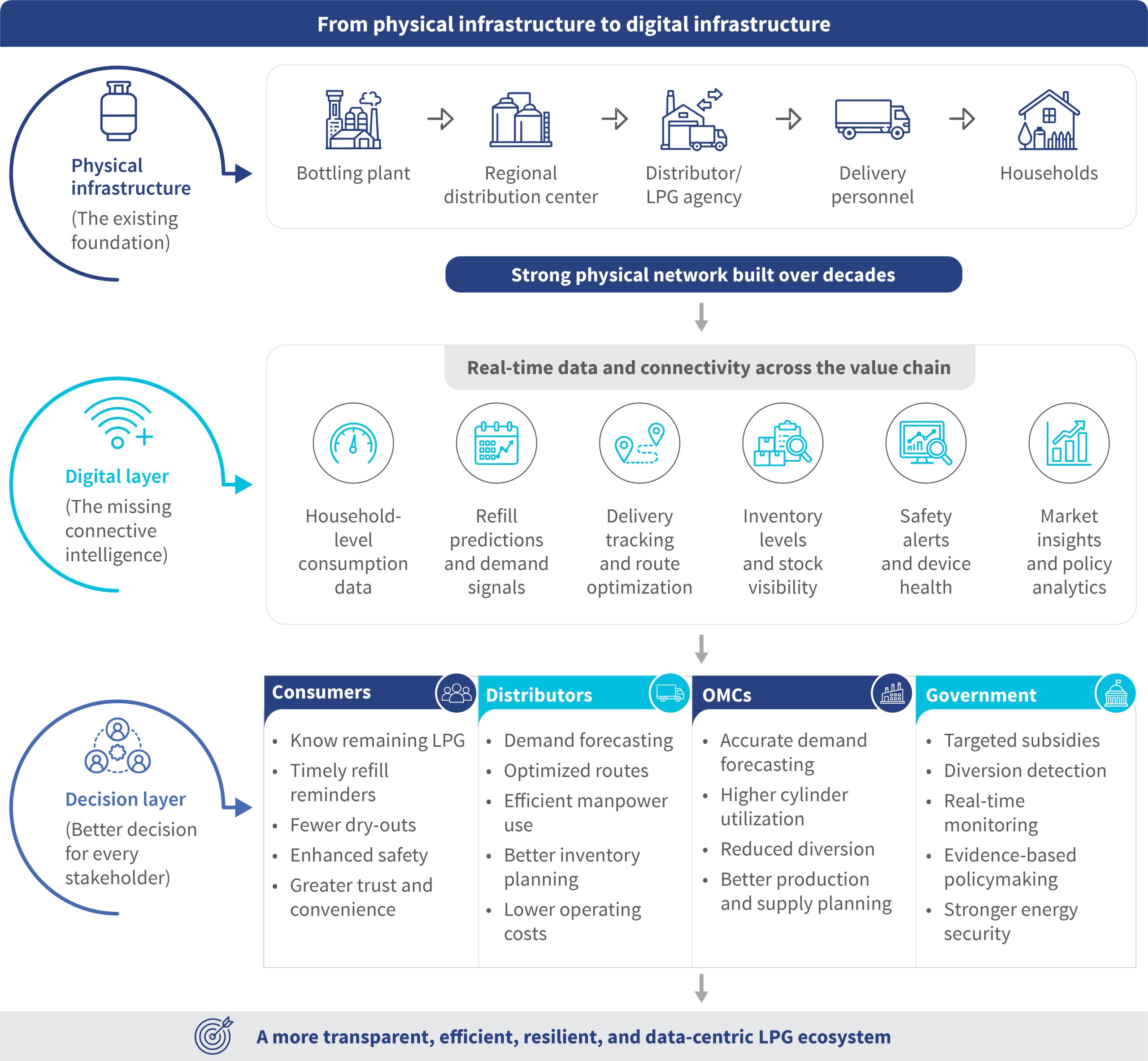
India has one of the world’s largest physical LPG distribution networks. Millions of cylinders move each day from bottling plants to distributors and then to households. Yet, once a cylinder reaches a household, the ecosystem has limited visibility into its use until the consumer books another refill. As a result, decision-making relies on historical refill records rather than real-time consumption patterns.
A digital layer on this physical network requires one critical building block: bringing IoT-enabled sensors to the last mile. These sensors can monitor household consumption and securely transmit real-time information to a digital platform. This system can transform a conventional cylinder into an information-driven asset. It can also provide real-time visibility across the value chain and improve information flow throughout the ecosystem. Better information can support decisions for consumers, distributors, OMCs, and policymakers.
Just as smart electricity meters allow users to monitor power consumption and pay for actual use, a smart LPG ecosystem can give households greater control over their LPG use. It can also offer more flexible payment models. A pay-as-you-go (PAYG) approach allows households to pay only for what they consume rather than pay for a full cylinder upfront. This model can address the high upfront cost of LPG cylinders.
Unlike conventional households that estimate the remaining gas by lifting or shaking the cylinder, Sarita uses a digital LPG app linked to an IoT-enabled sensor on her cylinder. The sensor tracks her real-time LPG use and sends a push notification through the app. The notification shows how many days of LPG remain. The app also alerts her when the system places a refill request. This feature reduces uncertainty and helps prevent sudden dry-outs during cooking.
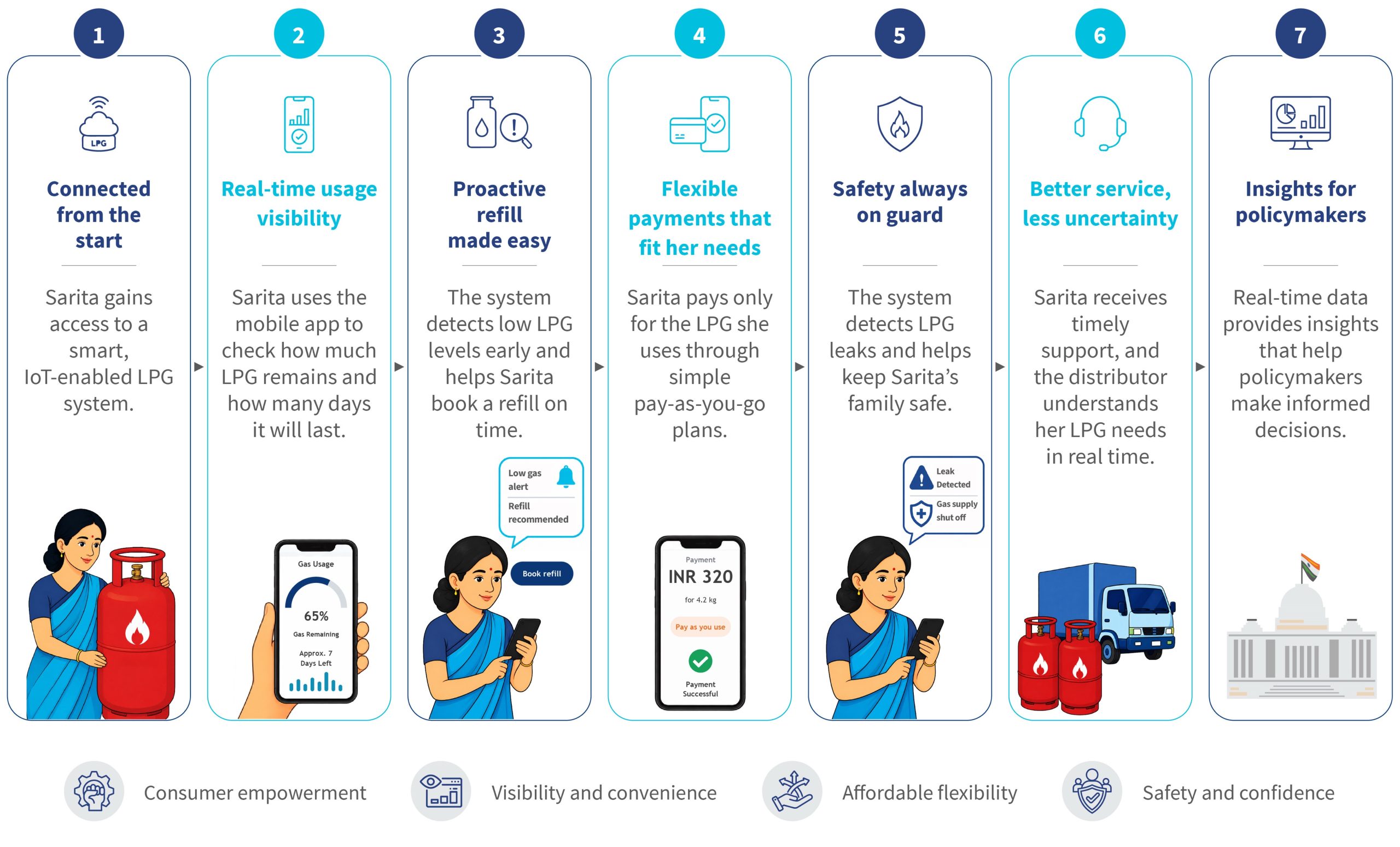
For Sarita, the benefits extend beyond timely refills. Instead of making a large upfront payment for a replacement cylinder, she could pay for the LPG she consumes. This model resembles prepaid smart electricity meters. It spreads the cost across smaller, more manageable payments. Such a model could ease the financial burden on households with irregular incomes. It could also encourage more consistent LPG use.
A few days later, Sarita receives an alert about a potential gas leak in her kitchen. The IoT-enabled system can detect unusual gas flow patterns that may indicate a leak. In such cases, the regulator could automatically shut off the gas supply. This would give Sarita time to contact the distributor. An event that once relied on intuition, self-vigilance, and periodic inspection can now be supported by real-time information.
Such solutions must account for varying levels of digital literacy, technological familiarity, and access to smartphones and the internet among households. A phased approach can help the system mature, improve accessibility, and support wider adoption over time.
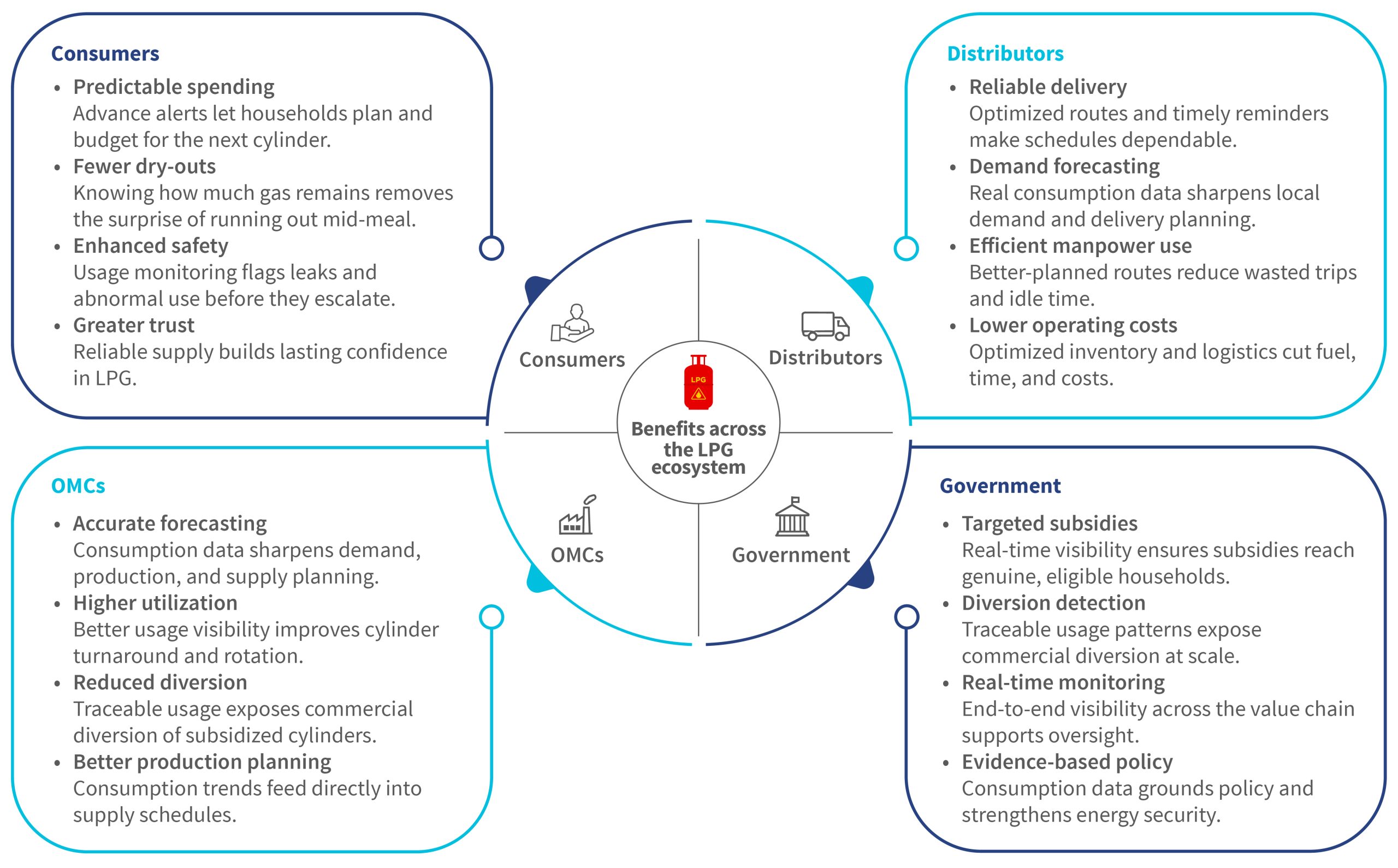
While Sarita’s experience is illustrative, the benefits are not limited to a single household. The same information can improve last-mile operations and enable smarter distribution. Real-time monitoring of LPG use can reduce uncertainty in everyday cooking.
Delivery planning by distributors after they receive refill orders can result in uneven workloads, suboptimal route planning, and higher logistics costs. Instead of waiting for a household to submit a refill request, the system could forecast demand based on actual consumption patterns. Better visibility could also help distributors anticipate refill requirements, schedule deliveries proactively, improve workforce deployment, minimize delays, and reduce the need for households to maintain a second cylinder as a precaution.
For OMCs, access to last-mile data could improve production planning, cylinder utilization, and inventory planning across regions. It could also minimize operational losses from diversion and inefficient asset deployment.
From a governance perspective, the advantages of a smart and data-driven LPG ecosystem extend beyond operational efficiency. For governments and policymakers, real-time visibility into household-level consumption trends could help improve subsidy targeting. It could also support a robust monitoring protocol for subsidized LPG distribution and enable evidence-based policymaking.
The transition to a smart LPG system can occur incrementally, without requiring a complete overhaul of the existing infrastructure. Smart sensors could initially be introduced through pilots in selected geographies and integrated with existing distributor and OMC networks. As the technology and operating model mature, coverage could expand across households. Data platforms, customer interfaces, and delivery systems could also be gradually integrated to enable smoother information flow. This phased approach would allow stakeholders to test the technology, refine operating processes, and build the capabilities required for scale.
Real-time data on last-mile consumption behavior could also help identify irregular use patterns that may indicate diversion of subsidized domestic cylinders for commercial use. Instead of relying mainly on periodic audits or refill histories, the government could use granular, ground-level data to monitor the system more effectively and respond proactively.
Besides better day-to-day operations and governance, digital LPG could also serve a larger strategic purpose: strengthening India’s energy resilience. Rising geopolitical tensions and volatile global energy markets make real-time demand management increasingly important for energy security.
For decades, the debate on energy security has focused on higher storage capacity. Recent geopolitical tensions have also highlighted the need to maintain adequate strategic LPG reserves. But as India’s LPG ecosystem continues to expand, another equally important question arises: Can resilience emerge from effective management of the existing system, and not from storage alone?
Digitalization can help achieve this. Rather than treating millions of household cylinders as the end of the supply chain, stakeholders can integrate them into a connected network. This network can provide insights into consumption trends, demand changes, and inventory needs. It can also help supply chains respond proactively to disruptions and use existing assets better.
This has a significant implication. India’s future energy security strategy may depend less on how much LPG it stores and delivers and more on how intelligently it manages the LPG in circulation.
A smarter LPG network can help India move from access to LPG to reliable, sustained, and informed use. Over the past decade, the country has built one of the world’s largest clean cooking networks. The next decade offers an opportunity to make this network smarter. Every refill can generate useful insight. Every cylinder can become part of a connected system. Every stakeholder can benefit from real-time information.
Resources

Written by




Leave comments