The two-thirds opportunity: Where capital should flow
 by Lois Eva Adongo
- Oct 27, 2026
- 6 min
 by
 Oct 27, 2026
 6 min


This blog identifies seven financing opportunities across Kenya’s fisheries value chain, from fish-feed suppliers and hatcheries to traders, processors, and importers, showing how tailored capital can support sustainable business growth.
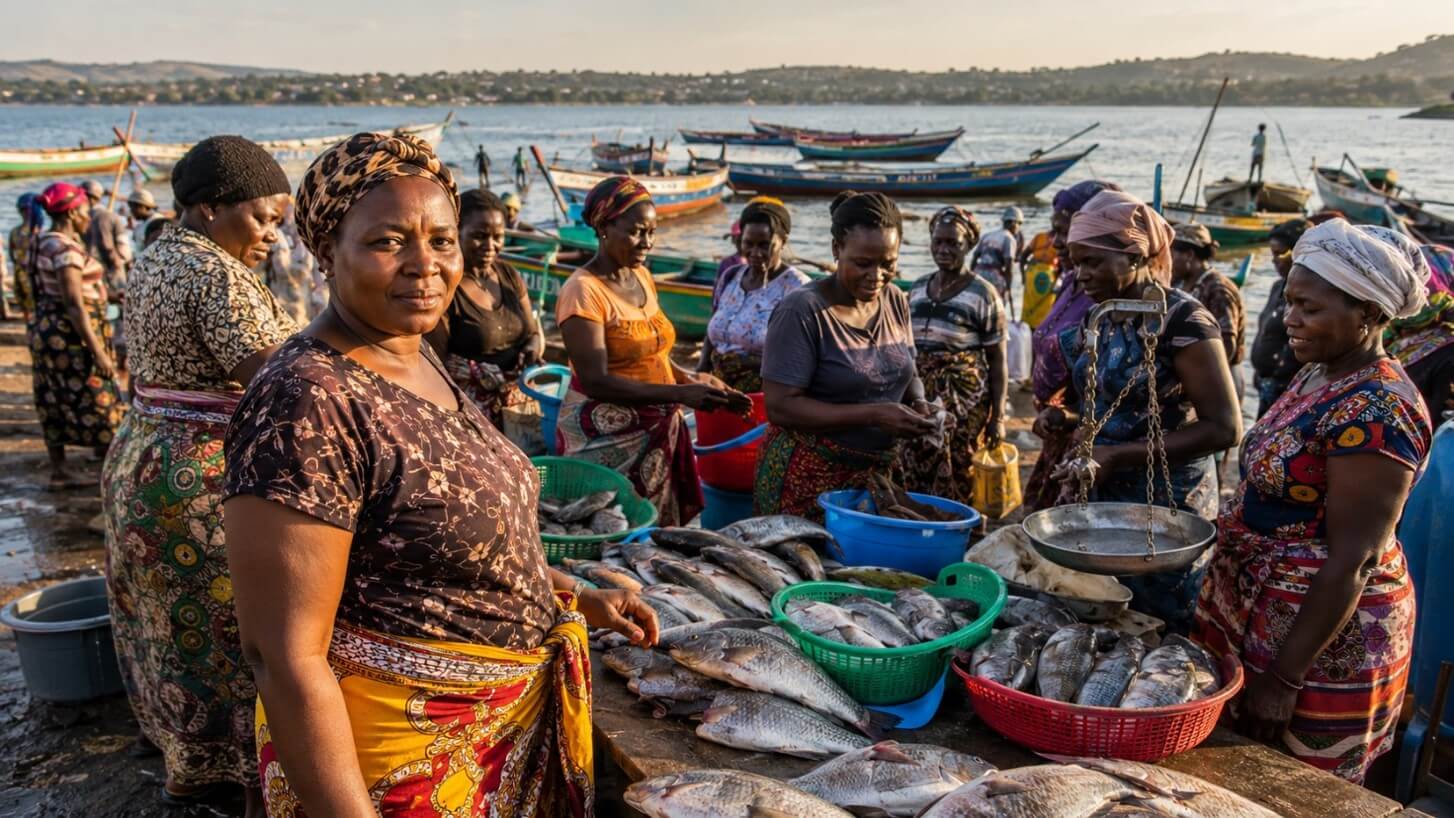
The previous blog in this series showed the scale of Kenya’s fisheries opportunity. In 2024, domestic production of 168,424 metric tons met about one-third of an estimated annual requirement of 510,000 metric tons. Data from MSC’s Women and Youth Economic Empowerment in Fisheries through Inclusive Market Access (WYEEFIMA) program also show the sector relies substantially on informal finance.
This brings us to the question of where formal finance can work across Kenya’s fisheries value chain. As we will see, the answer may emerge from enterprises with viable markets, visible cash flows, and financing structures that match how they operate.
Seven places where capital can work
MSC’s work under the WYEEFIMA program points to seven areas where formal finance could support growth.
- Working capital for fish-feed suppliers
Feed is among the highest operating costs in aquaculture. For cage and pond farmers, it can account for more than 60% of production costs. Moreover, Kenya depends partly on imported aquafeed, which exposes suppliers and producers to pressures related to working capital, inventory, and foreign exchange.
For lenders, this creates a clear use case for working capital. Facilities linked to purchase orders, confirmed supply contracts, established sales histories, or recurring customer relationships could help suppliers stock ahead of demand. Financing suppliers can strengthen more than one enterprise. More reliable feed availability can ease a constraint for farmers further down the value chain.
- Financing hatchery expansion
Aquaculture depends on a reliable supply of quality fingerlings, which places hatcheries near the start of the production cycle. WYEEFIMA data show that hatchery capital requirements range from relatively small working-capital needs to investments of more than KES 15 million (USD 117,238) for larger commercial operations.
Hatcheries, therefore, need different products. Smaller businesses may need short-term finance for broodstock, feed, labor, and operating expenses. Larger hatcheries may require longer-term funding for tanks, pumps, water systems, equipment, and expansion. Meanwhile, lenders must assess whether production records, survival rates, customer demand, and repayment capacity support the requested finance.
- Working capital for women aggregators and traders
Women play a major role in fish aggregation, processing, and retail. Yet, many have limited working capital and few productive assets that conventional lenders recognize as collateral. Their immediate need is often straightforward. They need enough liquidity to buy fish when supply is available, move it quickly, sell it, and return to the market for the next cycle.
A cash-flow-based, collateral-light facility could assess these businesses through transaction histories, repeat supplier relationships, mobile money records, and established trading patterns, rather than relying only on fixed assets.
Why does this matter? It matters because MSC’s WYEEFIMA market study found that informal borrowing remains an important source of working capital for most fish traders. Formal lenders could replace some of that high-cost, short-term borrowing with products matched to actual trading cycles.
- Cold-chain infrastructure
Capital is also needed after fish leave the water. Recent research estimates losses at about 25% of production, which means post-harvest losses reduce the share of fish that reaches consumers in saleable condition. Cold storage, ice, handling equipment, and transport infrastructure are therefore vital opportunities to finance fisheries.
For lenders, much of this is a use case of asset finance. Cold rooms, ice-making machines, insulated boxes, refrigerated transport, and related equipment can generate identifiable revenue when demand and use are sufficient.
Yet, equipment is only part of the credit decision. Lenders must also understand throughput, energy costs, utilization, location, maintenance, and who will pay to use the infrastructure. The opportunity is strongest when a cold-chain asset serves an established fish-supply chain and a visible market.
- Cluster finance for cage farming
In 2024, Kenya had approximately 5,975 fish cages in operation, which shows that cage aquaculture had already reached a meaningful scale. Further expansion may require more capital than individual microloans can provide.
One option is cluster finance for farmers who share infrastructure, purchase feed collectively, coordinate market access, or sell through common off-takers. This structure can give lenders better visibility into production and transactions and allow farmers to share some operating costs.
MSC’s pond-farming data also illustrate why repayment structures must follow biological cycles. A lender cannot finance a farmer whose revenue arrives only after harvest on the same schedule as a trader who turns stock every few days. Finance must therefore follow the production cycle instead of forcing the cycle to fit the loan.
- Working capital and equipment for processors
Processors create value after fish are landed, yet many lack sufficient capital. Some need equipment, such as improved smoking kilns, drying racks, handling tools, or small cold-storage units. Others need working capital to buy fish when supply is available, before limited liquidity costs their business.
Asset finance can support equipment with a useful life extending beyond a single production cycle. Short-term working capital can help processors purchase inputs and maintain throughput. Meanwhile, lenders should compare revenue and investment over consistent periods. Even so, these financing needs may be modest enough to fit within existing small and medium-sized enterprise (SME) portfolios.
- Trade finance for fish-feed importers
Domestic fish-feed production will take time to expand. High-quality extruded feeds require formulation, manufacturing technology, quality control, and scale. Kenya’s experience illustrates these barriers. Take the Unga Group, for instance. One of the country’s long-established grain and animal-feed businesses, it expanded its feed business through a partnership with Nutreco to establish Tunga Nutrition Kenya and expand fish-feed production at its existing Nairobi plant. The partnership combined Unga’s local manufacturing and distribution network with Nutreco’s feed expertise and technology, increasing the capacity to produce fish feed locally.
Meanwhile, importers and distributors must place bulk orders, clear consignments, carry inventory, and wait for payment from customers whose cash flows follow production cycles.
These cash-flow gaps create a sizeable need for trade finance. Kenya imports about 7,000 tons of aquafeed annually, equivalent to roughly one-fifth of the country’s estimated annual feed demand of 34,000 tons. With published feed-cost benchmarks of about USD 850–950 per ton and more recent commercial feed prices averaging around USD 1.24 per kilogram, the value of inventory moving through this part of the value chain is substantial.
Importers must finance bulk orders, freight, clearance, and inventory before recovering those costs through sales to distributors and farmers. Bank guarantees, letters of credit, and other trade-finance instruments could help established importers bridge that period, while lenders assess supplier reliability, currency exposure, inventory risk, off-take arrangements, and receivables.
Fisheries finance requires a portfolio
Across these seven use cases, fisheries finance requires a portfolio of distinct products. The mix should include short-term working capital for feed suppliers and traders, longer-tenor production finance for hatcheries and farmers, asset finance for processors and cold-chain businesses, and trade-finance instruments or guarantees for importers.
Capital alone is unlikely to close the gap. A financial institution can design a suitable product and still struggle to find enterprises with reliable records or visible cash flows. A fisheries business may become more productive yet remain invisible to lenders that do not understand its operating cycle. The opportunity lies in matching the right capital and tenor to businesses that can use them productively.
MSC’s analysis of youth entrepreneurship and financial inclusion reinforces this point: Finance and enterprise support must move together. Either one has limits without the other.
The final blog in this series looks beyond Kenya. It examines how the African Continental Free Trade Area is expanding regional fisheries trade opportunities and what financial institutions need to finance cross-border flows. The answer to the opening question remains clear: Capital should go to enterprises with viable markets, visible cash flows, and financing structures that fit how they operate.
Written by
Lois Eva Adongo
Senior Manager
Leave comments