Digital agriculture is advancing. So why is it not scaling?
 by Martin Aketch, Emmanuel Mwiti and Violet Njeri Kamau
- Sep 17, 2026
- 6 min
 by
by  Sep 17, 2026
 6 min
6 min 


This blog explores how fragmented digital agriculture services across Africa can limit farmers’ ability to make informed decisions. It examines how interoperable ecosystems, trusted infrastructure, sustainable models, and lessons from the Bihar Krishi initiative can help deliver timely, reliable, and actionable agricultural information.
Plant now or wait? For Makiwa, choosing the wrong answer could affect an entire season.
A 49-year-old farmer with a diploma in business administration, Makiwa manages her farm with a smartphone. She uses several agricultural apps for weather updates, planting advice, pest alerts, input recommendations, and market information. Yet, the advice does not always align. One app tells her to plant, while another warns her to wait. When the stakes are high, she turns to her extension officer. Her experience highlights a growing reality in digital agriculture. More information does not always lead to better decisions. Farmers still need support that is trusted, coordinated, and actionable. The question is what a system built around that principle would look like
Makiwa’s experience is not unusual. Across Africa, digital agriculture expands through farmer registries, e-wallets, subsidy platforms, weather advisories, market information systems, and digital credit solutions. While the contexts differ, examples from elsewhere show how digital systems can better coordinate services and support farmer decision-making. Bihar Krishi in India offers one such example. It brings multiple agricultural services together through shared digital infrastructure and common digital foundations. By connecting services that are often delivered through separate platforms, it aims to provide farmers with more coordinated and consistent support.
A landmark study by the Technical Centre for Agricultural and Rural Cooperation (CTA) identified nearly 400 active digital agriculture solutions and more than 33 million registered farmers and pastoralists across the continent by 2019. Kenya Integrated Agricultural Management Information System (KIAMIS) has registered more than 7 million farmers. This growing digital infrastructure provides a foundation for agricultural transformation. Yet, the real question is whether these systems help farmers make better, faster, and more confident decisions.
The digital reach does not always translate into sustained use. The Global System for Mobile Communications Association (GSMA) estimates that nearly one billion Africans live within mobile broadband coverage but do not use mobile internet. The same gap affects digital agriculture, where solutions continue to grow. Yet, many smallholder farmers, agribusinesses, and public agencies do not use them for daily decision-making.
The challenge often lies less in the technology than in the failure of the delivery model. Pilots succeed because projects absorb the costs of onboarding, training, field support, devices, data, and incentives. When funding ends, support declines, ownership becomes unclear, and platforms struggle to sustain use. Technology may work, but the model’s long-term viability remains uncertain.
Successful pilots do not automatically translate into sustainable scale. Many digital agriculture initiatives show that a solution can work under controlled conditions. Fewer continue to deliver value when donor funding, project support, and intensive onboarding decline. DigiFarm in Kenya highlights the need to move beyond standalone farmer platforms toward ecosystem models. These models connect farmers with financial institutions, input providers, markets, and service providers.
Similarly, MSC’s work on Bihar Krishi in India shows how reusable digital foundations, interoperable systems, and AI-enabled services can support integrated farmer solutions at scale. These experiences show that the challenge goes beyond digital tools. It also involves sustainable models in which different actors can participate to create value beyond the initial project cycle.
In digital agriculture, onboarding does not show the impact. Registrations, downloads, and messages sent may look impressive, but they do not show whether farmers make better decisions, improve productivity, increase incomes, or reduce risks. MSC’s experience in digital financial services reinforces this lesson. Meaningful inclusion depends on sustained usage, trust, and customer value, rather than account opening.
Farmers continue to use digital services when they solve real problems. These services help them access the right advice, inputs, finance, markets, or risk-management solutions when they need them. Sustainable scale, therefore, requires a shift from isolated applications toward interoperable ecosystems. Shared digital infrastructure can connect multiple services into a single and coherent farmer journey.
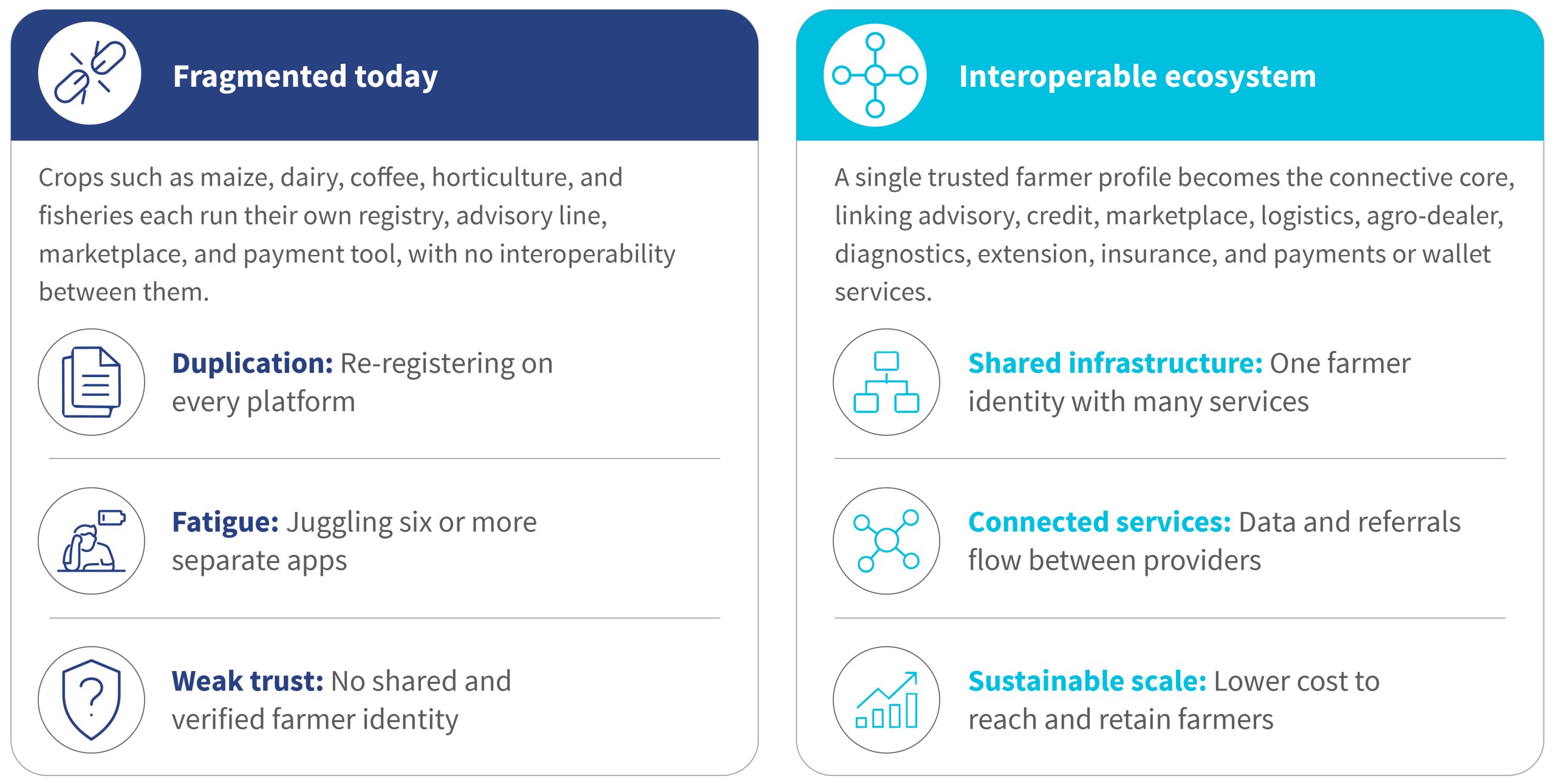
Figure 1: Fragmented apps create duplication, fatigue, and weak trust
The solution requires more than a single government-run platform. It encompasses a well-governed, interoperable ecosystem where different actors connect through shared digital infrastructure. The World Bank’s Digital Agriculture Roadmap Playbook highlights the importance of reusable, modular building blocks rather than siloed systems.
Farmers should be able to register once through a trusted digital identity or farmer registry and access advisory services, payments, insurance, credit, and markets without repeated onboarding. Shared digital foundations also allow service providers to focus on innovation and customer value rather than rebuilding parallel systems.
However, interoperability alone will not drive adoption. Digital services must also be trusted, affordable, and aligned with farmers’ realities. Tools may appear affordable during pilots because projects absorb the costs of onboarding, training, devices, and support. Farmers will pay only when the value is immediate and reliable. Seasonal payments, pay-as-you-use models, and embedded service fees may be a better fit than annual subscriptions.
Digital services also require trust, as farmers share sensitive data on land, production, and credit behavior. Adoption will remain weak unless farmers understand who controls their data, how providers use it, and what they receive in return. Trust is not optional. It is infrastructure for scale.
Governments should shape the ecosystem rather than build every application. Their role is to establish foundational digital infrastructure, set priorities, protect farmer data, enable interoperability, and create an environment for private innovation. MSC’s experience with India’s AgriStack and Bihar’s Digital Farmer Services platform demonstrates the value of trusted farmer registries, which support data systems, consent frameworks, and common standards. These foundations can create shared digital rails for multiple public and private services.
For African countries, the lesson is to invest in adaptable digital building blocks rather than replicate a specific model. These building blocks can enable diverse actors to deliver services that support food security, climate resilience, and market access.
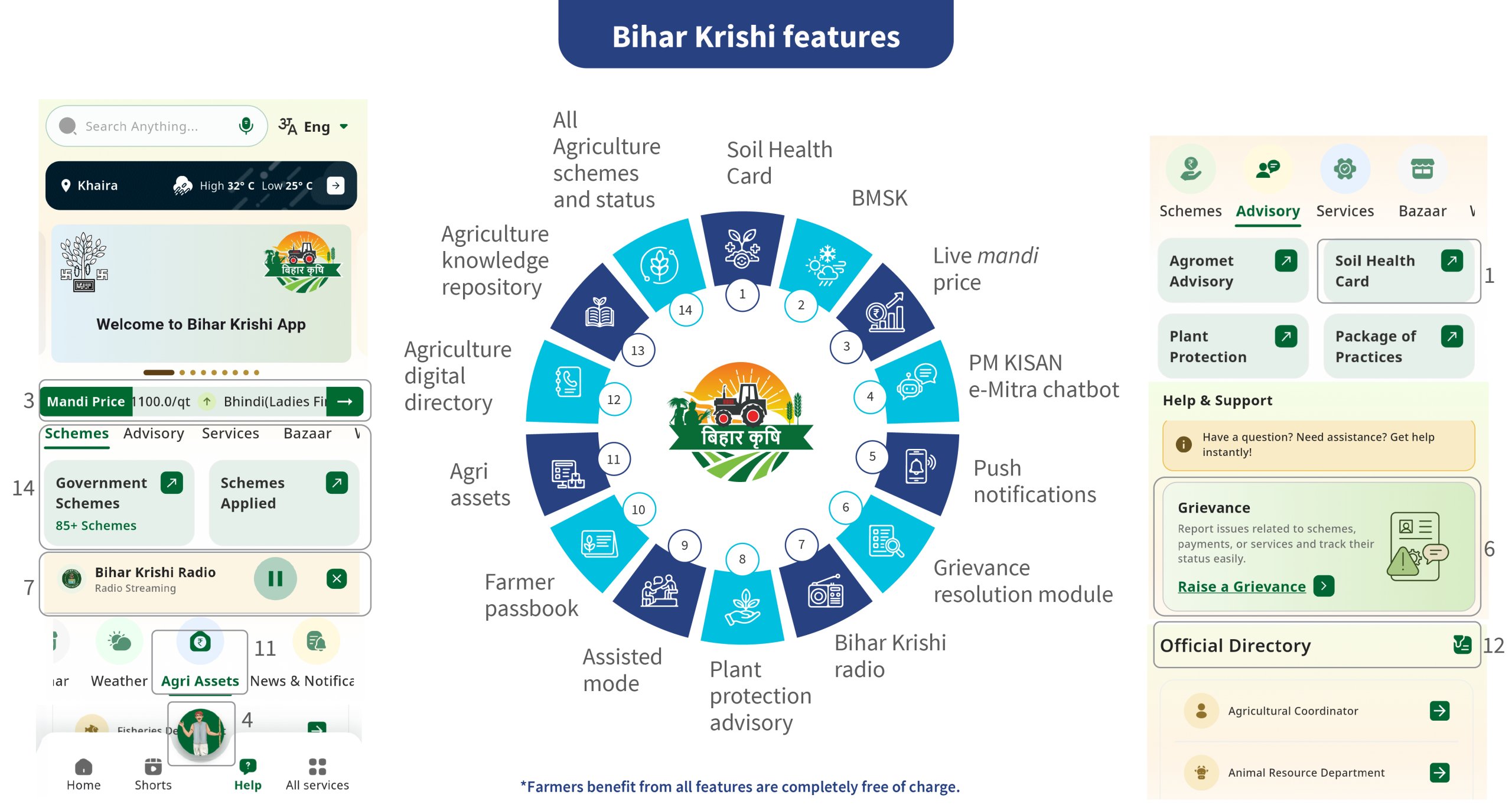
Figure 2: Bihar Krishi brings 16 integrated features into a single farmer-facing digital platform, spanning advisory, schemes, markets, grievance redressal, finance, and agricultural services.
On 19th May 2025, 14 months after its launch, the Bihar Krishi platform had 1.61 million registered farmers. Around 0.35 million monthly active users represent roughly 22% of the registered base. This data shows that engagement extends beyond initial onboarding.
Farmer use varies each quarter based on crop cycles and needs. The 22% figure, therefore, understates the platform’s broader use over time. Bihar Krishi demonstrates how government investment in shared digital foundations can unlock an open ecosystem in which public and private actors build services on top of these foundations. These services range from advisory and market services to finance and climate resilience.
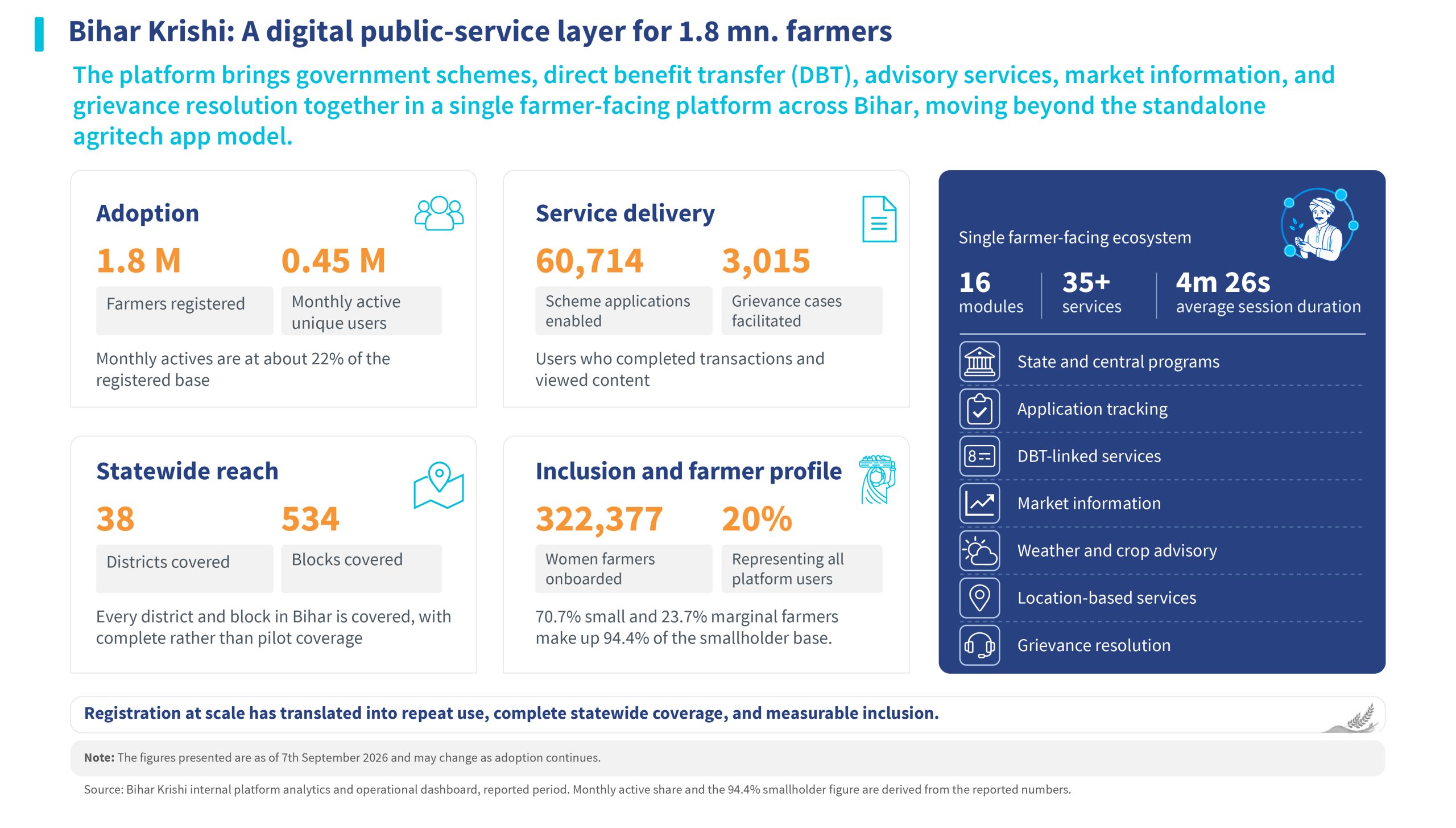
Figure 3: Bihar Krishi internal platform analytics and operational dashboard for the reported period. The monthly active share and the 94.4% smallholder figure are based on the reported numbers.
So, what needs to change? Digital agriculture must move from fragmented pilots to reusable ecosystems. Governments should invest in shared digital foundations and use open digital public goods (DPGs). They can adapt proven solutions to local priorities rather than build parallel systems from scratch. Donors should measure success through sustained usage, farmer outcomes, and long-term sustainability beyond project funding.
Technology can support agricultural transformation, but people remain central to its success. The future is human-enabled rather than digital-only. Extension officers, cooperatives, agro-dealers, and agents of financial service providers remain critical. They help farmers interpret, trust, and use digital services.
The strongest models equip trusted intermediaries with better tools to serve farmers more effectively. As a result, open, interoperable, and trusted ecosystems that turn digital access into better decisions and stronger livelihoods.
For farmers like Makiwa and farmers in Bihar, scale means more than access to digital tools. It means connected, effective, and reliable advice when decisions matter most. Interoperable systems, built on trusted digital foundations and strengthened by human intermediaries, can turn fragmented information into timely, confident decisions. Farmers need information that is relevant, timely, and trustworthy, which enables them to make informed decisions when it matters most. When digital services work together, farmers like Makiwa no longer need to navigate competing advice on their own. They gain the confidence to act, invest, and plan for the future.
Written by




Leave comments