Letters are dying. Your network isn’t.
 by Graham Wright and Maansi Sharda
- Nov 24, 2026
- 6 min
 by
 Nov 24, 2026
 6 min


This blog shows how postal operators build sustainable digital finance businesses through trusted networks and broad reach. It examines four strategic models and the capabilities that create lasting customer and business value.
How postal operators can earn again through digital finance
This is the second piece in our series on postal transformation. Our opening video showed why many postal networks are struggling and why their reach gives them a strong basis for offering financial services. Here, we look at how a Post can turn that reach and trust into a sustainable business, and where governments and development partners can help.
In 2025, Morocco’s banks closed 180 branches and opened only 29. The postal bank, Al Barid Bank, went the other way: It added new branches and now runs country’s largest network at 2,468 branches. Across many countries, commercial banks are pulling back from places that cost too much to serve, and the Post is still there. The world had 663,674 post offices in 2024, and four in five of them are rural.
Posts fill the gap between traditional branch banking and digital-first banking. They bring digital financial services to the remotest locations in an assisted model, through a trusted, local partner. This matters for customers who face barriers of distance, connectivity, documentation, digital skills, or trust.
Yet reach alone has not saved the Post, and a few financial products at the counter will not be enough. The Posts that are recovering treat digital financial services as a core business, with a clear customer proposition, accountable governance, and sustainable unit economics. The question is no longer whether to enter financial services, but which role a Post can perform credibly.
Four strategic models for postal financial services
Postal financial services sit on a spectrum. At one end, the Post distributes other providers’ services through its network. At the other, it owns and operates a full bank. The more of the customer relationship, product economics, and balance sheet a Post wants to control, the more capital, skills, governance, and regulatory standing it needs. These are options, not stages every Post must pass through.
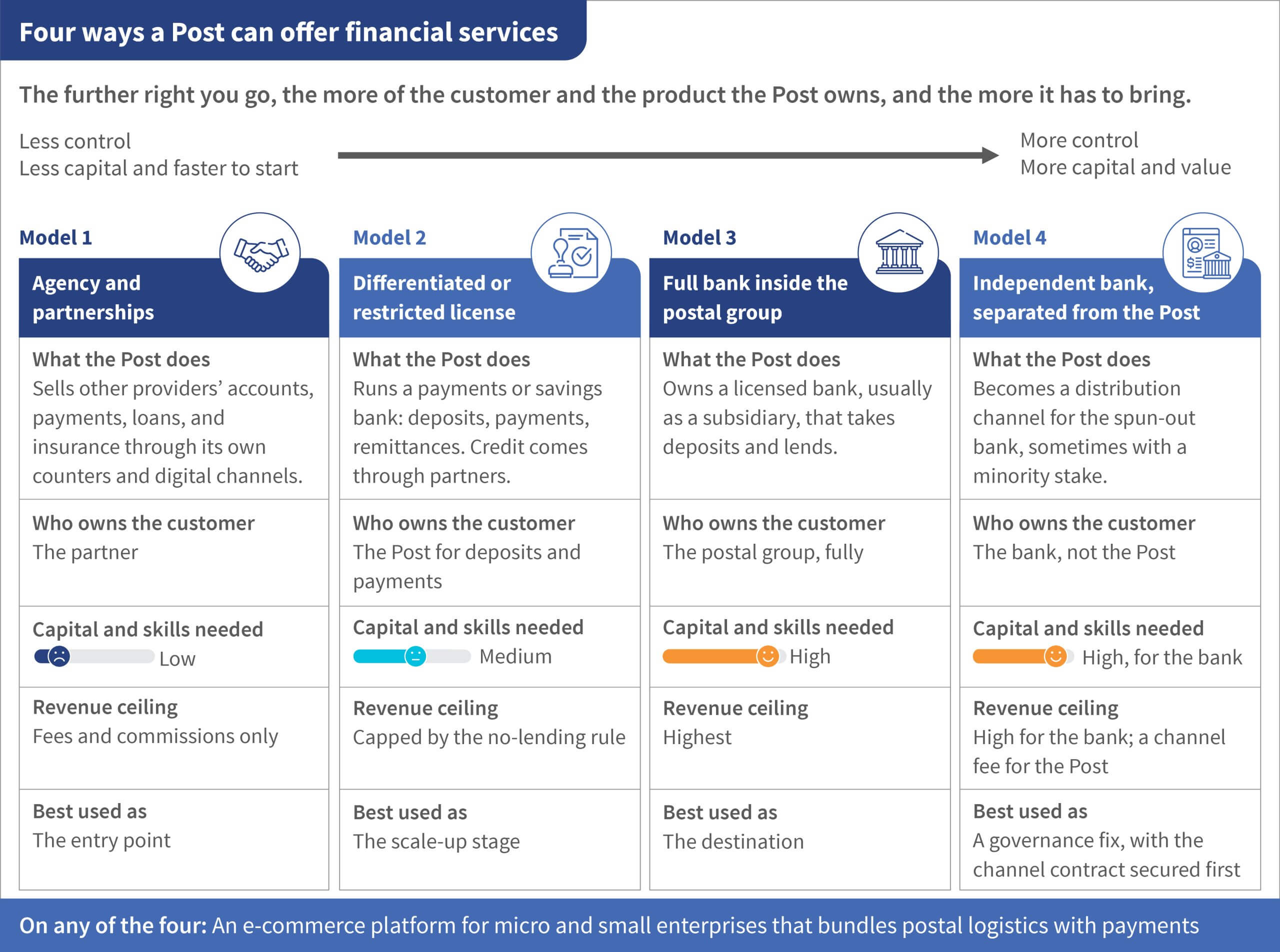
Figure 1: Four models for postal financial services
What we have learned about each model
Our work with India Post Payments Bank (IPPB) in the last six years, other postal networks, and financial service providers across Asia and Africa has taught us that the label on the model matters less than the economics underneath it. A model succeeds only when it creates value for the Post, the provider, and the customer.
Model 1: Agency: a low-risk starting point, but not always a destination
Agency is often the lowest-risk starting point. It requires little capital, uses counters and staff the Post already supports, and leaves balance-sheet risk with the partner. In Kenya, GTBank used the postal network to reach underserved areas cost-effectively, by opening 46 agency outlets inside post offices in 2025.
The risk is that the partner controls the customer relationship, data, and product economics. Posts should negotiate non-exclusive arrangements, purpose-bound data access, joint branding, service standards, and a fair revenue share. They should also consider building their own digital agency-banking or payments solution. Pos Indonesia’s PosPay platform integrates financial services with its courier business, letting enterprises on remote islands handle parcels and cash-on-delivery, on one platform.
Model 2: A differentiated license: own the customer, live on thin margins
A restricted or differentiated banking license lets a Post own deposits, payments, and customer data with less capital than a full commercial bank. Where digital public infrastructure is strong, this model can scale quickly. IPPB launched nationally in September 2018 and served 132.5 million customers by March 2026. Of these, 77% were rural, 49% of account holders were women, and 97% of accounts had been opened at the customer’s doorstep.
The limit is that a payments bank cannot lend, so its economics depend on float, fees, third-party distribution, and volume. In FY 2025–26, IPPB earned about USD 322 million in total income and a net profit of about USD 65 million, more than four times the previous year’s profit. Scale can produce a real business, but the economics of the bank and the postal network must be designed together.
A Post that cannot lend should set up referral partnerships for credit, insurance, and investments from the outset, with clear standards on customer protection, pricing, revenue share, data, and complaints.
Model 3: A full bank: the destination, not the starting point
A full bank inside the postal group captures more of the value but demands a high-level of institutional capability. Al Barid Bank reported a net profit of about USD 82 million in 2025, and it holds about a fifth of Morocco’s savings deposits. This model requires capital, independent risk and compliance functions, a commercially accountable board, and a regulator willing to supervise it as a full bank.
Model 4: Separation: good for the bank, risky for the Post
Spinning the bank out can bring stronger governance, management independence, and outside capital. Tanzania Commercial Bank (TCB), the former postal bank, moved from a loss of about USD 19 million in 2023 to a profit of about USD 12.5 million in 2024. A full commercial licence let TCB offer corporate loans, trade guarantees, foreign exchange, and capital market products that were restricted under the postal savings umbrella. Dropping the “Postal Bank” name in 2021 also shed its small-savings image, helping it attract institutional depositors, correspondent banks, and corporate clients.
The risk is that the Post loses the business without securing a durable economic role. In South Africa, the government is now Postbank’s sole shareholder, and the bank’s annual report records the discontinuation of the Post’s over-the-counter channel and cash-pay-point channel. The lesson is to lock in a long-term distribution agreement, with clear revenue sharing, before letting go of the bank.
Beyond banking: A platform for small businesses
Under any model, a Post can also build an e-commerce and merchant-services platform for micro and small enterprises. Bundling logistics and payments gives a small seller one partner for receiving orders, moving goods, and collecting payment. With customer consent and safeguards, the transaction data can help partner lenders assess cash flow. One in five Posts already runs an online marketplace, and Pos Indonesia handled 4.5 million cash-on-delivery transactions worth about USD 51 million in 2023.
Choosing the right model
The right starting point depends on network density, regulatory permissions, and available capital. For many Posts, the prudent path is to digitize the counter first, then deepen their role only if usage, economics, and customer outcomes justify it. The decision should rest on a business case, not on an assumption that every Post must become a bank.
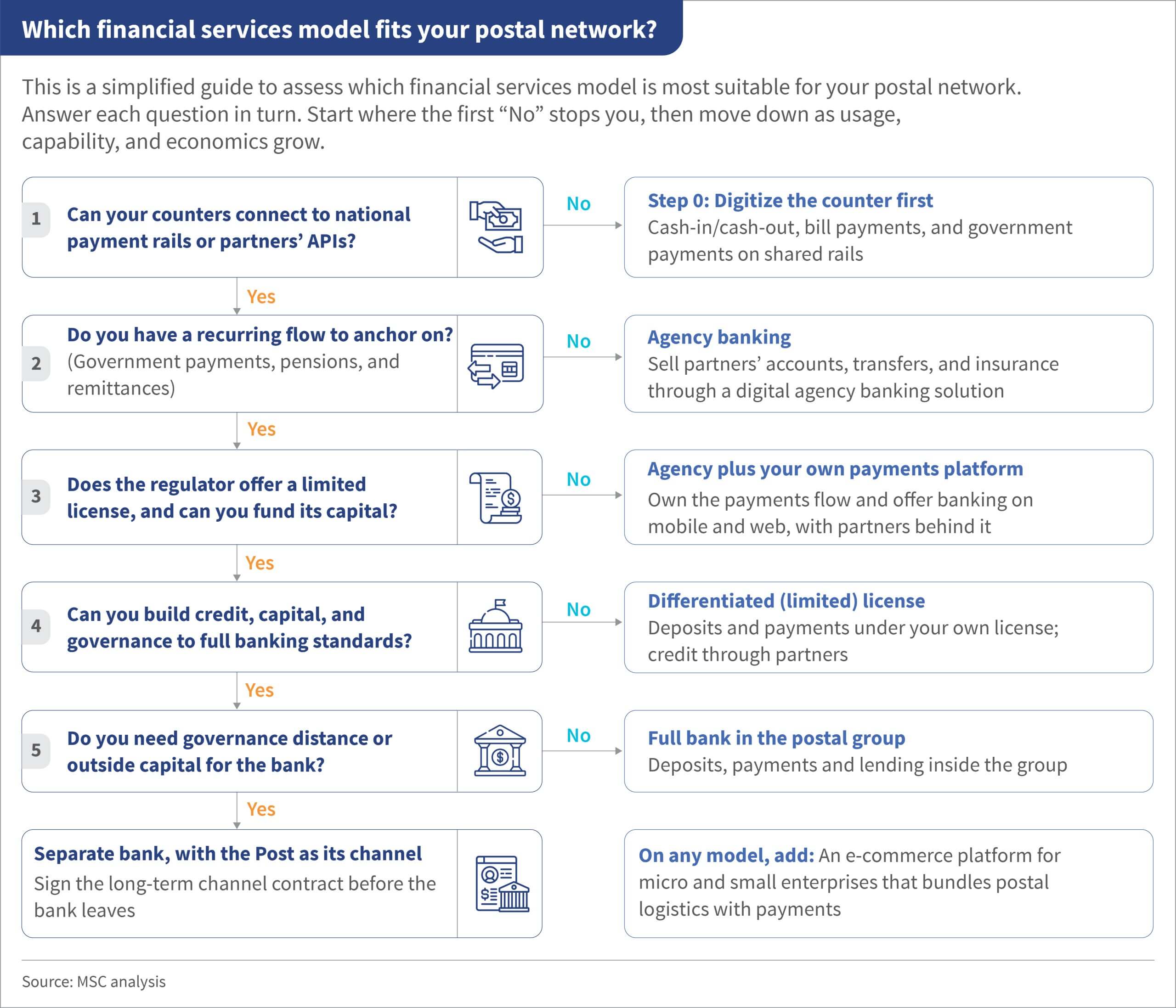
Figure 2: Which financial-services model fits your postal network?
The capabilities a Post must build
- Technology. A Post needs connections to digital public infrastructure, national ID, e-KYC, and retail payment rails, with reliable core systems, cash-in/cash-out operations, cybersecurity, and fraud monitoring. The gap is wide: In 2021, 51 of 101 Posts surveyed by UPU had no link to their national payment or settlement system.
- People. Posts must combine banking, risk, compliance, and digital skills with the trusted local staff they already have. Training has to be continuous, and incentives should reward active usage and customer service. IPPB shows the potential of postal workers as last-mile banking agents, but this requires supervision, safeguards, and fair remuneration.
- Regulatory standing. Licensing, AML/CFT, cybersecurity, data protection, agent oversight, and consumer protection require permanent capability and sound reporting, often across several regulators.
- Anchor digital use cases. Post offices often serve customers who are poorer, less educated, older, rural, or outside formal employment. Use cases should build on flows these customers already receive, with specific attention to women, people with disabilities, and microenterprises.
- Data and responsible use. Posts hold logistics, financial, and customer data, but it creates value only when digitized, used lawfully for service improvement and credit assessment, and protected.
Conclusion
Digital financial services can sustain a postal network when they are run as a core business, built around customer needs, institutional capability, and sound economics. A Post should start with the model it can govern well, anchor on recurring flows, build usage, and deepen its role only when the evidence supports it.
Development partners can help Posts move from physical access to meaningful usage. They can connect postal networks to national digital rails; design use cases for women, rural households, and micro and small enterprises; strengthen governance, risk management, and consumer protection; and test commercial models that attract private capital. The aim is to build capability, not to subsidize Posts indefinitely. Success should be measured by active usage, customer value, women’s participation, service reliability, and the network’s financial sustainability.
“The network is the asset. Digital finance is how it earns again.”
Written by

Graham Wright
Chairperson
Maansi Sharda
Senior Manager
Leave comments