A district-led model for advancing financial inclusion from the ground up
 by Madhusan Hulgi (IAS), Mimansa Khanna, Ravi Prakash Kaushal and Sushma Kaw
 Apr 21, 2026
 5 min
5 min


Interdepartmental convergence lays the foundation for joint action planning, which enables coordinated service delivery across departments. Our blog highlights how collaborative execution helps bridge top-down operational gaps and improves last-mile impact.
Shanti Devi had been waiting for her usual pension payout for the past three months. Yet, the 64-year-old widow from Kaushambi district, Uttar Pradesh, was left waiting. Her pension, however, had not stopped. Instead, the withdrawal services in her Jan Dhan account had been deactivated due to incomplete know your customer (KYC) data. No one had explained this to her.
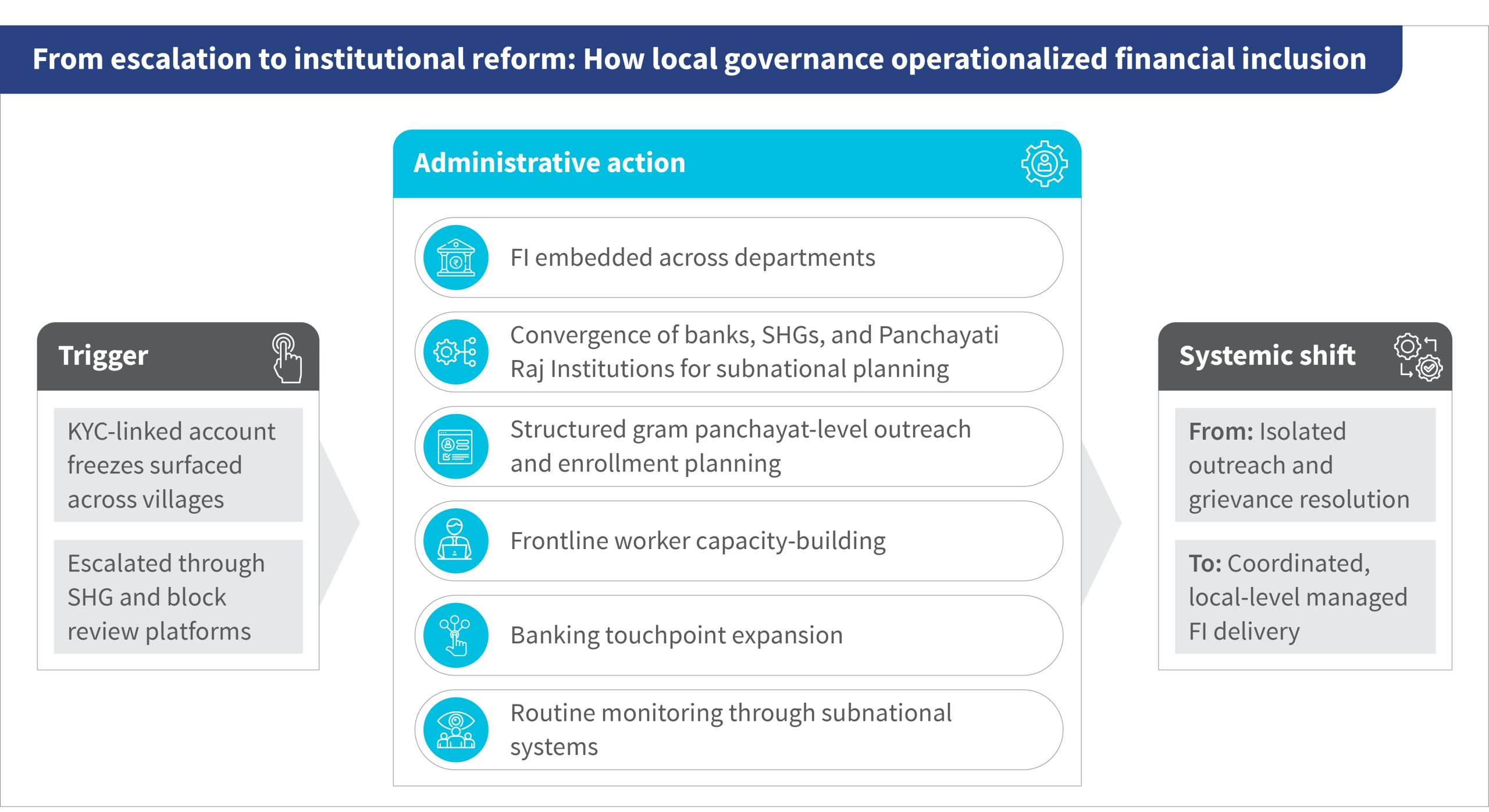
The issue surfaced only when she raised it during a self-help group (SHG) meeting, which revealed a wider pattern across villages. Shanti recalled, “I did not know something was wrong. I thought perhaps my pension had stopped, so I just gave up.” Shanti’s case was one among many that emerged across nearby villages. Community functionaries flagged this pattern during routine block-level reviews and escalated it to the district administration.

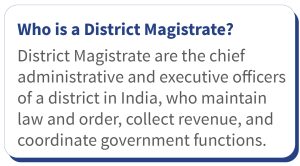 The District Magistrate (DM) of Kaushambi, Madhusudan Hulgi, reviewed these cases and found that the incomplete KYC had led to frozen bank accounts across multiple villages. He positioned financial inclusion as a district governance priority and the foundation for access to welfare, education, and livelihoods to fix this problem.
The Viksit Kaushambi Abhiyan marked a shift from fragmented efforts to a unified, district-led approach. The DM appointed a nodal officer to drive cross-departmental action. The district received technical support from MSC (MicroSave Consulting) under the NITI Aayog’s Aspirational Blocks Programme. The nodal officer embedded FI across planning and delivery systems active in the region through this support.
Based on this mandate, the district launched coordinated actions to strengthen local capacity and reach communities at the last mile. The district also drove coordinated action from the district to the village level and improved access to quality digital financial services to underserved households.
Enabling frontline workers to strengthen last-mile financial service delivery
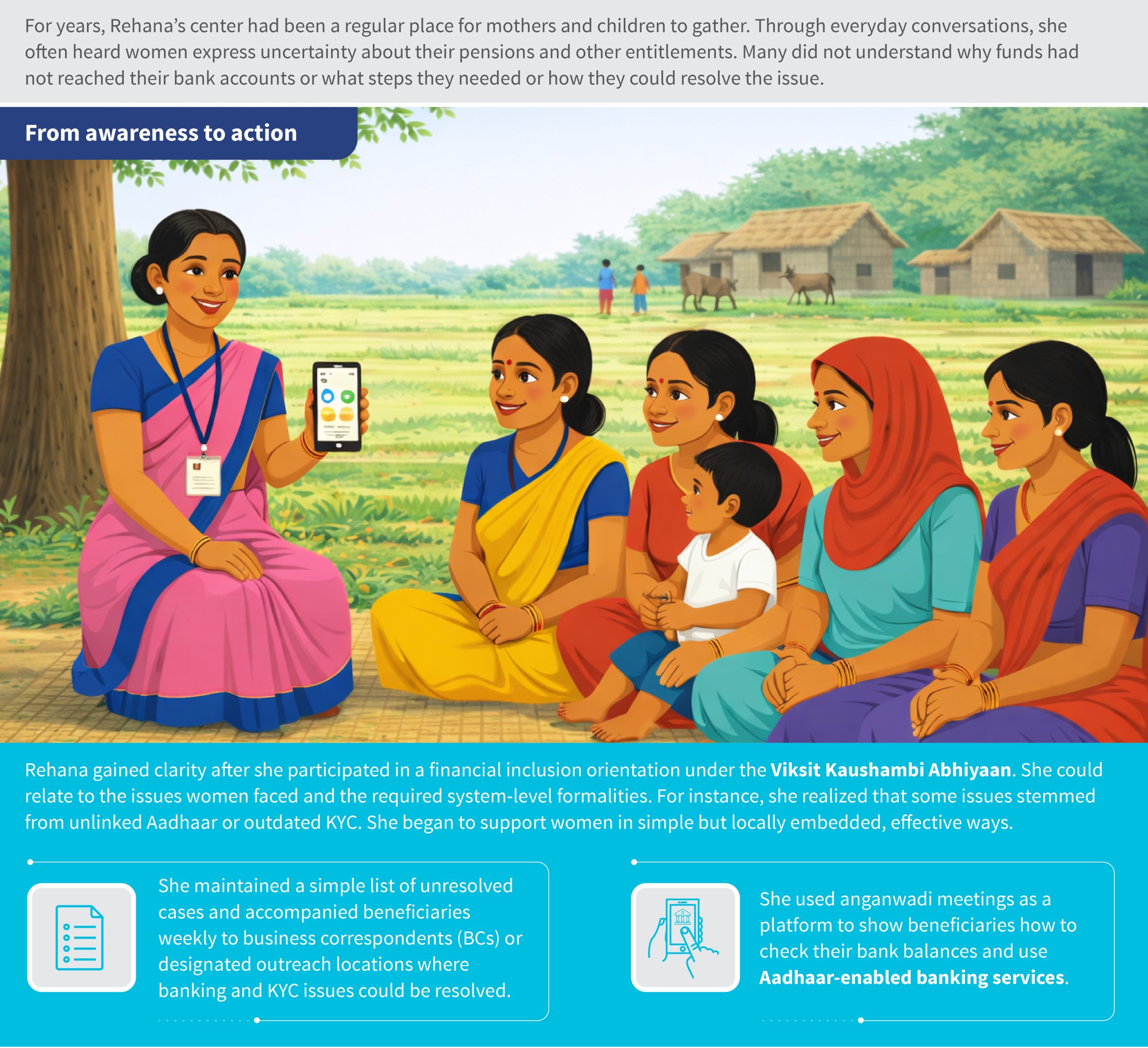
Kaushambi district bridged the last-mile gap by placing its trust in resource persons already embedded in community life. The district administration used existing frontline workers under the Viksit Kaushambi Abhiyaan, rather than create new structures. Rehana, an anganwadi worker who supports maternal and child development services, was one such example.
Rehana’s efforts show how frontline workers can strengthen service delivery when supported through capacity building and sensitization. The district administration could reach households that had quietly fallen out of the system through existing frontline networks. This included building their understanding of schemes and guiding people on using digital payments.
Design and execute a structured village-level financial inclusion campaign
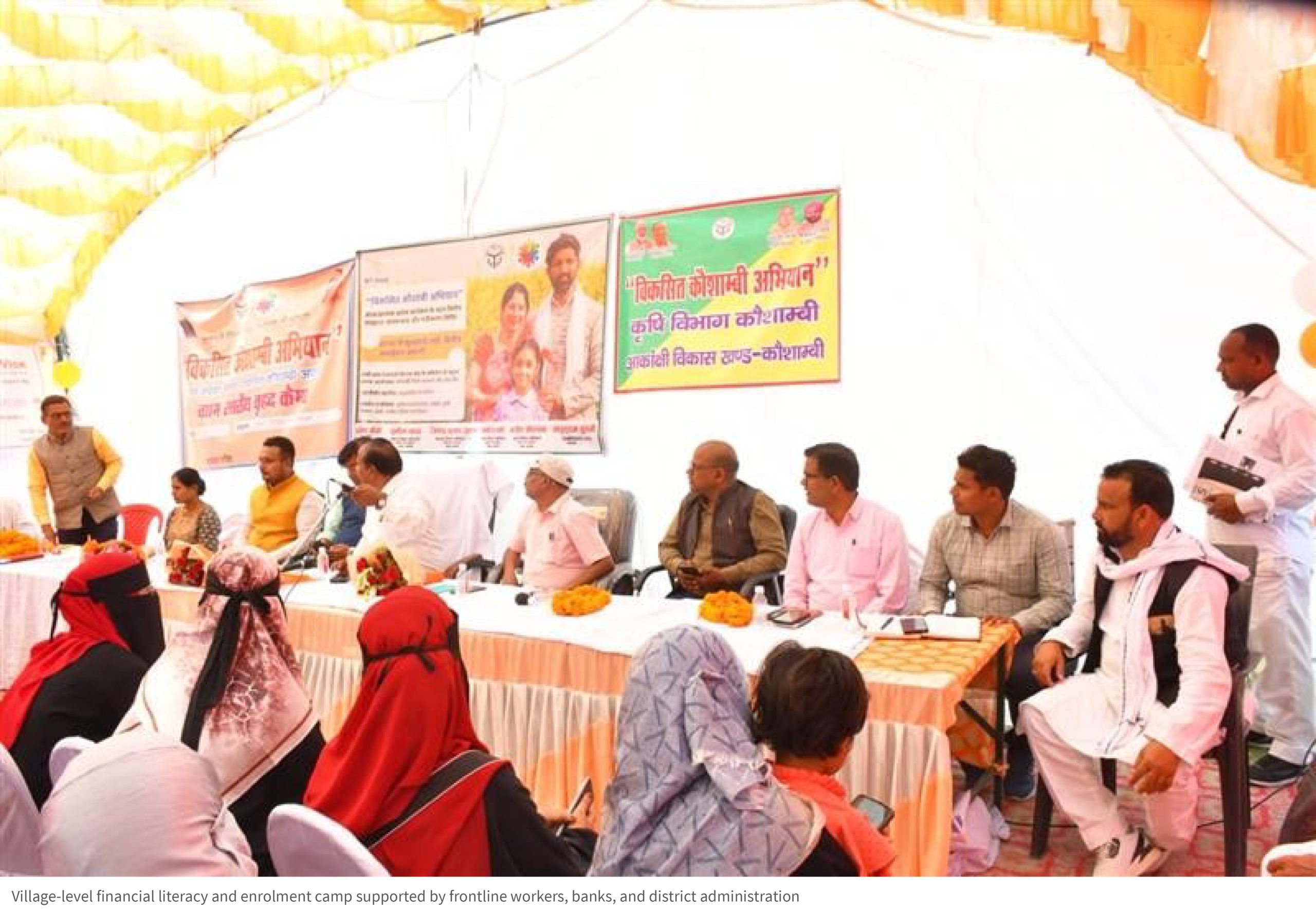
The district administration launched a structured financial literacy and enrolment campaign across Manjhanpur and Kaushambi aspirational blocks in coordination with local banks and the Lead District Manager (LDM). At the core of the campaign was a dedicated camp planner to ensure complete gram panchayat coverage rather than sporadic outreach. The planner mapped villages, sequencing door-to-door mobilization with village-level camps over a two-month period, and clearly assigned roles to banks, frontline workers, and district teams to avoid overlaps and gaps.
SHG accredited social health activists (ASHAs) and local champions, such as Rehana, who conducted outreach in familiar settings and supported beneficiaries through enrolment and follow-up. This structured approach ensured that awareness and enrolment were delivered systematically at the gram panchayat level, rather than as stand-alone activities. The LDM played a catalytic role by aligning banks to the camp calendar, which ensured staff availability and prioritized key products, such as savings, insurance, and digital transactions. This alignment transformed isolated banking efforts into a coordinated, district-wide campaign anchored in the district’s broader financial inclusion vision.
As a result, the campaign directly engaged more than 15,000 residents through village camps, group meetings, and household visits, while district-wide Information, Education and Communication (IEC) efforts extended awareness to an estimated 400,000 people. Beyond awareness, the gram panchayat-saturated approach translated into measurable uptake.
During the campaign period, the district recorded 44,000 new Pradhan Mantri Jeevan Jyoti Bima Yojana (PMJJBY) enrolments, 129,000 Pradhan Mantri Suraksha Bima Yojana (PMSBY) enrolments, and 35,000 Atal Pension Yojana (APY) enrolments, largely driven through village-level camps and SHG-led facilitation. In addition, 856,762 bank accounts were Aadhaar-seeded, which strengthened beneficiaries’ ability to receive Direct Benefit Transfer (DBT) and access services seamlessly. Banks also reported higher first-time transaction activity during this period, indicating increased engagement with formal financial services.
Increase village-level banking access through targeted touchpoint expansion
The district administration shifted its focus to improve last-mile access as awareness and demand for financial services increased. In coordination with banks, business correspondent (BC) agents, and postal banking services, the district administration expanded and revitalized inactive outlets. Priority went to underserved gram panchayats with limited or non-functional banking touchpoints, where residents had to travel long distances for basic transactions. These efforts strengthened local access to essential banking services and made routine transactions more convenient and affordable.
As a result, the number of banking touchpoints increased by 62%, from 415 to 674, between March 2024 and September 2025. This substantially expanded access to nearby banking services for residents in remote and underserved areas. The DM’s office regularly monitored and reviewed progress through direct leadership oversight, enabling timely course correction while ensuring steady implementation within routine administrative processes.
Frontline workers as a channel for gender-sensitive service delivery
A key element of Kaushambi district’s financial inclusion strategy was to strengthen the communication and engagement skills of frontline workers who interact most closely with women and vulnerable households. The district administration trained more than 84 frontline workers and officials across rural development, health, women and child development, education, and Panchayati Raj departments, focusing on gender-sensitive communication, trust-building, and practical facilitation skills needed to support access to financial and welfare services.
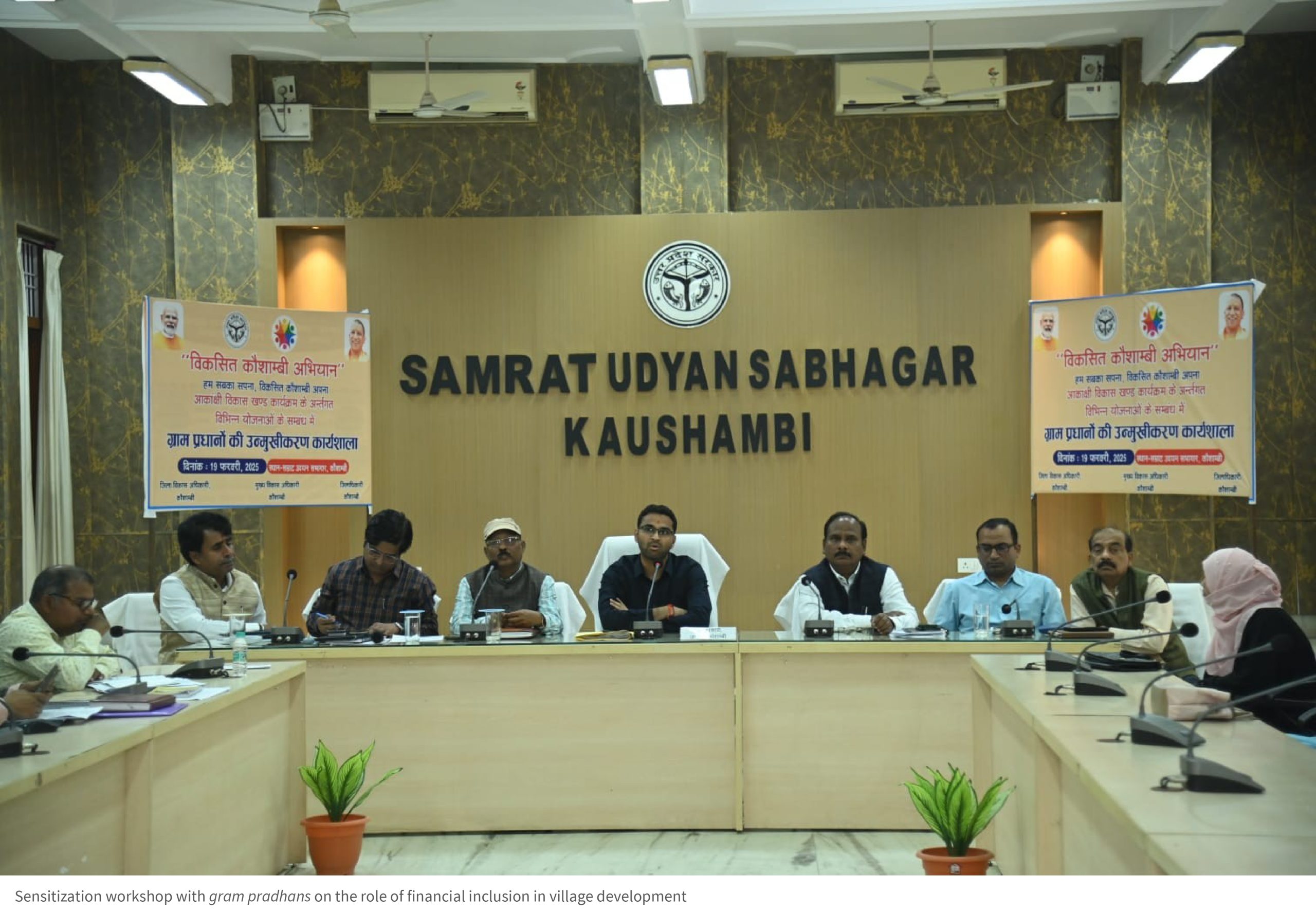
In parallel, the LDM sensitized and oriented more than 100 Gram Pradhans, or the elected heads of a village council, on the importance of financial inclusion. These village heads were encouraged to discuss banking and savings at village-level meetings to help resolve local banking issues and include financial inclusion targets in their village development plans. This buy-in from the local leadership ensured that the push for financial literacy and access was not seen as a standalone campaign from “outside,” but rather as an integrated part of each village’s own development journey.
Way forward
Kaushambi’s experience suggests that financial inclusion outcomes improve when managed through routine district processes rather than driven by one-time, short-term campaigns. Accountable delivery systems with clear task allocation, regular reviews, and follow-up at block and gram panchayat levels helped address access gaps more consistently. Sustaining gains will also require continued focus on how people use services, especially women and households in remote areas. Assisted support through frontline workers and familiar community platforms can help ensure that expanded access gradually translates into regular and confident use of financial services.
For other districts, the priority is to institutionalize regular tracking within existing systems. Existing block and district review forums can be used to regularly review banking access, basic usage indicators, such as active accounts or transaction activity, and recurring service gaps. Simple dashboards can use block- and gram panchayat -level data to help officials identify where access has expanded, but usage remains low, and prioritize follow-up with banks and frontline staff.
Through such measures, financial inclusion can reach the doorsteps of people like Shanti Devi, who need it most to build a better life for themselves across India’s far corners.
Written by

Madhusan Hulgi (IAS)
Indian Administrative Service (IAS)
Mimansa Khanna
Senior Manager
Ravi Prakash Kaushal
Development consultant
Sushma Kaw
Manager
Leave comments