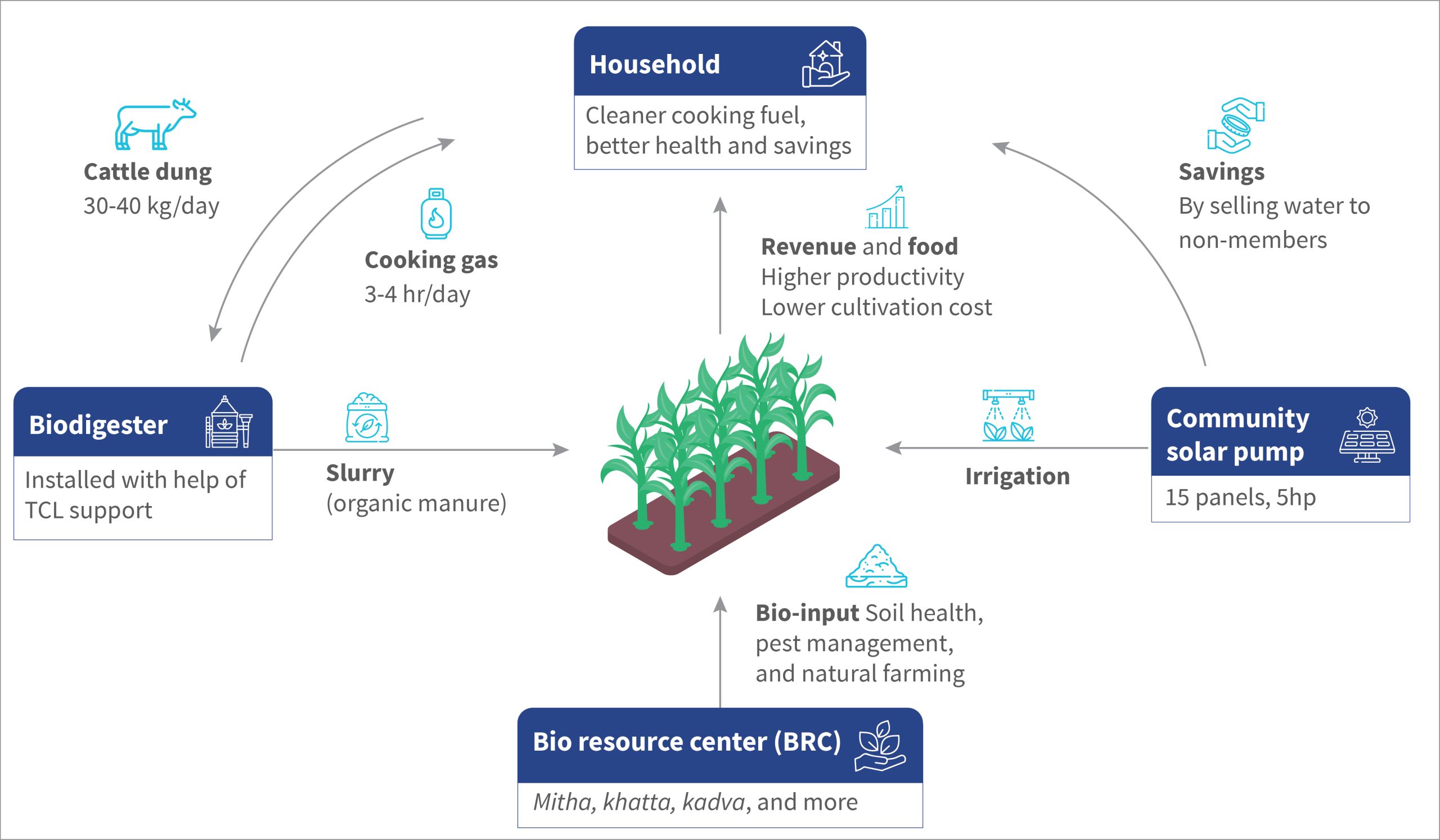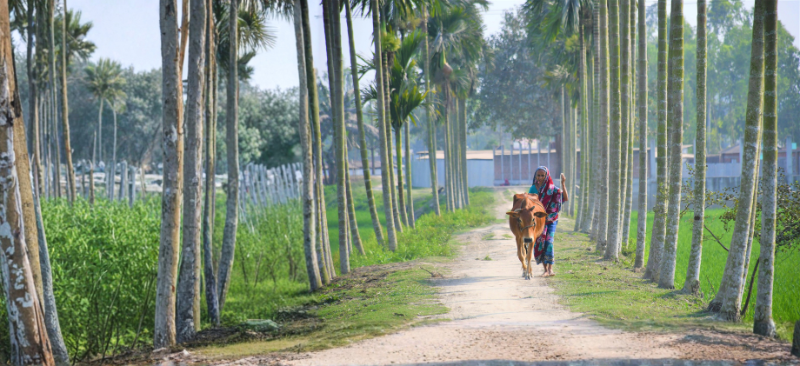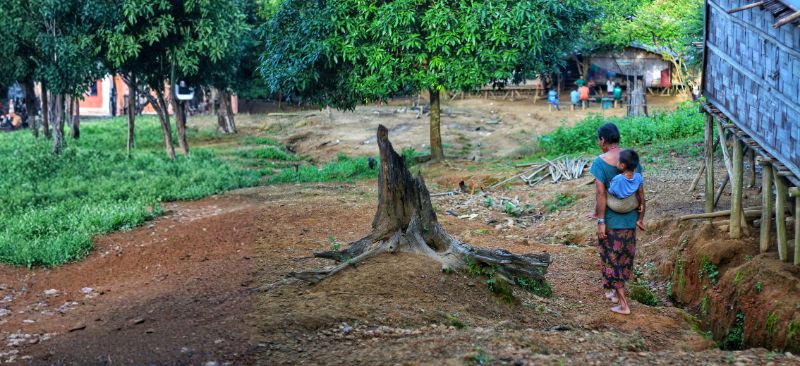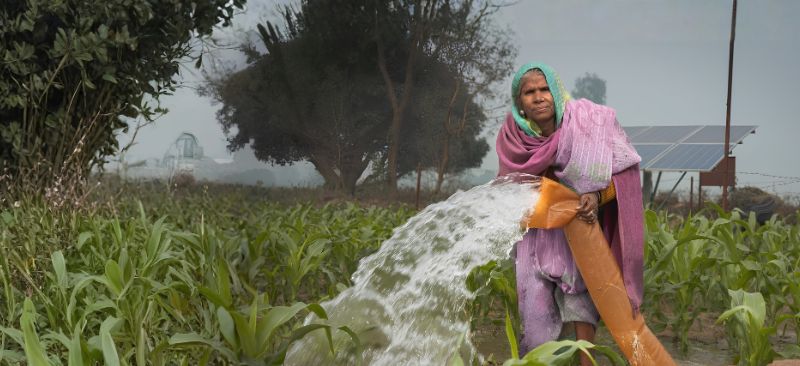
In Bahraich, Uttar Pradesh, a solar irrigation pump is doing more than lowering diesel use. Managed by the Ekta women’s group in Mohanpur Mafi, it helps farmers irrigate more reliably, cultivate across more seasons, and sell irrigation water to nearby farmers when local demand within the group falls. A household biodigester adds another layer to the rural economy. It converts cattle dung into cooking gas and returns slurry to farms as an organic input. At the bio resource center (BRC), women associated with the Udyami Mahila Producer Company Ltd. (UMPCL), a farmer producer company (FPC), produce bio-inputs that offer farmers a lower-cost pathway to soil health management, pest control, and natural farming, with institutional support from the Trust Community Livelihoods (TCL).
The TCL model works because it connects energy, water, soil, livestock waste, and women-led institutions within one livelihood system. For practitioners who work in decentralized renewable energy and regenerative agriculture, Bahraich raises an important question.How can rural livelihood assets across energy, water, and regenerative agriculture move beyond supported pilots and become locally governed service systems that create recurring value for farmers?
Many rural energy programs focus primarily on assets, such as pumps, biodigesters, solar panels, or clean cooking units. In Bahraich, the model builds an ecosystem around these assets to support local economic development in agriculture.
This blog examines three priority assets and how communities use, pay for, maintain, and convert them into recurring value.
1. Renewable energy as community-managed infrastructure
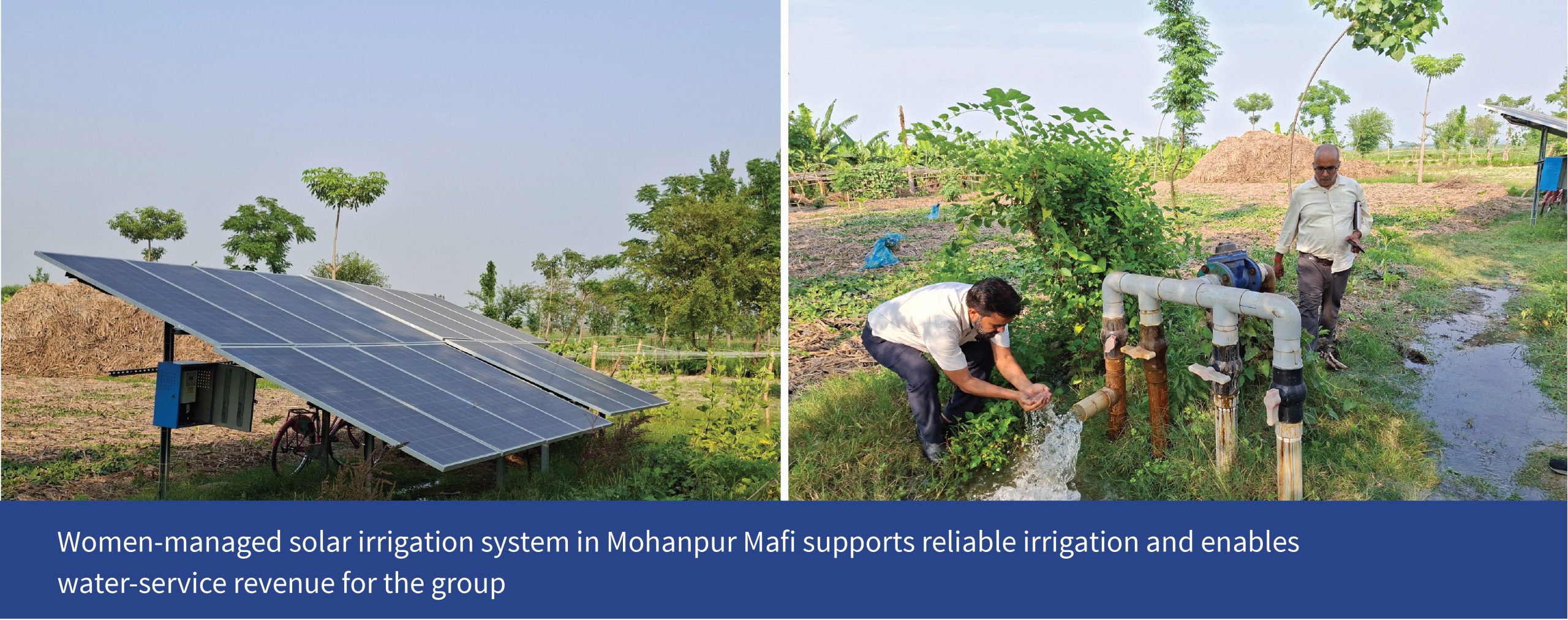
The solar irrigation system in Mohanpur Mafi offers a strong lesson in service delivery. The system includes 15 solar panels and a 5 horsepower (hp) pump. It currently irrigates about 12.5 acres and can potentially serve 20 acres, along with nearby farmers.
The women-led group manages water distribution, payment collection, recordkeeping, and group savings. As a result, the system functions as a community-managed service model, rather than a simple diesel replacement. The immediate gain is lower diesel dependence. The deeper benefit is a shift in cultivation practices. Reliable irrigation allows farmers to cultivate crops during the Kharif, Rabi, and Zaid seasons. These seasons correspond to the monsoon, winter, and short summer cropping periods.
Before the solar irrigation system, diesel costs and supply uncertainty made Zaid cultivation difficult for many farmers. The system changes the cropping calendar by providing water when farmers need it.
Group members pay a reported USD 0.026 or INR 2.5 per unit of water, while non-members pay a reported USD 0.031 or INR 3 per unit. The group deposits the revenue into its savings account. The pump supports crop production, generates local revenue, and strengthens community ownership.
The shift in this approach matters because the scale of decentralized renewable energy depends on ownership, pricing, maintenance, and recurring user value. During non-irrigation periods, communities can assess productive uses, such as flour milling or local processing. Any expansion, however, requires clear demand, load requirements, pricing, and maintenance arrangements.
This aligns with broader evidence that solar irrigation can reduce energy costs and improve farm productivity. Bahraich’s sharper lesson, though, is the women-managed service model built around the pump.
2. Biodigesters and the household-farm loop
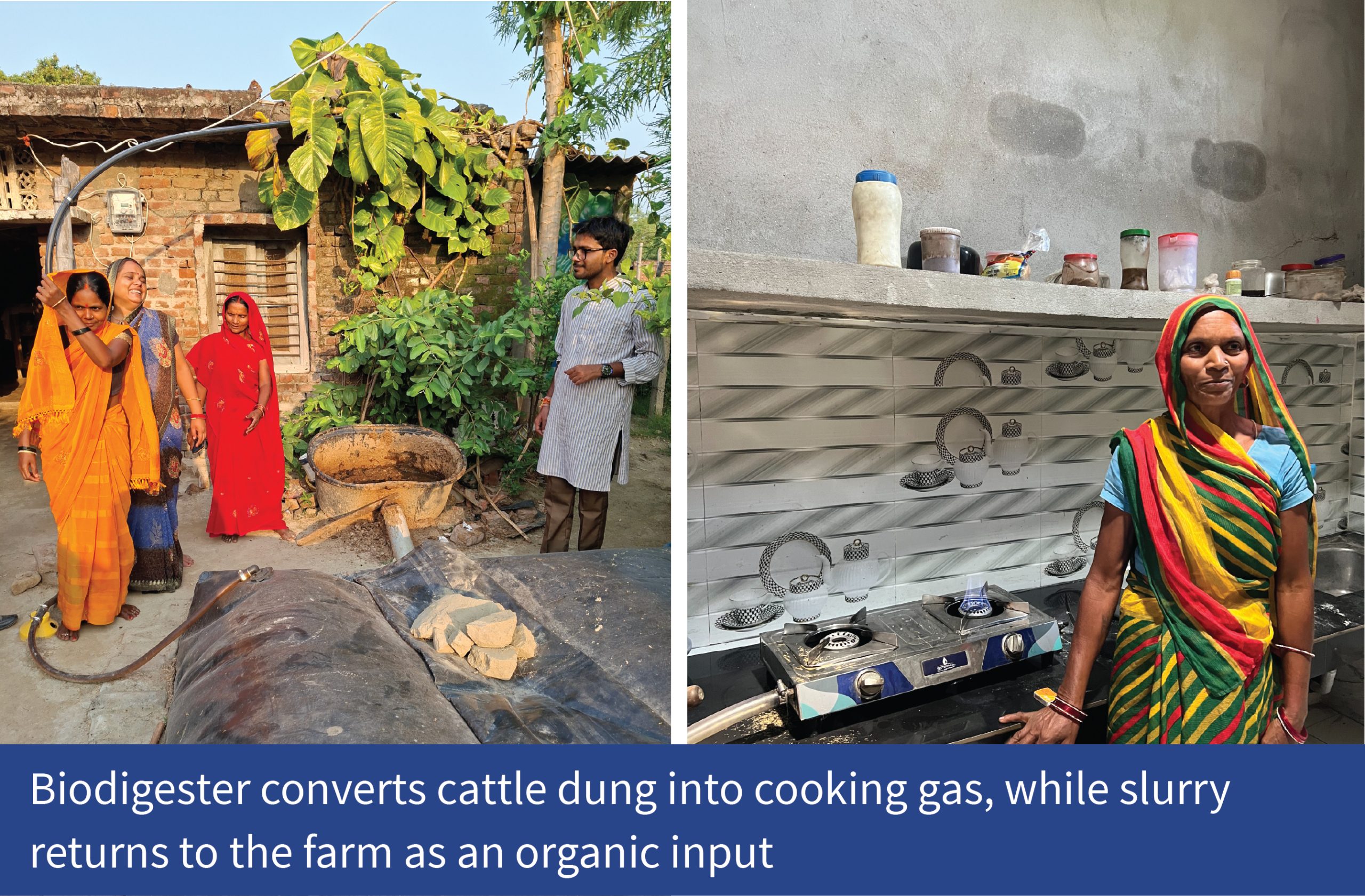
The biodigester represents the household-level component of the model. It operates within the household economy and depends on livestock ownership, daily dung availability, cooking needs, and the household’s ability to use slurry on farms. The household that the authors visited during the field visit reported that the biodigester provides about three hours of cooking gas each day in normal conditions. The model requires two buffaloes or three cows, with a daily dung output of 30–40 kg.
Before adopting biogas, the household reportedly spent about USD 125 or INR 12,000 each year on liquefied petroleum gas (LPG). The family also relied on firewood and cow-dung cakes. The benefit is, therefore, reduced fuel dependence, rather than full replacement of all cooking fuel across all seasons.
Gas production declines during winter because lower temperatures slow digestion. Hence, households may require backup cooking options.
Veena Devi, a resident and user of the biodigester in Bhraich, reported that the biodigester reduced the need to make dung cakes and collect firewood. It also simplified cooking and kept utensils cleaner. The household applies slurry from the biodigester to fields, particularly during plowing. Farmers can also use the slurry to prepare bio-inputs.
This finding aligns with broader evidence from India that household biogas can reduce women’s fuel-collection burden while producing digestate that supports crop nutrition. The biodigester also connects directly to the regenerative agriculture component of the model. Household livestock waste becomes cooking fuel, and slurry returns nutrients to the farm system.
3.The BRC as a community bio-input system
The BRC anchors the regenerative agriculture component of the model. Women produce bio-inputs, conduct demonstrations, and support producer structures that connect products with local demand. The center produces products that address practical farm needs. Mitha supports crop growth, khatta supports disease management, and kadva helps control pests. Farmers use these products on cereals, vegetables, spices, and high-value crops.
Field discussions suggest a significant cost advantage. Chemical inputs for a typical farm size of 0.2 acres may cost about USD 21 or INR 2,000. Bio-inputs from the BRC may cost approximately USD 2–3 or INR 200–300 for the same area, based on crop requirements and field conditions.
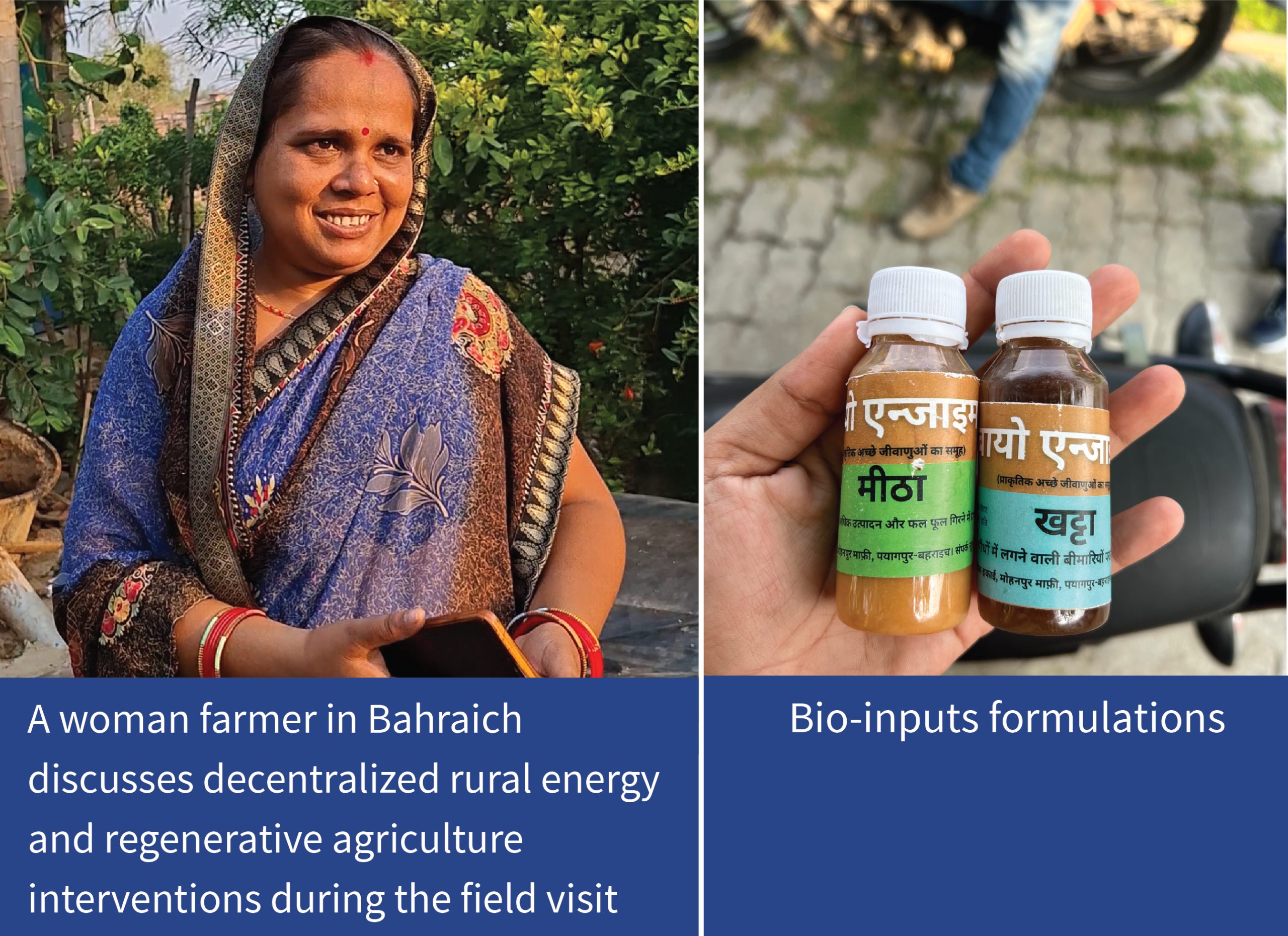
Adoption spreads through demonstrations, peer learning, TCL awareness sessions, and visible crop performance. The BRC therefore supports a local system in which women produce inputs, demonstrations build farmer confidence, and producer structures bring products closer to users. The center also connects directly to the decentralized renewable energy interventions. Solar irrigation improves water availability for more intensive cultivation. At the same time, BRC inputs help farmers manage soil health and input costs.
The key lesson from the TCL Bahraich model is that assets are only the starting point. The surrounding system turns energy, water, soil nutrients, and women-led institutions into recurring economic value. The TCL and MSC (MicroSave Consulting) now seek ways to translate this experience into an investable pathway for decentralized renewable energy, regenerative agriculture, and rural income growth.