This policy explores how collaborative lending can help Regional Rural Banks (RRBs) strengthen their role in financing rural micro, small, and medium enterprises (MSMEs). It focuses on how partnerships can combine RRBs’ regional presence and customer relationships with complementary capabilities from other lending institutions. The report highlights how such collaboration can support wider and more effective access to formal finance for rural businesses, while strengthening RRBs’ capacity to diversify their portfolios and deepen their engagement with the rural MSME segment.
Blog
Co-lending in India: Tracing the evolution of a collaborative lending framework
This policy brief examines the evolution of India’s co-lending framework from a priority-sector mechanism to a standardized model for collaborative credit delivery. It traces key Reserve Bank of India (RBI) milestones from the 2018 co-origination guidelines and 2020 co-lending model to the 2025 Directions. The brief examines changes in eligibility, risk-sharing, governance, customer protection, and operational processes. It highlights how the framework can expand credit access for underserved borrowers while balancing innovation with prudential oversight.
Beyond LPG access: Has the LPG ecosystem reached an inflection point?
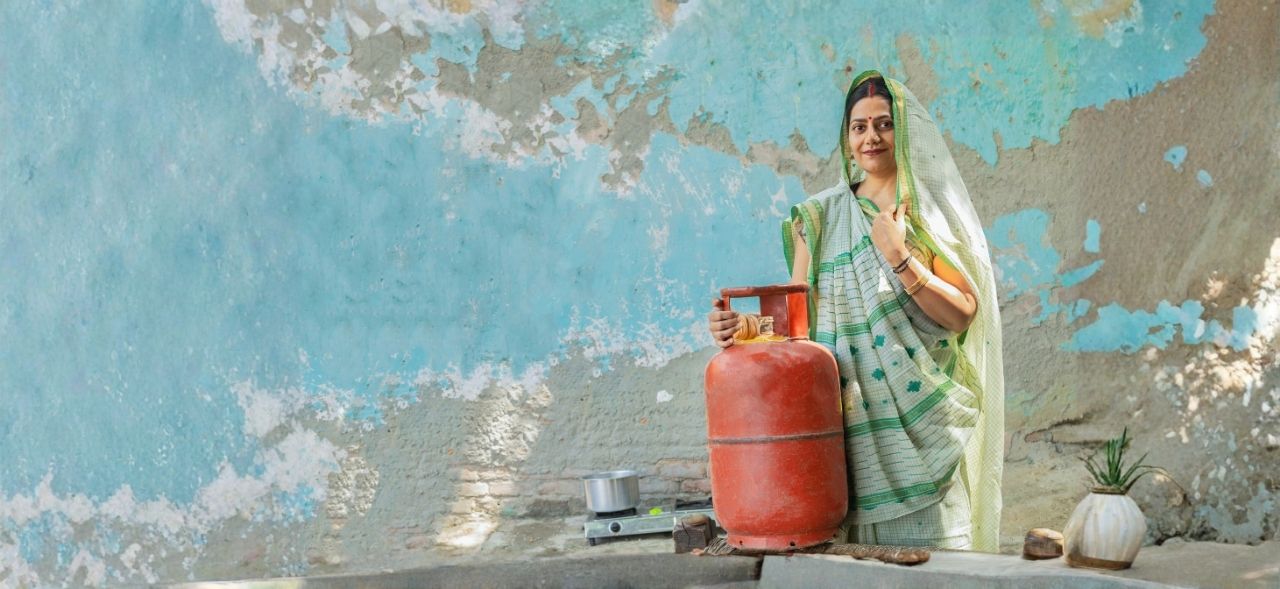
It is just after sunrise when Sarita begins her day. Breakfast is on the stove, lunch boxes need packing, and three school-going children must get ready for the day ahead. A liquefied petroleum gas (LPG) connection has made these mornings easier. She no longer spends hours collecting firewood, and cooking no longer means breathing smoke in a cramped kitchen.
Yet the LPG cylinder in her kitchen has not eliminated uncertainty. Will the refill arrive on time? Has the booking gone through? If a delivery is delayed, how long will she have to wait? For Sarita, as for millions of Indian households, access to clean cooking fuel was a major milestone, but it was only the first step.
Through initiatives such as PAHAL, GiveItUp, and the Pradhan Mantri Ujjwala Yojana (PMUY), LPG connections grew from 145 million in 2014 to nearly 330 million today. This expansion has transformed millions of kitchens across India, making cooking cleaner, safer, and more convenient.
Women spend less time collecting firewood, indoor pollution has declined, and cooking has become safer and more convenient. However, as India’s LPG ecosystem has expanded, a new question has emerged: has access translated into a seamless experience for all stakeholders across the value chain?
The economics of sustained LPG use remain challenging. Each refill costs nearly INR 900 (USD 9.5) upfront. As a PMUY beneficiary, Sarita receives the subsidy directly in her bank account. However, she often struggles to arrange the full amount at the time of purchase because her household depends on uncertain daily wages.
As a result, she learned to make each cylinder last as long as possible. She cooks at a lower heat, prepares fewer dishes at a time, and postpones refills whenever possible. Like many households, she keeps firewood as a backup because it remains a reliable option when she cannot refill her LPG cylinder.
The contrast reflects one of the biggest hurdles in India’s clean cooking transition. Although access to LPG has expanded rapidly, sustained and exclusive use remains irregular. PMUY households refill only 3.9 cylinders on average each year, compared with 6.5 cylinders among non-PMUY households. This suggests that many families continue to rely on traditional fuels alongside LPG.
One morning, Sarita’s cylinder unexpectedly ran out of gas while she was cooking. Such incidents were not unusual. What frustrated her most was the sudden shortage and her inability to know when the cylinder would run out. She relied on experience and guesswork, as she sometimes lifted and shook the cylinder to estimate how much gas remained and how many days it would last. Until the replacement cylinder arrived, she returned to cooking with traditional firewood.
This uncertainty is not limited to households. Distributors learn about refill demand only after consumers place orders, which gives them limited visibility into future demand. As a result, cylinder deliveries remain reactive rather than proactive. This creates unpredictable wait times for consumers and operational inefficiencies for distributors.
When the replacement cylinder eventually arrived, Sarita saw another side of the same problem. For LPG distributors and delivery personnel, daily demand can fluctuate significantly. Some days require only a few deliveries. On other days, the number of orders exceeds what the available workforce can comfortably fulfill. LPG agencies struggle to optimize delivery routes, deploy their workforce efficiently, and forecast refill requirements without reliable insights into household consumption patterns.
The domino effect extends across the supply chain. Consumers face delayed deliveries, distributors incur higher logistics costs, and oil marketing companies (OMCs) face challenges with demand forecasting and inventory planning.
What appears to be a minor inconvenience in a household kitchen forms part of a much larger operational challenge.
While waiting for her refill, Sarita discovered another obstacle that affects LPG availability. The large price difference between subsidized and commercial cylinders creates incentives for diversion. Domestic LPG costs around USD 0.7 (INR 65) per kg, while commercial LPG costs around USD 1.7 (INR 167) per kg. Small-scale commercial establishments often prefer subsidized domestic cylinders because they cost substantially less than commercial cylinders. This practice may reduce operating costs for businesses, but it also puts greater pressure on domestic supplies and can lengthen waiting periods for households.
This challenge has long concerned policymakers. Once cylinders leave the bottling plant and enter the last-mile distribution network, visibility into their end use declines. This limited visibility makes it difficult to detect diversion, track consumption, and ensure that subsidized cylinders reach their intended beneficiaries.
Consumer confidence in the LPG system depends on more than affordability and availability. Many households remain unsure whether their cylinders contain the full quantity of gas they paid for. However, households have limited practical ways to verify the quantity. Safety awareness around LPG has also improved over the years, but households still rely on periodic inspections and personal vigilance to detect gas leaks or faulty regulators. These concerns can weaken consumers confidence in the LPG ecosystem. They can also encourage households to keep traditional fuels as a backup and limit their reliance on LPG.
Each of Sarita’s experiences may appear disconnected when viewed separately. A high upfront payment creates affordability challenges. Sudden LPG shortages disrupt cooking routines. Unpredictable delivery schedules create difficulties for consumers. Demand fluctuations make distribution planning more complex. Diversion creates supply chain inefficiencies. Limited visibility into end use affects subsidy targeting and market oversight. Safety concerns weaken consumer confidence. Together, these challenges reveal a much larger issue.
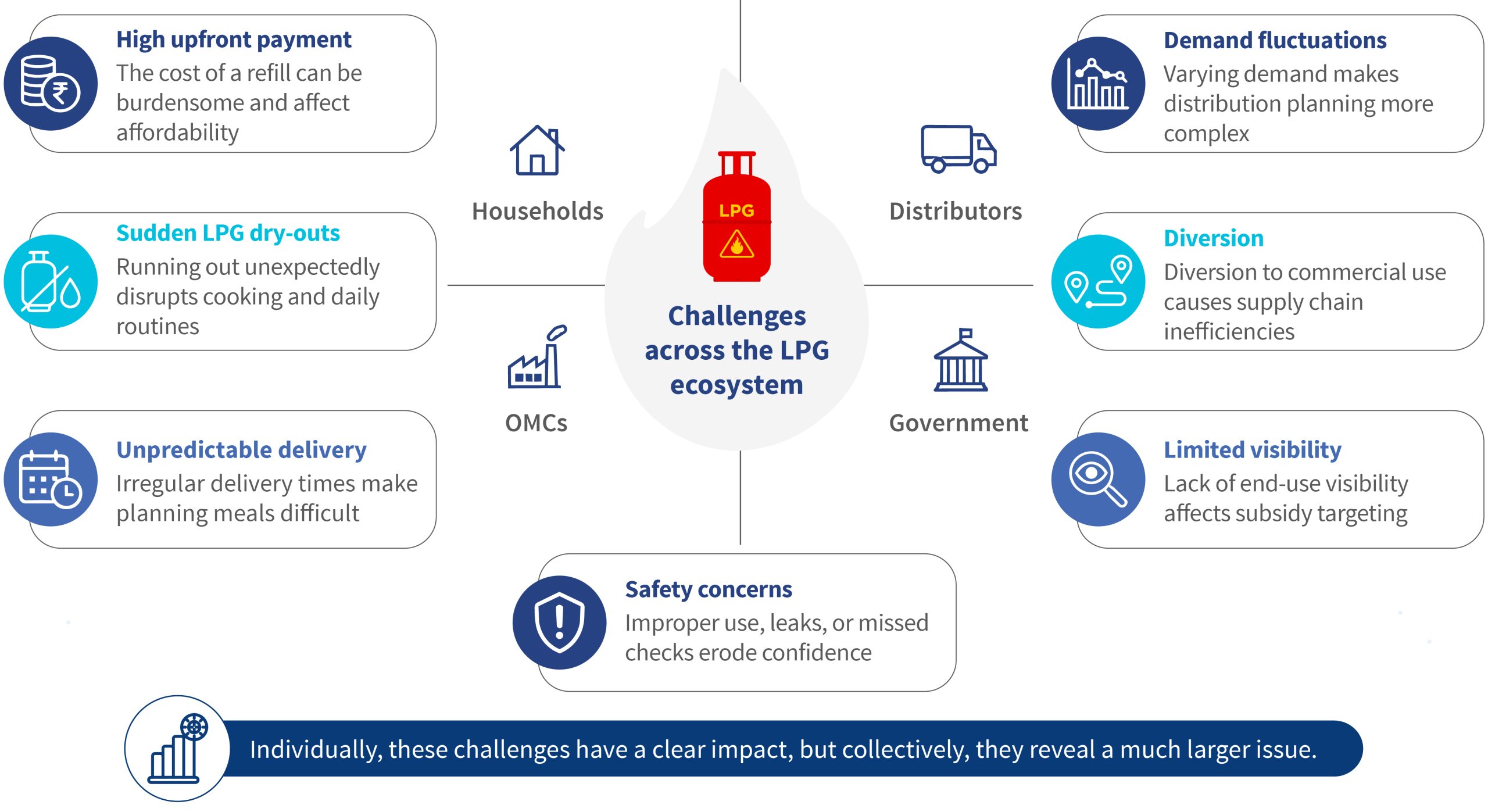
Figure 1: Challenges faced by various stakeholders in the LPG value chain
Each stakeholder in the LPG value chain faces distinct challenges. However, most of these issues stem from one common problem: a lack of real-time visibility across the LPG supply chain, particularly at the last mile. Consumers have limited information about their consumption. Distributors have limited visibility into future demand. OMCs lack insight into consumption trends after cylinders leave bottling plants. Governments have limited visibility into the end use of subsidized LPG.
Although India’s LPG landscape has evolved and expanded in recent years, most stakeholders still rely on limited data and make reactive decisions.
India’s LPG reforms have addressed access for almost every household in the country. The next phase of this journey requires a different approach. The focus now needs to shift from expanding access to improving the ecosystem for all stakeholders across the value chain. As the LPG network expands and global energy markets become more volatile, transparency, responsiveness, and resilience across the value chain become essential.
Sarita’s story, therefore, reflects more than the experience of one household in India. It reflects the experiences of millions of households, distributors, delivery personnel, OMCs, and policymakers across the same ecosystem.
The question is no longer whether India can deliver LPG to households. The question is whether the system can become smarter and more responsive.
In the second blog of this series, we explore how digital reforms can address these structural barriers. We also examine why the next chapter of India’s clean cooking transition may depend on transforming the last mile of the LPG ecosystem.
Bank-led individual enterprise loans for SHG women: Promise, practice, and field realities
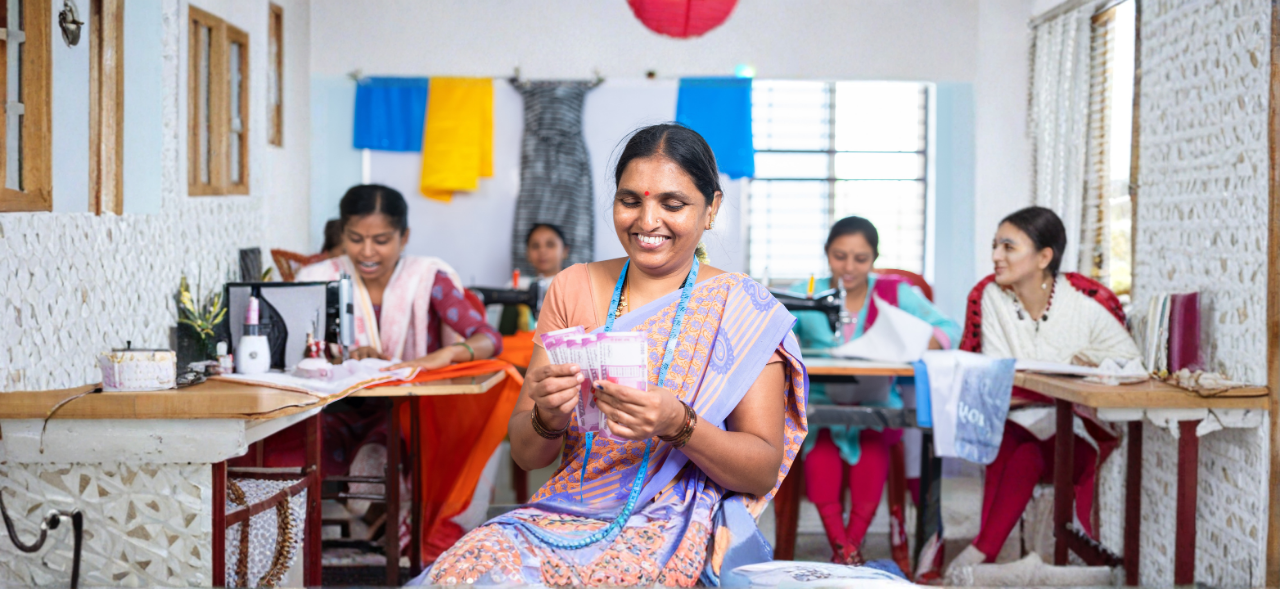
Could the next wave of women-led economic growth be emerging from India’s self-help groups?
For decades, self-help groups (SHGs) have been at the heart of India’s financial inclusion story, helping millions of women build savings, access credit, and strengthen their economic resilience. Through years of disciplined savings, timely repayments, and collective support, SHG women have established a proven track record as reliable borrowers. Yet, as their enterprises grow and ambitions expand, many face a familiar challenge: accessing the larger amounts of capital needed to scale their businesses.
Today, a new generation of enterprise loan products is helping address that gap. Across India, public sector banks are moving beyond traditional group-based lending and introducing individual enterprise loans for women SHG members. These products mark an important shift in the SHG finance journey. By offering higher-ticket loans above INR 75,000 (USD 786), they enable women entrepreneurs to invest in business expansion, acquire productive assets, and meet larger working capital requirements.
The Deendayal Antyodaya Yojana–National Rural Livelihoods Mission (DAY-NRLM) and the State Bank of India (SBI) helped drive this progressive shift to support women’s economic advancement. In September 2023, SBI launched Svayam Siddha, an individual enterprise loan product for women in SHGs. The bank designed the product as a step towards the Government of India’s Lakhpati Didi scheme. The scheme seeks to enable SHG women to achieve an annual household income of at least INR 100,000 (USD 1044). Since then, other public sector banks (PSBs) and regional rural banks (RRBs) have launched similar products. These include Star Sakhi, Union Nari Shakti, IND MSME Sakhi, and Digi Shrestha.
Moving from group loans to individual enterprise loans
Traditional SHG-bank linkage loans are extended to SHGs, which then lend internally to their members. Enterprise loans represent a further stage in this journey. While SHG credit linkage enables women to access formal finance and build a credit history, individual enterprise loans help them expand businesses and make larger investments.
Under these products, the individual SHG member becomes the borrower. However, their SHG journey remains relevant to the lending decision as it provides banks with useful information on membership history, savings discipline, previous credit linkage, and repayment performance.
These indicators can help reduce information asymmetry between banks and women entrepreneurs, particularly where conventional financial records remain limited. The shift from group lending to individual enterprise lending does not replace the SHG model. Instead, it builds the institutional relationships, financial discipline, and credit history that SHG participation develops.
How are these products working in practice?
Individual enterprise loan products can serve as an important bridge between financial inclusion and enterprise growth. Through state rural livelihoods missions (SRLMs) cadres, banks identify potential loan applicants and source applications. These cadres also support entrepreneurs in preparing proposals, handling documentation, and conducting initial validation.
For women entrepreneurs, these products create a pathway to individual credit that recognizes their economic activity beyond the group framework. They can provide larger or more flexible financing for enterprises that exceed group-based borrowing limits.
However, MSC’s (MicroSave Consulting) field experience indicates that implementation remains a work in progress. The products appear to work better when applicants have an operating enterprise, formal documentation, visible cash flows, and clear business ownership. Implementation becomes more difficult when enterprises operate informally, rely on family members, or depend on local procurement practices. These features are common among rural enterprises but often conflict with conventional banking requirements. Banks typically require clear processes for appraisal, documentation, procurement, and disbursement.
This gap highlights the need to align product processes more closely with the realities of rural enterprises.
Challenges across the credit journey
MSC’s work to scale enterprise financing for SHG women entrepreneurs across multiple states in India has highlighted challenges at different stages that may limit product uptake, timely credit delivery, and impact despite collaboration with banks, NRLM, SRLMs, community institutions, and women entrepreneurs.
1. Loan application stage
Bank processes often require additional documents, land records, rent receipts, quotations, and registrations. While necessary for risk management, these requirements can pose challenges for rural women entrepreneurs operating informal enterprises with limited documentation.
Common issues include mismatched identity and business details, assets registered in family members’ names, and limited familiarity with loan procedures, resulting in incomplete applications. This may lead to repeated branch visits, increasing the time and cost of accessing credit and discouraging eligible borrowers.

2. Appraisal stage
During appraisal, banks assess the borrower’s repayment capacity, enterprise viability, cash flow, and overall credit risk. Branches generally prefer applicants with established businesses, stable income, and adequate supporting documents.
Enterprises in agriculture-allied sectors face additional scrutiny. Disease outbreaks, livestock mortality, and income volatility create risks for these enterprises. These risks do not necessarily make such enterprises unviable. However, they highlight the need for sector-specific appraisal tools.
From the borrower’s perspective, several factors make it difficult to demonstrate individual repayment capacity. These include limited credit history, weak business plans, and a lack of formal records. Limited branch-level sanctioning authority and staffing constraints can further extend processing times. They can also increase the risk of borrower drop-off.

3. Disbursement stage
At disbursement, banks may require vendor verification, formal invoices, or Goods and Services Tax (GST)-compliant documents to independently verify the transaction and end use of funds through conventional documentation.
In practice, rural entrepreneurs typically purchase inputs and assets from multiple small local vendors and informal suppliers, many of whom do not provide invoices, hold GST registrations, or accept direct bank payments. When banks require formal procurement channels, borrowers face higher costs and lower enterprise returns, sometimes prompting them to abandon the loan process. This reflects a structural mismatch between formal banking requirements and the practices of informal businesses.

A balanced way forward
The field challenges do not undermine the relevance of individual enterprise loan products. Bridging the gap between formal banking requirements and rural enterprise realities requires action at three levels: product design, operational processes, and the broader policy environment.
1. Product-level
a. Align credit products with enterprise needs
Financial institutions should focus not only on expanding credit but also on offering the right type of credit. While banks are often more comfortable financing fixed assets through term loans, many micro and small enterprises primarily need working capital, creating a product mismatch that can constrain growth and increase repayment risk. A simplified cash-flow-based assessment of working-capital requirements can help lenders design more appropriate products and improve portfolio quality.
b. Refine operational guidelines
Product features and operating guidelines should reflect the sector, enterprise stage, loan purpose, and borrower profile. Banks can allow alternative procurement verification where formal invoices are not feasible. Options can include SHG or federation certification, local vendor confirmation, transaction receipts, or post-purchase asset checks.
Banks can retain supplier payments where practical and allow borrower-account disbursements in suitable cases, with safeguards and post-disbursement verification.
c. Use alternative data for credit assessment
Where formal credit histories are limited, banks can supplement conventional underwriting with alternative data sources, including behavioral, transactional, and digital indicators such as bank account statements, utility payment records, gig-work earnings, and UPI/digital payment records.
In the SHG context, savings discipline, internal lending, repayment records, and bank account transaction data can provide valuable insights into members’ financial behavior. The Account Aggregator (AA) framework can also enable secure, consent-based sharing of relevant SHG data. This can strengthen women’s financial identities while preserving their control over how their data is used as borrowers.
MSC’s whitepaper on the AA framework and SHG ecosystem shows how verifiable financial and behavioral data can improve credit assessment. This approach can potentially expand credit access to more than 100 million SHG women. Banks should use this data through transparent, context-specific scoring methods. Community validation and safeguards should support these methods to prevent exclusion or misuse.
2. Process-level
a. Strengthening enterprise-readiness support
Access to credit alone may not ensure successful enterprise growth. Borrowers often need support with business plans, documentation, investment estimates, cash flow management, and procurement plans.
MSC’s experience across Bihar, Uttar Pradesh, and Uttarakhand shows that training and support through community cadres can improve borrower preparedness.
Enterprise-readiness support should therefore form part of the financing ecosystem. It should cover business diagnostics, financial management, application support, digital literacy, and post-disbursement mentoring.
Community cadres and SHG federations can help borrowers prepare stronger applications. They can also help borrowers manage enterprises after disbursement, thereby improving both credit access and outcomes.
3. Policy level
a. Risk-sharing support for financial service providers
Under the traditional SHG Bank Linkage Programme, SHGs’ collective guarantee and peer accountability largely manage repayment risk. Enterprise finance lacks this social collateral, thereby increasing banks’ perceived risk of individual borrowers.
A dedicated risk-sharing facility can complement existing guarantee mechanisms, such as the Credit Guarantee Fund Trust for Micro and Small Enterprises (CGTMSE), particularly where lenders find the available cover inadequate from a risk-management perspective. Long cooling-off or claim-settlement periods can also require lenders to make provisions before guarantees are realized, affecting their balance sheets and appetite for enterprise lending.
Banks, NRLM, and SRLMs can therefore explore more responsive risk-sharing arrangements, including appropriately structured first-loss mechanisms, while maintaining prudent underwriting and borrower accountability.
b. Waiver of stamp duty on loans
Stamp duty adds to the cost of borrowing and can increase the financial burden on entrepreneurs. The Assam Cabinet has approved a waiver of stamp duty on loans of up to INR 1 million (USD 10,445) availed by SHG members under ASRLM, helping reduce the cost of accessing formal credit. Other states could consider similar measures to lower borrowing costs and encourage enterprise development and livelihood generation among rural women.
Conclusion
Bank-led individual enterprise loans for SHG women are an important step in the pathway from financial inclusion to enterprise growth. However, scale and impact require more than product availability.
Banks can bridge the gap between formal banking requirements and rural microenterprise realities through better-aligned products and processes, as well as alternative data-based underwriting. Credit guarantee support and strong enterprise-readiness systems can further strengthen this approach. Together, these measures can create a more inclusive and sustainable enterprise finance ecosystem and support the next phase of the Lakhpati Didi scheme, enabling an additional 30 million Lakhpati Didis.
The strategic blueprint of co-lending: Expanding credit access and institutional collaboration in India
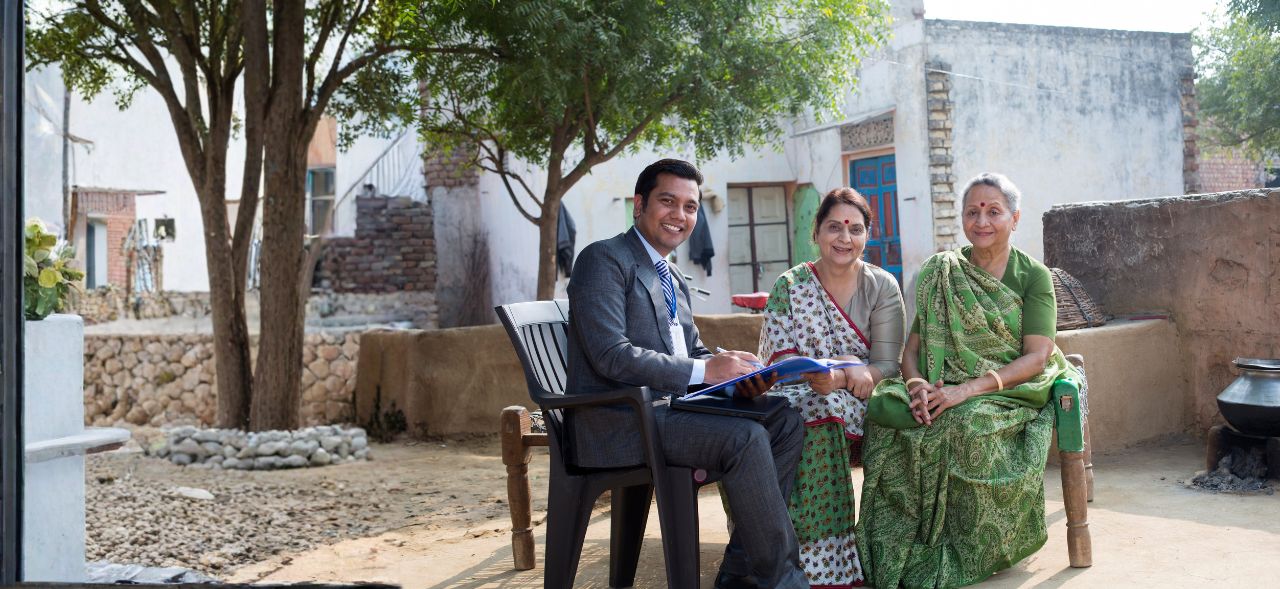
This policy brief examines India’s co-lending framework and its evolution into a broader approach to formal credit delivery. It explains how originating and partner-regulated entities share funding, risks, revenues, and operational responsibilities. It also distinguishes co-lending from traditional lending, consortium lending, and loan transfers. The brief highlights how digital public infrastructure, APIs, electronic know your customer (e-KYC), e-Sign, and AI credit scoring improve efficiency and expand access for underserved and new-to-credit borrowers.
Why gender equality and social inclusion matter? Scaling climate adaptation in the Hindu Kush Himalaya
The Hindu Kush Himalaya (HKH) are, in the truest sense, the world’s water tower. Stretching over 3,500 kilometres across eight countries, the region is home to around 270 million people, while its river systems sustain the water, food, energy, and livelihood security of more than 2.1 billion people living both within and beyond the mountains. Within this broader landscape, the Integrated Climate Adaptation Solutions for the Hindu Kush Himalaya Region (HI-CAS) project focuses on Bangladesh, Bhutan, and Nepal, where changing precipitation patterns, rising temperatures, land-use change, and ecosystem degradation are intensifying climate risks for mountain communities that depend directly on natural resources and climate-sensitive livelihoods. Rapidly and unequally.
In Bangladesh’s Chittagong Hill Tracts (CHT), for instance, eleven recognised ethnic groups including the Chakma, Marma, and Tanchangya make up roughly half the population of the Chittagong Hill Tracts (CHT). Historically, they depended on ‘jhum’ or shifting cultivation, but shortened fallow cycles, land availability, and erratic monsoons have eroded its viability. With springs reported to be drying in 74% of Nepal’s local governments, water scarcity is intensifying and increasing unpaid care and water collection responsibilities for women to fetch water. And in Bhutan, women make up nearly two-thirds of the agricultural workforce but earn just about half the annual income of their male counterparts. When water, irrigation, and agrobiodiversity systems fail, the costs land on their primary users who have the least role in creating the crisis and the fewest resources to absorb it.
Existing interventions helping these communities adapt often fall into one of three areas: springshed management, which focus on rejuvenating drying mountain water sources through nature-based catchment interventions; renewable energy-powered irrigation, which replaces diesel-dependent pumping with solar-based systems to improve irrigation access; and agrobiodiversity practices, which restore indigenous crop diversity and traditional seed systems whilst supporting livelihoods, nutrition and food security. Putting this into practice, ICIMOD, with funding from Global Affairs Canada, and in partnership with CEAPRED, Arannayk Foundation and Tarayana Foundation have recently launched the Integrated Climate Adaptation Solutions for the Hindu Kush Himalaya (HI-CAS) project.
Where are interventions falling short?
Our baseline assessment for the HI-CAS project examined the current status of these interventions. We found that none of these solutions build resilience at scale and in sustainable ways unless they are understood as interconnected and designed and implemented holistically. And that none can support inclusive climate justice without deliberate attention to gender equality, disability and social inclusion. Power doesn’t shift just because the technology does and four dimensions unmask places where exclusion shows up, where gains could stall, or reverse, as the work scales.
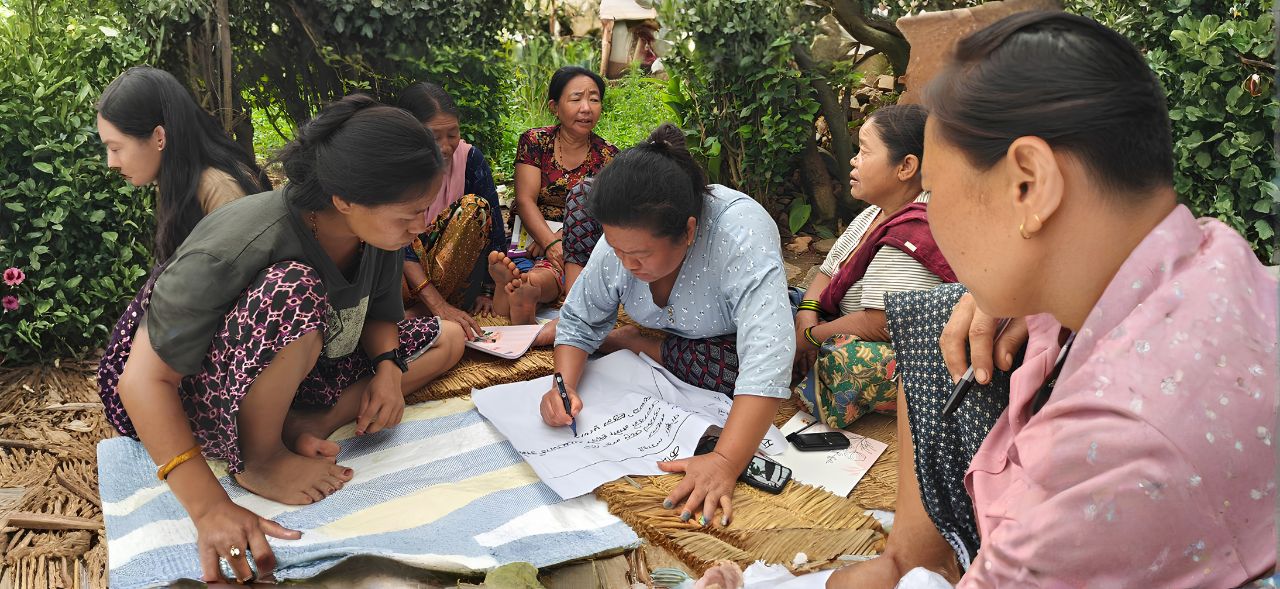
Women from Athpahriya community from Dhankuta Municipality, Ward 8, providing existing knowledge and recommendation to incorporate in the climate adaptation solutions during community consultation meeting for GESI-responsive integration adaptation solution packages. Photo credit: Neha Thapa/CEAPRED
Technical training defaults to men because the technology is socially constructed as men’s work. While this pattern was noted in solar irrigation technology, it holds wherever access is“open to everyone”. In Bangladesh’s CHT, the assessment found that only 1 of 47 participants had ever accessed an agricultural training, and that language and literacy barriers mean information about subsidies and opportunities often does not reach women or is not understood when it does. In Nepal, focus group discussions described long waiting periods for irrigation turns of up to 13 days compressing labour into narrow windows that leave little space for training or participation. And even where governance structures open a door, walking through it takes years: a female Karbari (village chief) in Khagrachari, an outlier in a governance structure dominated by male traditional authorities, noted that it took years to gain the men’s trust.
Governance structures that produce tokenism. Water user committees are male dominated by design. When women are present, their roles tend toward administration rather than in decisions over allocations and budgets. Springshed governance that extracts women’s maintenance labour while excluding them from authority over water allocation reproduces inequality even when it delivers ecological outcomes. In Bhutan, the same pattern holds in community forestry structures linked to springshed protection: the presence of women and most disadvantaged groups is institutionalised but not their leadership.
Indigenous knowledge unrecognised and undocumented. Women across all three countries play a critical role as custodians of traditional ecological practices, seed diversity and post-harvest management. This knowledge, though directly relevant to agrobiodiversity interventions, remains largely oral, informal, and absent from formal training content. Extension systems that increasingly prioritise uniform commercial crops are eroding intergenerational transmission of knowledge and skills.
Women’s economic contribution made invisible. Labour in water collection, spring maintenance, and subsistence farming is categorised by country statistical systems as domestic support rather than economic work. Women receive no compensation, generate no employment records, and accumulate no assets through their adaptation-related contributions. Women remain invisible in the technology systems that increasingly mediate access to productive resources. Control over income and assets remains concentrated with men regardless of who performs the work.
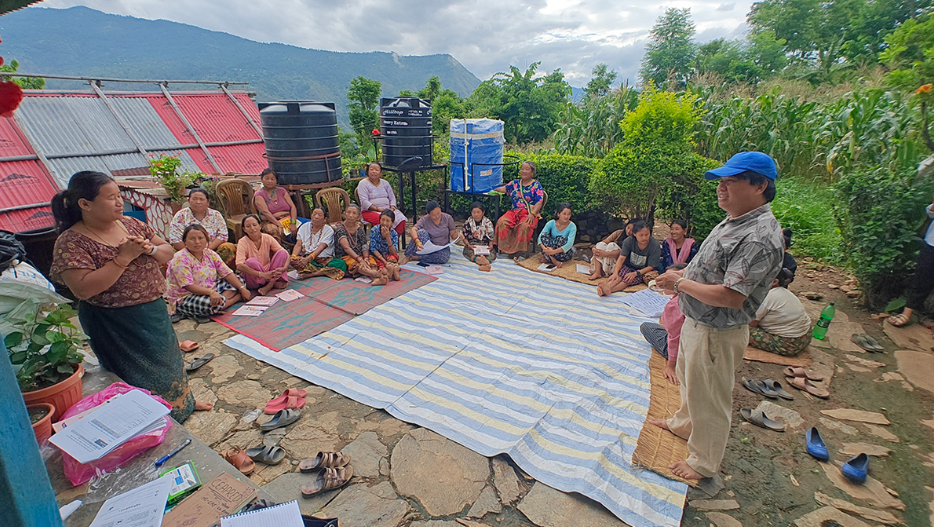
Community consultations should prioritise including voices of women, Indigenous Peoples and marginalised communities. Photo credit: Neha Thapa/CEAPRED
So, what does GESI-responsive scaling require?
Adaptation solutions need certain non-negotiable commitments if outcomes are to benefit the populations who bear the greatest climate burden. We propound three commitments which would anchor this approach:
First, decision-making authority must be shared structurally. Water user groups require co-chairs holding equal authority, not a token deputy seat. That only holds if men engage as allies rather than gatekeepers and how GESI responsive orientation is built into technical delivery rather than bolted on as a separate workstream. Second, every adaptation intervention must demonstrably reduce women’s time poverty. This requires baseline time-use surveys and embedded childcare and mobility support from the start. Third, gender-responsive budgeting must apply across all activities, with institutional GESI-responsive codes tracking allocation and expenditure against GESI outcomes at each governance level.
Beyond these non-negotiables though, a second set of actions targets the specific indicators along which climate adaptation either narrows or widens gender gaps, i.e., GESI-analysis and data segregation in feasibility studies, decision-making role in livelihoods, asset ownership and income control, group membership and leadership, and time poverty/workload linked to unpaid care.
Meaningful inclusion and engagement. This requires redesigning how trainings are delivered, not just who attends. Facilitation teams should include women, IPLC knowledge holders, and persons with disabilities. Sessions should run in local languages at care-friendly times. Training content should combine tasks women already lead such as seed management, water scheduling, and post-harvest handling with the skills and access to engage with technology adoption which has historically been male domains.
Equitable distribution of benefits. A role charter system for each user group should set at least 50 percent of overall roles and 30 percent of decision-control roles for women, with rotation rules to prevent elite capture. A community knowledge centre near intervention sites, gender-balanced in staffing and offering onboarding, technical advisory, and safeguarding support, creates a trusted access point that does not depend on male-dominated networks. Women’s groups and Indigenous Peoples’ networks must evolve from project participants into accountability actors who can engage with policies, budgets, and implementation processes long before and after programme cycles end.
Social and economic empowerment. Women’s adaptation-related labour must be directly compensated at or above local wage rates and paid via mobile money to prevent interception. Indigenous knowledge must be documented, recognized as prior learning (RPL) and integrated into adaptation curricula as climate expertise rather than informal background. Community-level water economics dashboards can normalise women as economic stakeholders rather than service users.
Finally, and in conclusion, governance structures that embed Free, Prior and Informed Consent principles, prevent concentration of decision-making power, and link all user bodies to functional grievance and safeguarding pathways are what will make such change durable. Without them, technically sound climate solutions will deliver uneven benefits and perpetuate layers of exclusion. Populations that carry the greatest climate burden will continue to have the least say in shaping the solutions designed in their name. Once gender-responsive, indigenous-centric practices move beyond individual projects into sub-national plans, policies, and institutional systems, livelihoods and community capacities in the HKH will be better safeguarded.
This was first published in ICIMOD on 10th August 2026