
The Y Initiative’s Compendium of Global Good Practices on Youth Finance was a study that sought to identify innovative, cost-effective, and replicable initiatives that increase low-cost access to financial services for young people globally. MSC worked with Making Cents International to conduct a global assessment of initiatives led or done by financial service providers, private sector companies, or non-governmental organizations focused on young people’s financial inclusion.
We produced a compendium of good practices across Asia and Africa. FMO and its clients can replicate these practices across fragile and low-income countries. We also developed an executive summary deck, youth segments for persona mapping of youth, and an interactive map.
Our recommendations and tools were implemented with the FSP partners to increase service provision to youth.
FMO: Dutch Entrepreneurial Development Bank commissioned this study.

MSC assessed and diagnosed opportunities and challenges in a robust agent acceptance infrastructure’s development for digital financial services (DFS) in Liberia and Sierra Leone. We conducted country-level scoping and provider-level agent network diagnostics with Strategic Impact Advisors (SIA). MSC worked with four mobile money providers: MTN Lonestar and Orange Money in Liberia and Africell and Orange Money in Sierra Leone in this project. We studied the DFS ecosystem and identified the challenges and work opportunities with agent networks. Based on the study, MSC provided technical assistance to the mobile money providers in both countries. The technical assistance involved agent identification and selection, agent training, liquidity management, agent monitoring systems, and marketing and communication support.
MSC developed tools, templates, and strategies for the providers to select the right agents and provided training content and modules for agent and super agent training. We also developed marketing plans and built marketing concepts for the mobile money providers. We also created toolboxes for the four providers. These toolboxes included a detailed set of documents and tools for multiple thematic areas of agent network management, such as liquidity management, agent network scale-up, agent monitoring and support, marketing and communication, and implementation. The service providers used these toolboxes to address their issues.
The project helped providers onboard more than 6,000 agents and 40 super agents in the project countries. This increased mobile money services’ acceptance.
United States Agency for International Development (USAID) commissioned this project.

Digital payments in India have grown phenomenally over the past decade. But critical barriers continue to hinder the current trajectory of this progress for the low0 and middle-income (LMI) segment. MSC worked on building the retail payments landscape in India and strengthening social benefit transfers to vulnerable communities.
In the area of strengthening retail payments, MSC worked with National Payments Corporation of India (NPCI), NPCI Bharat BillPay Ltd. (NBBL), Reserve Bank Innovation Hub (RBIH), and banks or agent network managers to strengthen pro-poor payment systems. We worked closely with institutions to improve their products and distribution channels to deliver financial services to last-mile customers. We worked toward designing programs with a gender lens to increase financial services usage among women and other vulnerable segments.
On the subsidy front, while India has one of the most advanced systems to manage social transfers, it has yet to bridge the existing gaps in the uptake and inclusion of LMI segments. To overcome these barriers, we extensively partnered and worked with line ministries of the Government of India (Ministry of Consumer Affairs, Food and Public Distribution (MoCAF&PD), Ministry of Petroleum and Natural Gas (MoPNG), Ministry of Agriculture and Farmers Welfare (MoA&FW), Ministry of Chemicals and Fertilizers (MoC&F), and NITI Aayog). We also worked with state government machinery to drive the implementation of policies at the ground level. We work alongside NITI Aayog, Meity, and DFS, among others, to drive our work in the payment space.
This project has improved the lives of one billion LMI segment population in India, particularly women and vulnerable groups.
The Bill & Melinda Gates Foundation commissioned this project.

Governments at all levels struggle to make public expenditure more effective and efficient. Float or an unused surplus of public funds in various implementing agencies’ bank accounts and delays in government payments to private vendors are key sources of inefficiencies in expenditure management. MSC has been working with Odisha’s finance department and a line department to pilot the solution. We used digital principles and tools to develop the solution. These include a single source of truth, just-in-time funding, and smart payments.
MSC ran detailed diagnostics of the programs managed by various line departments to identify a suitable use case to deploy the solution. We did a process analysis to identify payment gaps once we identified the program. We developed detailed “should-be” maps for the reengineered process. MSC designed the solution as the last step.
We expect these projects to emerge as helpful solution templates across India and the developing world for public finance reforms. Government agencies’ improved budget execution capabilities would reduce fiscal deficits due to float reduction. It would also remove barriers to private sector participation caused by payment delays.
The Bill & Melinda Gates Foundation commissioned this project.
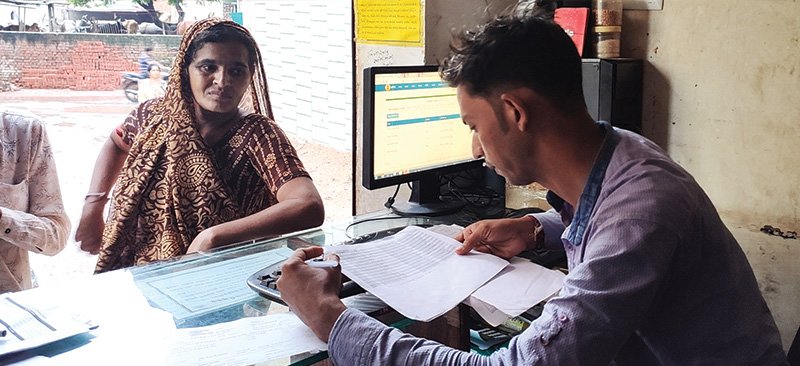
Bangladesh Bank wanted to introduce an e-KYC system to boost financial inclusion countrywide. Under the system, customers would not need to provide paper-based copies of authentication documents to open bank accounts. The e-KYC will use the national identity number and biometrics to make the authentication process seamless. United Nations Development Programme (UNDP) Bangladesh commissioned MSC to evaluate the e-KYC pilot and suggest reforms to the existing e-KYC guidelines for key stakeholders. MSC finalized the work plan, approach, methodology, and expectations of key stakeholders for the e-KYC pilot. We finalized the research tools and conducted a representative survey with the service providers and end-users.
MSC delivered an interim report that highlighted key findings and recommendations on the present state of the e-KYC process. We delivered the final report based on the analysis with recommendations on fingerprint-based, face-matching, and OCR-based (optical character recognition) e-KYC; a unified identity database; data privacy; and customer protection.
Bangladesh Bank modified the processes based on our recommendations and brought necessary changes to the draft guidelines.
United Nations Development Programme (UNDP) commissioned the project.

The Alliance for Financial Inclusion (AFI) contracted MSC to develop a regional policy framework on e-KYC and Digital ID for seven Eastern Europe and Central Asian countries. These countries included Armenia, Belarus, Russia, Mongolia, Kazakhstan, Tajikistan, and Uzbekistan. MSC provided end-to-end technical support to these countries, which included extensive regulatory analysis and policy advisory of the digital ID system, e-KYC norms, and compliance with Financial Action Task Force (FATF), Anti Money Laundering (AML) or Countering the Financing of Terrorism (CFT) regulations for enhanced financial inclusion. MSC also conducted ideation workshops with global experts from AFI to finalize the assessment framework.
MSC’s intervention led to the development of a regional framework on e-KYC and Digital ID. The framework includes three broad components—policy development, infrastructure and development, policy implementation, and ecosystem development. These components detail specific principles AFI members in these countries can consider as they formulate digital ID and e-KYC policies.
The findings and recommendations helped the regulators and policymakers improve the Digital ID system and e-KYC norms in the seven Eastern European and Central Asian countries.
The Alliance for Financial Inclusion commissioned this project.