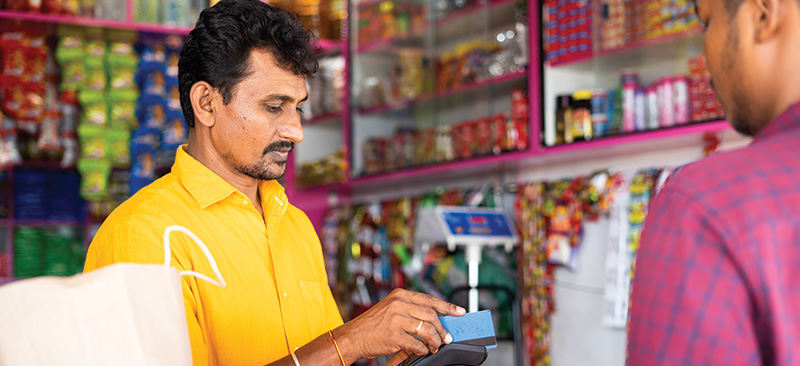
‘Voices of India’s MSMEs’ was a first-of-its-kind effort that explored the financial lives of MSMEs, with a focus on the informal, non-agri segment across India. The study examined the policy environment, market dynamics, access to finance, digitization, business management practices, and gender balance in entrepreneurship. It intended to support policymakers, financial institutions, industry bodies, and multilateral agencies in making more informed decisions.
India’s MSME ecosystem lacks a robust data system that captures the pain points and financial and operational health of informal MSMEs. This project helped bridge that gap by creating actionable insights that fed into feedback loops for industry and policy interventions.
Commissioned by Omidyar Network India and conducted in partnership with the World Bank, MSC led this pioneering initiative under the banner of ‘Voices of India’s MSMEs – Informal Enterprises’. The initiative produced a series of reports, technical notes, and interactive data dashboards, creating a credible and usable data source for all sector stakeholders. A key output of this initiative was the ‘State of India’s Informal Sector Report’.
A core component of the study was the Financial Diaries-based research on informal enterprises, which enabled a nuanced understanding of their financial behaviors and practices. The research also explored non-financial aspects such as the aspirations and needs of entrepreneurs. This rich data set, combined with insights from the World Bank’s Informal Enterprises Survey, formed the foundation of a robust, reliable data source now available for sector-wide use
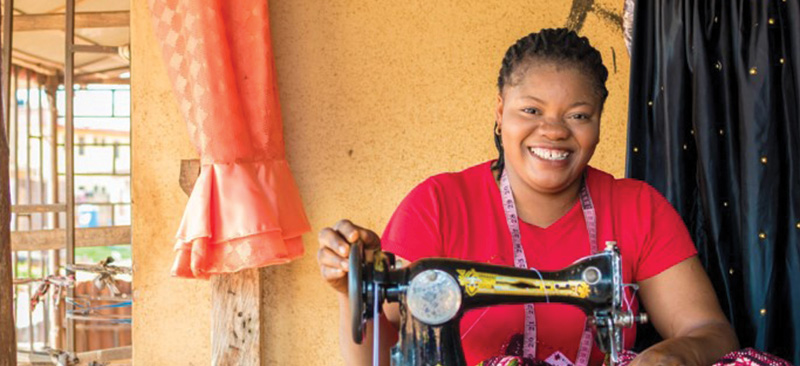
Opportunity Bank Uganda Limited (OBUL) and Urwego Opportunity Bank (UOB) in Africa struggled to understand the financing needs of microenterprises in Uganda and MSMEs in Rwanda. MSC helped the banks develop a financing product targeted at MSMEs. MSC conducted the market segmentation, designed the survey tool, and implemented it. MSC also formulated a credit-scoring model for the banks.
MSC’s recommendations helped reduce OBUL’s non-performing loans from 29% in 2013 to 3.7% in 2016. In December 2016, SME loans formed 26% of OBUL’s USD 4.95 million portfolio with 1,637 SME loan clients. UOB financed 550 enterprises with a portfolio of USD 1.66 million and maintained a high portfolio quality of less than 3% of non-performing loans at the end of the pilot.
This project reduced the turnaround time of individual loans to MSMEs from two months to eight days, and the average loan disbursed increased to USD 5,500.
MSC created digital marketing strategies for multiple startups, such as Xtracap, myPaisaa, and Chhotastock, among others. We reviewed their current marketing practice, evaluated competition, interviewed current and prospective customers. These strategies were designed to promote the respective brands, strengthen relationships with the current customers, create a pipeline of potential customers, and meet other business needs.
The insights gathered through these deep dives fed into the omnichannel marketing strategy that was designed for short-term and long-term business goals.
The startups have implemented MSC’s recommendations.

MSC supported Opportunity International to develop a toolkit for microfinance institutions to establish climate-resilient portfolios and services. We engaged in inception meetings, contextual analysis, and an institutional assessment with Urwego Opportunity Bank in Rwanda. MSC’s ongoing work involves the development of the toolkit’s content, incorporation of inputs from ecosystem partners and customer research conducted by Glasgow Caledonian University and the University of Rwanda.
The project would improve microfinance institutions’ ability to navigate and respond to climate-related challenges, and ensure long-term resilience of their operations and services.
MSC undertook this project to support Opportunity International’s larger climate resilience efforts and contribute to the creation of sustainable and climate-resilient financial services.

OJK, the Financial Services Authority in Indonesia, supervises more than 2,500 financial institutions. It observed an increase in consumer complaints due to the simultaneous growth in digital financial services. MSC supported OJK to implement consumer support technology initiatives. MSC helped OJK conduct stakeholder consultations, develop the Regtech and Suptech vision document, provide research findings on rising consumer complaints, design terms of reference for consumer support technology, implement a cloud-based sentiment analysis platform and an on-premise chatbot system, and develop publications to disseminate project insights to external and internal stakeholders.
MSC’s work has contributed to the development of a sentiment analysis solution to monitor social media activity around financial services. It also developed an automated chatbot for the OJK website for consumer education and inquiries or complaints.
These tools help OJK make informed decisions, better protect consumers, and handle complaints and inquiries more efficiently.
The Bill & Melinda Gates Foundation commissioned this project.
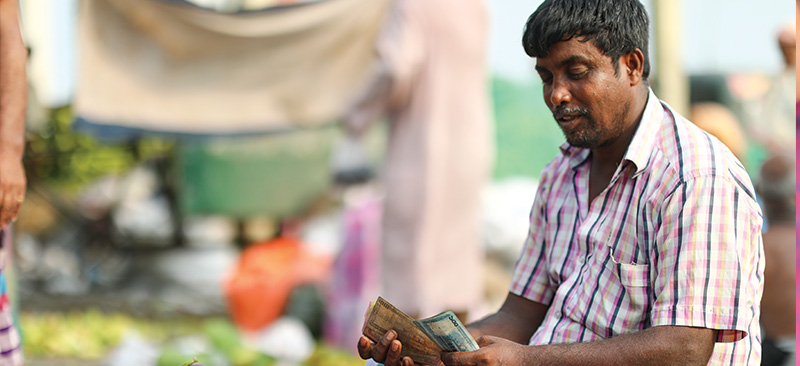
MSC, in partnership with the Agency to Innovate (a2i) and the United Nations Capital Development Fund (UNCDF), set up the Financial Inclusion Lab Bangladesh (FinLab BD). The Lab’s overarching goal is to support FinTechs, startups, and the overall ecosystem to innovate pro-poor solutions for Bangladesh.
The Lab’s first cohort released two key problem statements for a call to application—women’s financial inclusion and access to credit for cottage, micro, small, and medium enterprises (CMSMEs). The Lab selected eight unique FinTech startups and incumbents from 123 applicants through a rigorous, multi step selection process. The selected startups and incumbents went through boot camps, diagnostics, and mentoring sessions before their pitch. The winners of the first cohort won grant awards to develop and scale their solutions. The Bangladesh Bank’s Regulatory FinTech Facilitation Office (RFFO) remained a core part of the cohort selection at every juncture.
MSC has been helping the cohort winners shape their ideas through product design support, market analysis, market testing, scaling, go-to-market (GTM) strategies, pilot testing, and customer marketing. The Lab would support at least 100,000 LMIs through the first cohort.
MetLife Foundation commissioned the project with support from a2i.