
MSC supported Bappenas, the Indonesian Ministry of National Development Planning, to strategize and implement the Government of Indonesia’s ambitious G2P 4.0 transformation program. G2P 4.0 seeks to improve the delivery of social protection programs (SPPs). MSC led policy-support activities with CGAP around the vision’s two main building blocks: i) Incentive determination for payment service providers; ii) Transformation of awareness, communication, and socialization practices in the new system.
MSC conducted evidence-based research to provide insights and recommendations and proposed a reformed process to determine incentives and delivery for payment service providers. The team also projected the fiscal impact and conducted a cost-benefit analysis of the proposed incentives on government finances. We uncovered insights, created recommendations, and proposed a reformed process for awareness and socialization activities in the SPP delivery.
Bappenas used the proposed reforms to consult other government agencies, which included the central bank, line ministries, service providers, and other international development partners. The support was exemplary as it laid out a framework for private sector participation in SPP delivery in Indonesia. Bappenas used the proposed recommendations to pilot-test the new reforms across seven regencies with 2,000 SPP beneficiaries. Bappenas planned to analyze the pilot results for the proposed reforms’ potential national-level rollout.
The Bill & Melinda Gates Foundation commissioned the project.

MSC conducted market research to understand the financial services needs for water, sanitation, and hygiene (WASH) among existing and potential Kenyan customers. We assessed WASH products’ demand among sanitation-based and water-based products’ clients and evaluated the feasibility of WASH loan products’ introduction for Kenya Women Microfinance Bank (KWFT).
MSC proposed new product concepts to enhance KWFT’s WASH finance portfolio, as part of the study. We also determined potential partnerships that KWFT should seek to deliver WASH finance to target customers.
The team shared the market research report and presented the product concepts to KWFT’s senior management team. KWFT’s senior management would deliberate on the marketing strategy and product concepts. The next steps would be to support KWFT to develop a pilot test plan for the updated WASH products.
Kenya Women Microfinance Bank commissioned this project.
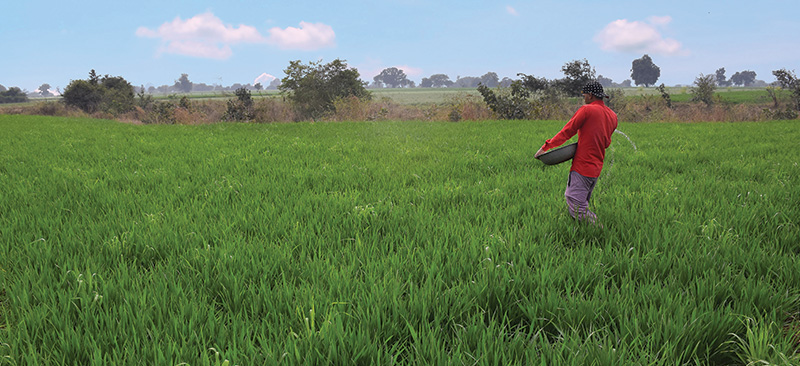
MSC provided strategic advisory and technical assistance to the Government of Bihar’s Department of Agriculture to strengthen the state’s agricultural marketing ecosystem. We formulated high-priority agri-marketing policies, designed and rolled out digital systems, and provided institution-building and strengthening support.
MSC activated a price and arrival information collection system in 100 markets across the state, facilitated approvals to implement e-NAM (National Agriculture Market) in 20 markets, and developed a state digital dashboard for FPOs. We helped train more than 350 government officials and 138 farmer producer organizations and conducted 13 stakeholder workshops for the Government of Bihar. MSC also facilitated collaboration between the Department of Agriculture, the Government of Bihar, 12 private sector organizations, and 17 government organizations and institutions.
Our interventions helped the Government of Bihar formulate a range of upcoming policies, which include the Bihar Agri-export Policy, Bihar FPO Policy, and Bihar Rules for Market Asset Allotment. MSC also helped formulate the section on strategies and roadmap for agriculture marketing and farmer producer organizations under the Government of Bihar’s proposed Agriculture Roadmap 4.
The Bill & Melinda Gates Foundation commissioned this project
MSC conducted a study for CGAP to assess the different pricing mechanisms for the distribution of digital transfers. MSC analyzed the different transfer models that a G2P program designer could adopt. We offered examples of how different G2P programs distribute their cash transfers to understand the distribution model’s cost centers. We also suggested ways to reduce these costs while maximizing providers choice for recipients.
MSC analyzed various payments models to explore how beneficiaries receive payments from the government in the context of digital social protection. Such models were assessed through single entity state-owned or public sector banks, single entity commercial or private sector banks, and multi-entity banks or telco-financial models. We developed a pricing tool to guide the efforts of program designers and help them determine the distribution model based on different cost areas and actions to reduce these costs. Further, we developed a dissemination strategy that included recommendations for program designers on how to package lessons for delivery and terminologies associated with payments in digital social protection.
The project involved an extensive analysis of different social protection programs in Asia and Africa. The project formulated a reference for social program managers by analyzing current approaches to distribute transfers through continuous discussions between CGAP and the MSC team.
CGAP commissioned this project.
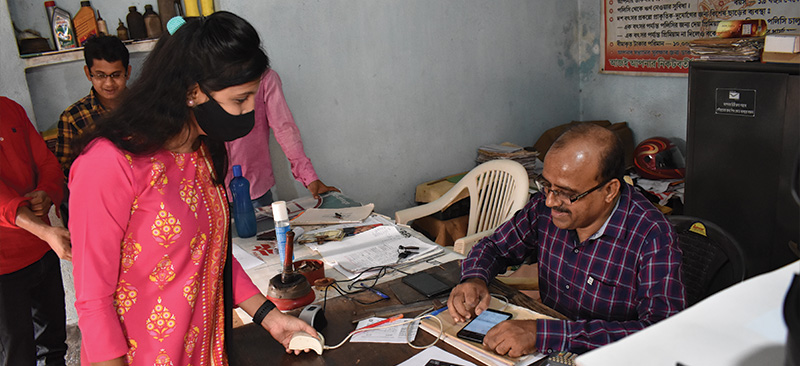
India Post Payments Bank (IPPB) launched operations throughout the country. MSC supported IPPB to provide financial services to poor and rural communities. Gramin Dak Sevak (GDS) presents a useful outreach channel. However, the challenge would be to build its capacity to handle digital technology while it offers a range of financial services and manage its existing suite of postal services.
At the time of writing, MSC planned to undertake a diagnostic study to conduct an institutional assessment for IPPB and provide insights on the current stage of its operations and challenges. The MSC team would develop a GDS capacity and planning document and a management framework and enable G2P delivery. We would also develop a program M&E framework, an operational manual, and training of trainers (ToT) material for GDS and conduct the training. Further, we would revise the incentive structure for GDS, design three product roll-out plans, produce a DBT communication strategy document, and develop a DBT customer protection and GRM framework.
MSC would also develop an MS Excel-based costing template, manuals for liquidity management and grievance redressal, and a product enhancement plan. We would prepare three marketing strategy documents, produce a merchant acquisition plan, and conduct periodic monitoring.
Through MSC’s support, IPPB is expected to achieve four outcomes: an active, efficient, and capable CICO network; suitable product and channel lines that use public infrastructure to support local customers, specifically women; streamlined G2P and bulk payment processes; and a comprehensive ecosystem of merchants to support last-mile customers to drive digital transactions.

MSC supported Bina Artha Ventura (BAV) in Indonesia to develop, pilot test, and expand outreach and portfolio of individual loan products for the MSME segment and housing microfinance. MSC helped BAV expand within the microenterprise sector. We did this through the individual or joint liability group (JLG) loan products and business premise improvement loans in the housing microfinance or business improvement segment. MSC assessed the demand-supply gap, conducted market research, and designed the operation processes. We also designed the pilot-test procedures, projections for the pilot, controls, protocols, and monitoring framework.
The pilot for both products started in three branches in May 2014. With MSC’s support, BAV disbursed 74 loans worth USD 52,000 in three pilot branches within three months in 2014. It intended to reach ten branches by the year’s end. Bina Artha scaled the MSME product and gained more than 26,000 clients.
IFC commissioned this project.