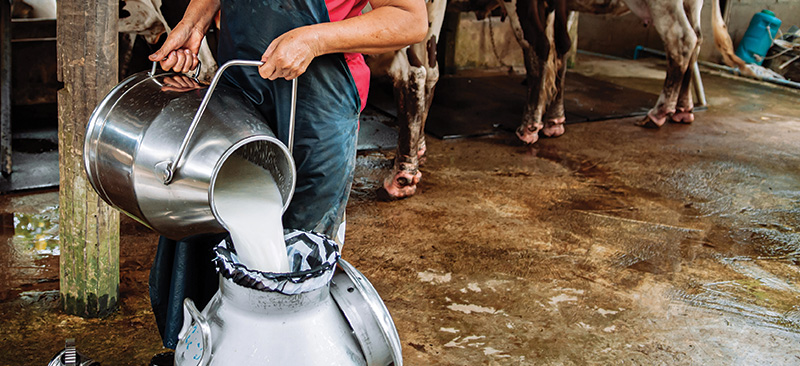
MSC provided technical assistance to Bank Sinarmas to develop a finance product on the beef value chain for cattle farmers in Tuban, East Java. MSC conducted the product’s pre-pilot review, developed operational processes, created a credit risk-monitoring tool, and provided recommendations for scale-up.
Bank Sinarmas launched the product in December 2016. By April 2017, the product had successfully disbursed 56 loans worth IDR 4.24 billion (USD 318,000) to 49 farmers in Tuban Regency.
At the end of 2017, Bank Sinarmas had plans to disburse 346 loans worth IDR 26.3 billion (USD 1.9 million). The bank also intended to offer a similar product in other geographies.
The Australia Indonesia Partnership for Rural Economic Development program (AIP-Rural) commissioned the assignment through the Strengthening Agricultural Finance in Rural Areas (SAFIRA) project. The SAFIRA project ran for three years and received support from a rural economic development partnership between the governments of Indonesia and Australia.

MSC undertook a mixed-methods study to evaluate the Government of India’s Direct Benefit Transfer (DBT) programs’ impact on female beneficiaries. MSC interviewed 4,000 beneficiaries across 12 Indian states to fill their knowledge gaps.
MSC uncovered significant insights into the relationship between DBT funds and women’s empowerment. Women with more agency over financial decisions reported better access to DBT funds and their use. The research also highlighted positive correlations between DBT funds and increased availability of women’s time.
MSC’s research and analysis led to actionable policy recommendations. The proposed policy changes sought to enhance women’s access to critical DBT programs and promote their effective use. MSC presented these recommendations to the Government of India and the Bill & Melinda Gates Foundation.
The Bill & Melinda Gates Foundation commissioned the project.

The Indian government’s Soil Health Card (SHC) program seeks to enhance soil quality in agricultural land through education of farmers on proper fertilizer use. MSC undertook a comprehensive behavioral study to identify barriers and triggers that influence SHCs’ adoption alongside a nationwide study to evaluate beneficiaries’ awareness, accessibility, and program usage.
MSC used a mixed-methods study design and employed qualitative and quantitative research components. For the qualitative research, the MSC team interacted with 150 farmers and officials from the districts’ soil testing labs and agriculture departments. It surveyed more than 11,000 farmers using a cross-sectional design and multistage stratified random sampling for the quantitative research.
The findings from MSC’s study shed light on crucial aspects of the SHC program. They revealed that farmers had low awareness and limited access to SHCs, which led to a lack of understanding about the program’s purpose. Based on these findings, MSC recommended the implementation of a “local ecosystem” approach to enhance the program’s effectiveness. This approach sought to offer near real-time soil health analysis and specialized advisory services to encourage SHCs’ uptake.
In response to MSC’s recommendations, the Indian government launched a pilot program called “Development of Model Villages.” This initiative tested 2.3 million soil samples in 7,000 villages, which showcased a proactive step to improve the program’s impact.
The Bill & Melinda Gates Foundation commissioned the project.

The Government of India (GoI) announced a relief package worth INR 1.70 lakh crores (USD 22.4 billion) as part of Pradhan Mantri Garib Kalyan Yojana (PMGKY) in response to COVID-19 and the countrywide lockdowns. In this context, MSC conducted a pan-India study to gauge the effectiveness of the GoI’s interventions for vulnerable segments, particularly under the PMGKY, and inform the government of the on-ground situation. The study measured the impact of government interventions, gauged effectiveness, assessed beneficiary capabilities, and informed policy decisions.
The study comprised three rounds. The first round covered 5,531 beneficiary households in 18 states and union territories in April and May 2020. It used a computer-aided telephonic interview (CATI) system to collect quantitative data and telephonic interviews with middle-mile service providers. MSC provided three services in the assignment:
- Surveyed beneficiaries in 18 states and union territories to gather information about their benefits and feedback on the government program, including their issues, pain points, and expectations.
- Surveyed middle-mile service providers to assess their efforts to implement the government program.
- Documented and analyzed the findings and shared reports, which included recommendations, with the relevant ministries.
The major findings of the study were:
- 83% of surveyed households reported loss of income during the lockdown, but swift government support through cash (PM KISAN, PMJDY, and NSAP), free rations (PDS), and fuel (PMUY) provided much-needed relief to poor households
- 91% of households reported they received food support under the PDS during the lockdown.
- Although the GoI transferred cash advances electronically to almost all PMUY beneficiaries, only 57% of the eligible households reported receiving the advance amount. 72% reported buying cylinders during the lockdown.
- Banks (67%) were the preferred withdrawal channel for households despite being farthest from home.
The Bill & Melinda Gates Foundation commissioned the project.
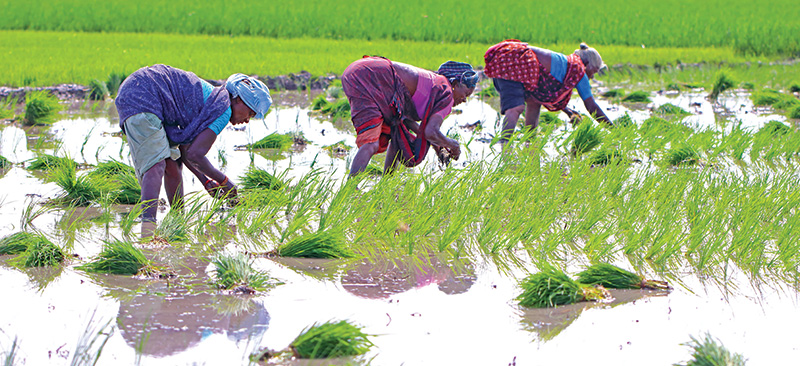
DBT in Fertilizer (DBT-F) is a modified subsidy payment system that remits subsidies to fertilizer companies only after retailers sell fertilizer to farmers through Aadhaar-based authentication. The NITI Aayog and the Department of Fertilizers (DoF) in India engaged MSC to study the program and provide actionable solutions to improve its implementation. MSC provided technical support to conceptualize and implement a set of DBT pre-pilots in two districts of Andhra Pradesh followed by a pilot in 14 districts. MSC also provided implementation and design support at each stage through concurrent evaluations.
MSC’s work comprised a mixed-methods study design, which included qualitative and quantitative research with 12,000 retailers and farmers. MSC recommended measures, such as developing a device-agnostic application, deploying a centralized call center, and altering the POS application to generate transaction receipts in local languages. MSC submitted an approach note to the Ministry of Chemicals and Fertilizers to transition directly from in-kind subsidy to cash transfer subsidy to farmers’ accounts.
MSC’s intervention led to the nationwide implementation of DBT-F in a record time of two years. This led to efficiency, administrative gains, and financial savings.
The Bill & Melinda Gates Foundation commissioned the project.
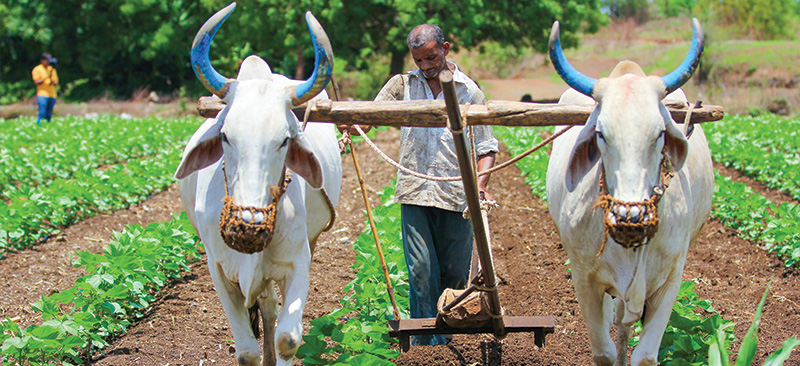
The Government of India launched AgriStack to establish a Digital Public Infrastructure (DPI) for agriculture that improves service delivery and farmer support systems across the country. AgriStack aims to unify and digitize farmer-centric data, enabling access to services such as crop advisory, credit, insurance, and market linkages. The platform is designed to be federated and open, allowing integration between central and state governments, as well as private sector actors.
MSC supported the conceptualization, design, and piloting of AgriStack. We focused on developing three foundational digital registries: the farmer registry, a georeferenced land parcel registry, and a crop sown registry. Through more than 10 pilots across diverse states, we tested and refined standard operating procedures (SOPs) that could be scaled nationally. MSC also helped develop user-facing digital applications and backend systems to support registry creation and maintenance. MSC created training manuals for local implementation teams and supported the development of uniform data structures and nomenclature to enable interoperability across platforms. This groundwork facilitates the creation of the Unified Farmers Services Interface (UFSI), a central data exchange layer for agriculture-related services.
AgriStack lays the foundation for a unified digital ecosystem for agriculture in India. MSC’s work contributed to a scalable and interoperable digital framework that supports real-time data-driven decision-making, increases farmer access to services, and improves efficiency across agricultural value chains. The project is currently in the rollout phase across India, signaling a transformative step in agricultural governance and service delivery.
The Gates Foundation commissioned the project.