
The Government of India enacted the National Food Security Act (NFSA) in 2013 to ensure people could access adequate quantities of quality food at affordable prices. Since 2014, MSC has collaborated with the Department of Food and Public Distribution (DFPD) on research projects to examine the Public Distribution System’s (PDS) nutritional effectiveness, the effect of cash transfers in union areas, the PDS supply chain, and the expansion of the Integrated Management of Public Distribution System (IMPDS)—One Nation One Ration Card.
MSC formulated a technical support unit (TSU) at DFPD in 2020 to continue providing technical support to the department’s initiatives. MSC has been working with the DFPD to implement, scale up, and stabilize the national-level portability of fair price shops. MSC also created a robust system to analyze data and a near real-time monitoring system to help strengthen the system.
MSC continues to create evidence to scale up initiatives, use PDS’s potential to improve nutritional outcomes and implement ongoing direct benefit transfer (cash) pilots in union territories alongside choice-based pilots in states.
The Bill & Melinda Gates Foundation commissioned the project.

MSC has been conducting women’s business diaries-based action research in Bangladesh to reduce financial barriers to access for women entrepreneurs. MSC will track all financial and nonfinancial transactions of about 500 women entrepreneurs for this project. This research is set against the backdrop of the minimal evidence available on how women-owned businesses are run and the unclear impact of social norms that restrict women’s agency. Research on microenterprises has only recently revealed hypotheses, such as men making business decisions for women-owned micro and small enterprises (WMSEs) and women’s preference for different types of businesses than men.
Through this research, MSC will take a comprehensive view of the lives of female business owners. This includes their financial, business management, digital, and personal lives. MSC will then collaborate with financial institutions to use insights from the action research to develop gender-centric financial products and help WMSEs in Bangladesh.
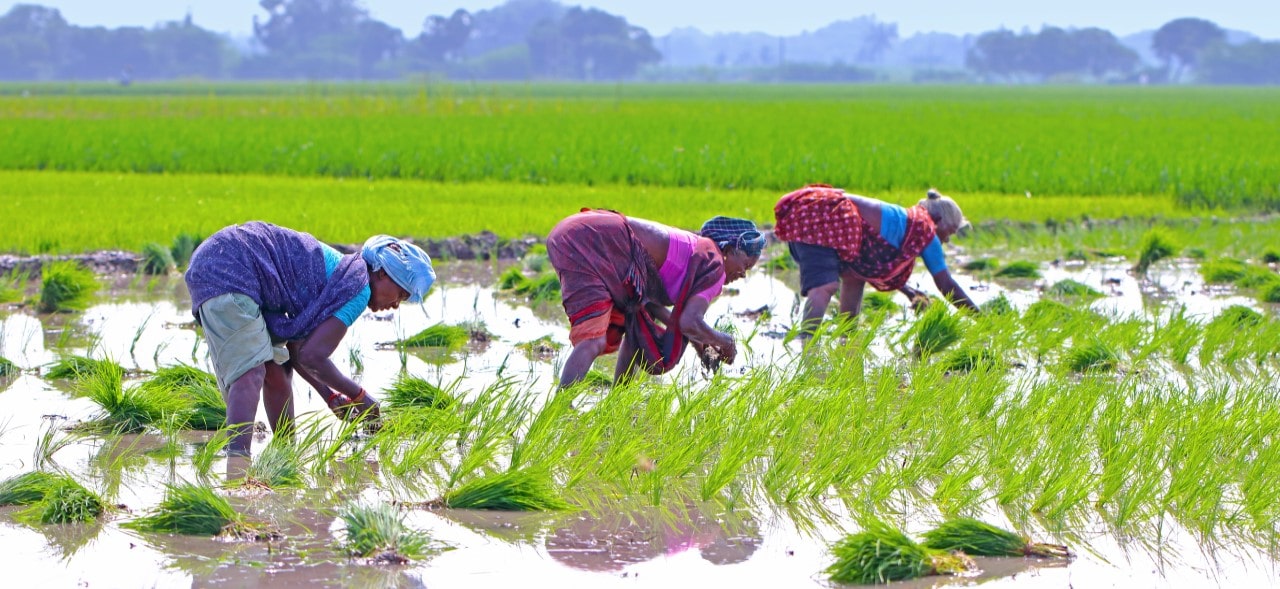
The CRAg working group seeks to address three broad inter-related aspects of agri-food systems:
- Integration and coordination in value chains: This is a central problem in developing economies, characterized by numerous smallholder farmers and businesses with poor communication, weak physical infrastructure, and ineffective formal institutions.
- Diffusion of innovation across value chain participants: Even where innovations are ostensibly well-engineered for the context, frameworks of understanding, values, and risk perceptions play a significant role in shaping the diffusion of innovation and hence the adoption of productivity and resilience-enhancing technologies.
- Financing innovation end-to-end: The transformation of agri-food systems generally requires upfront investment and dealing with the problem of the inherent risks posed by change. Smallholders and small-scale firms in agri-food systems are frequently especially constrained in their ability to raise the finance to enable a shift from business-as-usual.

MSC helped the Government of India design and develop AgriStack as a digital public infrastructure (DPI) with a collection of registries, datasets, APIs, and information technology systems enabled by common policies, standards, and guidelines. It can open up data in agriculture that can enable governments and the private sector to develop small-scale producer-centric services and solutions. MSC is collaborating with India’s Government of Bihar on the Integrated Digital Farmer Services (DFS) platform, a comprehensive digital agriculture solution to offer holistic services and support to small-scale producers. These programs intend to bridge information gaps, reduce risks, empower small-scale producers with skills, knowledge, and information, and enhance their incomes and resilience.

MSC has designed a global signature program intended to empower women-led businesses (WLBs) in India, Nepal, and Vietnam. The initiative seeks to improve livelihoods and income for female entrepreneurs, enhance their financial health through stronger digital footprints, expand access to formal financial services, and improve market linkages. As part of this effort, MSC developed ‘Sangini Konect’ in India—an interactive platform that provides training materials, learning tools, and mentorship support to help women-led businesses grow, become digitally adept, and access vital financial products.
In partnership with the MetLife Foundation, MSC led the conceptualization and execution of this program. We designed tailored training modules, developed mentorship frameworks, and facilitated digital and physical market linkages. The team worked closely with local ecosystems in India, Nepal, and Vietnam to identify and onboard women entrepreneurs, ensuring that the interventions addressed their specific business needs. By building Sangini Konect, MSC created a platform that not only offers business support and financial literacy but also fosters a collaborative community where female entrepreneurs can learn from one another’s experiences and successes.
The program has successfully engaged thousands of women entrepreneurs across India, Nepal, and Vietnam, equipping them with the tools and knowledge to scale their businesses. It has fostered better financial literacy, enhanced digital capabilities, and offered new market opportunities. It has ultimately contributed to greater financial resilience and economic empowerment among WLBs. Sangini Konect, in particular, stands out as a dynamic platform that continues to guide women-led enterprises in India, serving as a model for similar initiatives in the other two countries.
The MetLife Foundation commissioned this project.
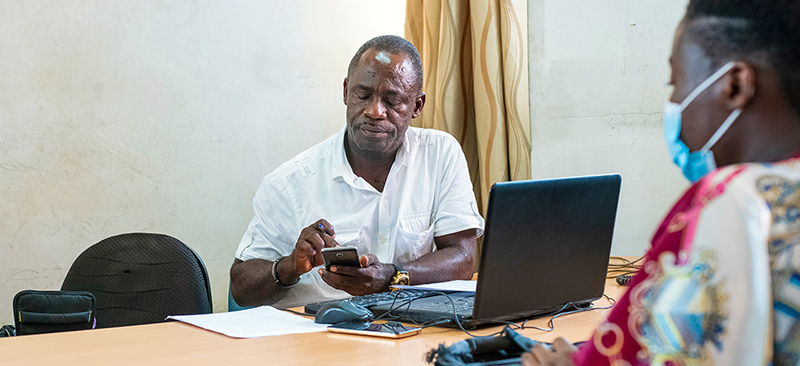
MSC in partnership with CGAP conducted a research on the role of mobile money providers and their agents in protecting customers data. This research identified responsible practices employed by mobile money agents and providers to safeguard customer data, particularly for female agents and customers. It examined factors that enabled agents to manage customer data responsibly and assessed the alignment of consumer protection standards with mobile money guidelines in Uganda. The MSC team conducted qualitative research with customers, agents, and mobile money providers. The study intends to strengthen data protection policies, agent practices, and providers’ support to build a responsible mobile money ecosystem in Uganda.