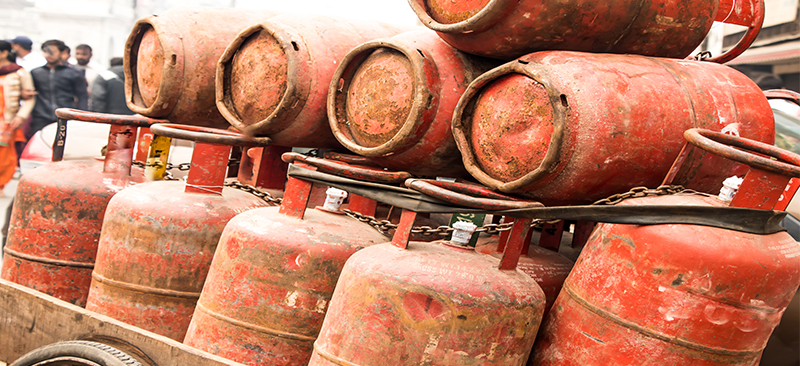
As part of the relief measures announced by the Indian government to combat the COVID-19 crisis, 80 million poor women received cash transfers to purchase liquefied petroleum gas (LPG). This paper analyzes the program’s performance and the experience of beneficiaries while purchasing LPG refills from the money disbursed during and after the lockdown.
Did MGNREGA mitigate the loss in income and unemployment caused by the COVID-19 pandemic?
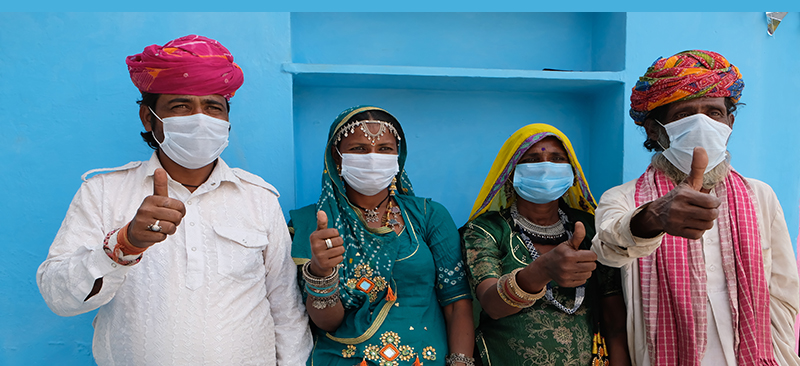
The COVID-19 pandemic and the resulting lockdown in India had a dire effect on employment and income across the country. The Government of India attempted to mitigate the impact by announcing various relief measures under the Pradhan Mantri Garib Kalyan Yojana (PMGKY). Under PMGKY, the GoI worked to provide relief to a large number of unemployed persons, including migrant workers, who had returned to their villages. These relief measures were channeled through the government’s flagship cash-for-work program, Mahatama Gandhi National Rural Employment Act (MGNREGA). It increased the daily wage rate of workers from USD 2.44 (INR 182) to USD 2.70 (INR 202) and subsequently increased its budget allocation.
MSC (MicroSave Consulting) undertook a mixed-method study [2] the impact of COVID-19 on the income of low-income households and assessed the government’s COVID-19 relief package, Pradhan Mantri Garib Kalyan Yojana (PMGKY). The study covered the effect of the steps taken under MGNREGA. The first and second phases of the study were conducted respectively in May, 2020 during the three-month complete lockdown and in September, 2020, after the lockdown norms were eased. The study covered 1,165 MGNREGA beneficiaries in Round 1 and 1,186 beneficiaries in Round 2 across 18 states and union territories.
The government tried to absorb as many people under MGNREGA as possible. However, the significantly high demand for work made the task challenging. In just 50 days, between 1st April and 20th May, 2020, 3.5 million workers sought employment under the program. In comparison, in the year 2019-20, 1.5 million workers had applied for MGNREGA jobs. Addressing the higher demand, the government provided more work as illustrated in Chart 1, which compares the number of person-days[3] generated under MGNREGA in 2019 against those in 2020. Except in the month of April, 2020 when the lockdown restricted work, person-days generated in 2020 were much higher than in 2019. As per official data, only 15% of households enrolled under the program reported receiving work in round 1 of our study, which increased to 53% in round 2.
One of the biggest achievements of the scheme was that it provided work to women in rural areas. While the Indian government mandates a minimum of one-third participation by women in MGNREGA, 53% of the persons employed under MGNREGA were female in the fiscal year 2020-21.[4] Additionally, MGNREGA is implemented by local panchayats[5], which must have 50% women representatives. Reservation for women in the program and in its implementing body have led to a massive increase in participation by women.
The government also attempted to make timely payments to the workers. In May, 2020, 40% of respondents reported that they had not received their pending MGNREGA wages so far. In September, 2020, the government ensured that it cleared all dues as 83% respondents reported that they had received all payments pending for the work done in preceding months. According to official data, 87% of the total payments in 2020-21 have been paid.
The government attempted to absorb more people under MGNREGA. However, due to the excessive demand for jobs created by the pandemic, the program could not accommodate everyone. One respondent said, “If 20 people are required for a specific job, more than 200 are available to do the work.” As a result, 31% of respondents who were enrolled in MGNREGA did not receive work after applying.
As more labour was available during the lockdowns, project completion was much quicker under the program. This reduced the number of days required to complete a project—thus reducing the number of days a person was employed and earned wages. Only 7 million of the 75 million employed under MGNREGA received work for full 100 days in the year 2020-21.
What could have been better?
MGNREGA shouldered some of the adverse effects of the pandemic, providing much-needed employment and income to returning migrants and other vulnerable segments. Its efficacy as a tool to address future economic shocks are likely to improve if some of its design and implementation issues are solved.
- The scheme is unable to entirely absorb the high demand for jobs created during economic crises. As a result, job seekers do not receive the guaranteed 100 days of work. The government should cater to any surge in employment demand by creating new avenues of employment and expanding areas of permissible work. MGNREGA workers could be employed gainfully in short-staffed positions. For example, they could be instrumental in guarding national parks and forests.
- Although the GoI raised the daily MGNREGA rate, it should increase further to match the minimum wage rate in each state. The wages paid under the program continue to be lower than the minimum wage rate in 17 states in the country. To do this, the government should increase the budget allocation for the program. The country appears to be moving in the right direction as the allocation for this scheme increased in the 2021-22 Union Budget by 19% compared to the 2020-21 allocation.
- While irregularities and delays in MGNREGA payment have reduced, these issues can be minimized further through investments in human resources and technology and adoption of automated processes. The Mobile Monitoring System (MMS) should be used across all village councils to update the database on demand submission, work allocation, attendance, and measurement of work. Through these steps, the GoI can curb administrative delays at every stage to provide beneficiaries their dues on time.
- By design, MGNREGA is only made available to those living in rural areas, which leaves out vulnerable populations in cities. The pandemic dealt a devastating blow to the urban poor. Yet, they were unable to seek employment relief from the government.[6] The pandemic has categorically highlighted the need for an employment guarantee scheme for the urban poor. The government could employ, for instance, urban workers in municipalities to ensure cleanliness and sanitation, and in the process solve the dual problems of unemployment and poor sanitation.
- Relief provided through MGNREGA or direct income support provides some immediate assistance. Yet it often fails to sufficiently protect the vulnerable from the next shock. As India experiences a second wave of COVID-19 and experts predict a third wave, the government should be prepared with a plan that absorbs the unemployed population. It must also create policies and guidelines for industries to ensure the safety of its workers through the provision of shelter and food so that a huge segment of the population is not forced to return to their villages again.
Lessons for other countries from India’s experience with MGNREGA
Many countries and humanitarian organizations launched cash-for-work programs as a COVID-19 relief measure. India’s 16 years of experience with MGNREGA as an employment support program and now as a COVID-19 relief measure may help budding cash-for-work programs across the globe.
- Maximum coverage: Cash-for-work programs should ensure coverage of all vulnerable segments, especially during times of crises. The Indian government worked to cater to the rising unemployment and income loss in the country through MGNREGA. However, it could not provide relief to the urban poor as they are not covered under MGNREGA. Similarly in Kenya, the national cash-for-work program, Kazi Mtani continues to target rural youth exclusively. Due to suboptimal coverage, the urban poor are unable to access such relief measures.
- Gender-inclusive design Economic crises often have a disproportionate impact on women. In our study, households where the primary wage earner is female were reportedly less likely to get reemployed once lockdown restrictions were eased.[7] Governments must ensure that its programs can provide adequate work and income to women. The Indian government mandates a minimum one-third participation of women in MGNREGA. Countries should provide reservation to women in programs and implementing bodies of those programs. They should also ensure the nature of work provided is favorable for them.[8] The World Food Program ensures 60% of those assisted are women in its cash for work program in Tajikistan.
- Inclusive program design: India employs a localized system where unemployed persons can approach their panchayat to volunteer for MGNREGA work. This allows unrestricted access to every household. Contrastingly, the Pre-employment Card Program announced in Indonesia as a COVID-19 relief measure required individuals to register online. This feature faced criticism as people with low socioeconomic status and low educational levels are less likely to have internet access.[9] Informal workers tend to fall under these demographics, making them less likely to have access to the internet and thus, the program. While digitizing programs, governments should create offline measures too to ensure the most vulnerable are not left out.
- Transparent system with a strong GRM (Grievance Resolution Mechanism): Communication and lack of awareness remain real problems across the globe. Governments should ensure workers have full knowledge of the amount and timing of payment of wages. They should be able to ask for timely resolution in case of irregular, insufficient, or delayed payments. MGNREGA has an online GRM portal, a publicly available complaint register, and a portal to see the status of complaints. However, the awareness and use of such mechanisms is low among beneficiaries.
Developing nations can use these lessons to better serve their unemployed and low-skilled workers.
MGNREGA (Mahatma Gandhi National Rural Employment Guarantee Act) is GoI’s social security program that guarantees at least 100 days of employment to unemployed, low-skilled workers.
[1] MGNREGA (Mahatma Gandhi National Rural Employment Guarantee Act) is GoI’s social security program that guarantees at least 100 days of employment to unemployed, low-skilled workers.
[2] Detail methodology can be read here.
[3] Person-days is the number of people working per day times the number of days worked.
[4] The percentage of female participation has decreased slightly from 56% in 2016-17 to 53% in 2020-21.
[5] A Panchayat is a key village level government institution responsible for fulfilment of the community’s aspirations with respect to development of the village. It usually consists of five respected village elders.
[6] CMIE (Center for Monitoring Indian Economy) reported the unemployment rate in India in September, 2020 to be 5.88% in rural areas while 8.45% in urban areas.
[7] 17% of households with male primary wage earners reported an increase in income after the lockdown restrictions were eased while only 8% households with female primary wage earners reported the same. 10% households with male primary wage earners could get employed again while only 5% households with female primary wage earners could do the same.
[8] In rural areas, most women are unable to travel far from their houses so the work should be available within a 5km radius.
[9] Source: Survey by Indonesia Internet Service Provider Association 2017
Can we turn the COVID-19 crisis into an opportunity to enable indigenous capabilities?

On a recent field trip (one that happened before the COVID-19 outbreak), we watched in horror as four enthusiastic design consultants from a large international firm had set up a classic “sit them on school benches and tell them how to save” financial education program. The “planning sheets” to guide the poor farmers were in English. An indigenous staff member who spoke the local dialect and the national language delivered the accompanying lecture, translating from another member who spoke both the national language and English, and had learned the script from his new American paymasters.
The nature of the problem
Towards the end of my decade in Bangladesh, a growing number of immensely successful local institutions had become heartily sick of hosting international, fly-in-fly-out consultants. This was particularly true in the microfinance sector where local consultants had a much deeper understanding of the issues and on-the-ground realities. In contrast, many, if not quite all fly-in-fly-out consultants had little knowledge of the country’s history, culture, or market, institutional and political nuances, or even the language for which many were martyred in 1952. To add insult to injury, these fly-in-fly-out consultants were paid fee rates measured in many multiples of the salaries of their local counterparts.
As I noted in a previous blog, this dependence on fly-in-fly-out consultants can “lead to either inappropriate assumptions or conclusions or both, which have detrimental effects on both the development process and outcomes and leave years of experience and learning ignored and unused.”
In “The Absent Voices of Development Economics,” Arvind Subramanian and Devesh Kapur highlight how the concentration of development economics research in developed countries reflects and amplifies this problem. They note that “Development economics focuses on improving the well-being of billions of people in low-income countries, but the Global South is severely underrepresented in the field. A small number of rich-country institutions dominate, and their growing use of randomized controlled trials in research is entrenching the imbalance.”
A little history
In the 1990s, multilateral and bilateral donors responded to these very challenges. The donors pushed for programs that would train and empower local researchers and consultants and transfer skills to the management and staff of local institutions. They argued that this would lead to sustainable development rather than perpetuating the continued dependence on external researchers and consultants. Players in the sector accepted that the process would take more time but would pay off in the longer term by embedding skills in local institutions. And that was preferable to the quick-fix fly-in-fly-out solutions that often failed to understand local conditions or take them into account.
Then, at the turn of the century, the pendulum swung back and impatient, inorganic development returned to fashion. In many ways, this is understandable. How much longer must millions of people suffer just because development professionals take a longer-term view and seek to indigenize capabilities? If we can reduce the vulnerability of people through quick-fix solutions, should we not seize the opportunity now? It is a very real ethical dilemma.
The ethical dilemma
Yet implicit in the dilemma are several conditions. First, that the quick-fix solutions created by fly-in-fly-out international consultants both make sense and have the buy-in of the institutions that must then implement them. Second, that these solutions are sustainable and largely immutable irrespective of changing local conditions. Third, that the recipient institutions will pay the bucks to fly international consultants back in when they need the next round of research, strategy refresh, or operational guidance. Last, that they will be willing to do this with or without the financial backing of donor agencies.
The nature of the opportunity
The pandemic has highlighted this challenge and left many international consultants unable to fly into the countries they were meant to be advising in or visit the communities they have been researching. The world has not stopped but it has changed. With vaccines unlikely to be available at scale in Africa until 2023, international consultants are unlikely to be willing or even able to go there for years to come.
This is our opportunity to re-focus on indigenizing development and, doing so, to reduce millions of air miles for international consultants—a bonus in the fight against climate change.
The indigenization of skills
The indigenization of skills to support the development process need not compromise its impact. Indeed, if done well, indigenization is likely to better design, target, and improve development. Yet in the same way that players in the ecosystem have renewed their focus on making development gender-intentional, we will need to make all interventions indigenization-intentional. All programs, from the planning process through to dissemination, need to be clear about exactly how they will involve, train, and empower local government officials, researchers, consultants, and the industry.
For example, as is done in many cases in India, local universities and think tanks should play a leadership role to identify research issues, draft the research plan, lead in data collection and analysis, write the report, and disseminate results. This should be done in close collaboration with international academics and researchers who will provide mentorship and guidance throughout the process. In some cases, the limitations of local universities will require the development and implementation of programs designed specifically to enhance indigenous capabilities across a range of research methods, as well as critical, logical, and analytical thinking. These programs can be developed with dual objectives—to strengthen indigenous capabilities and to respond to specific research needs.
A good example of this type of initiative is Women’s Economic Empowerment and Digital Finance (WEE-DiFine), which receives funding from the Bill & Melinda Gates Foundation and is housed in BRAC’s Institute of Governance and Development in Bangladesh. WEE-DiFine seeks to generate a comprehensive body of evidence that addresses the impact of digital financial services (DFS) on women’s economic empowerment and the causal mechanisms between the two by funding rigorous research across South Asia and Sub-Saharan Africa.
We need to put the era of academics from rich countries using indigenous researchers as basic data collectors behind us. The capabilities of local, indigenous consultants need to be developed and strengthened. This has always been part of our mission at MicroSave Consulting (MSC). In 2008, the project completion report on MicroSave prepared for FSD-Kenya and CGAP concluded, “By the end of the project, thirty-nine senior [local] service providers, thirty-six other consultants, nine young executive professionals and six MicroSave staff have been certified and seventy-six assignments have been completed. In addition to these certified individuals, a considerable number of individuals within Action Research Partners have acquired capacity (although not necessarily certification) through exposure to MicroSave training or other support.”
MSC remains proudly committed to this indigenized approach as we encourage and enhance south-south cooperation wherever possible to maximize the flow of experience, ideas, and capabilities within our organization. Ninety-nine percent of our staff are drawn from the countries we work in. Training local governments, researchers, and industry remains a key part of our work both through The Helix Institute and as an integral part of many of our programs and projects. This commitment to training and human capital development has led to the transformation of our partners, including Equity Bank, BURO-Bangladesh, and more than 325 other financial services providers across Asia and Africa. Our local presence and leadership and deep understanding of culture, language, and social norms allow us catalytic access to policymakers and regulators and the chance to forge partnerships with them.
We need to ensure that most, if not all, projects include a core component to ensure the transfer of skills and capabilities.
Looking to a brighter, more sustainable, future
Subramanian and Kapur conclude that “…diversity and broader representation are the best safeguards against intellectual narrowness resulting from elite capture.” This is true, but to realize this we will need to open our minds to the importance of local knowledge and understanding. We should invest in the capabilities of local researchers and consultants, and in the management of institutions.
Some of this is already underway through scholarship programs, although these are too few and far between and usually involve attending courses in rich (and expensive) countries. Now is the time to renew the pledge to support and enhance south-south cooperation, as well as more collaborative ways of working.
The pandemic gives us the opportunity and impetus to do just that—we should seize it!
The Helix Institute at MSC Masterclass 3 with Betty Wilkinson, CEO, FSD Zambia
Betty Wilkinson, CEO of FSD Zambia addresses our Master Class today. She speaks at length about her professional journey, key achievements, challenges, and lessons learnt. In this conversation, she delves deeper on :
- The medium- to long-term impact of COVID-19 on the inclusive finance sector;
- How financial markets can address the financial constraints of low- and moderate-income populations effectively;
- The need for a renewed focus on financial inclusion, considering COVID-19 has undone years of progress in inclusive finance initiatives; and
- Recommendations for the financial sector, development community, and multilateral organizations to future-proof against such crises.
Click here to watch more of our master classes
Taking the well-designed SABLA scheme to the next level (Part-II)
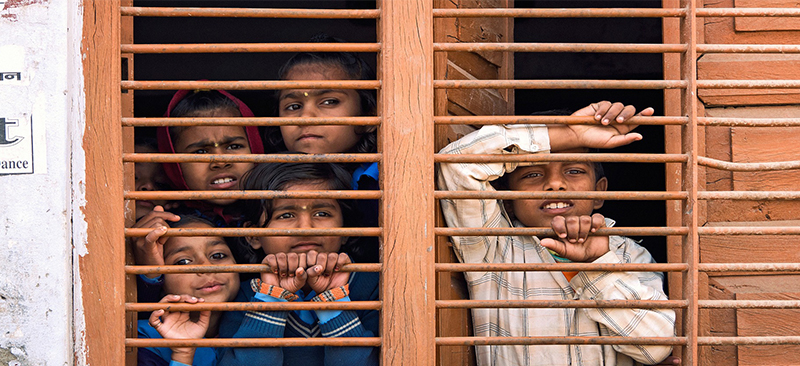
“Adolescence is a border between childhood and adulthood. Like all borders, it is teeming with energy and fraught with danger.” – Mary Pipher, Clinical psychologist
In the first part of this blog on SABLA, we discussed the genesis and evolution of the scheme, as well as how the scheme is presently implemented. In part two of this blog series, we unpack the challenges of scheme implementation and make recommendations to enhance the effectiveness of the scheme. Despite its commendable efforts to empower adolescent girls throughout India, SABLA has fallen short. The section below summarizes the challenges that plague the successful implementation of the scheme.
1) Poor program monitoring: SABLA uses a manual reporting approach, which leads to delays and errors. The information is passed on from block level to district and from districts to the state. At the block level, the details are maintained at the AWC. Due to a lack of backtracking, the quality of data is also questionable.8 At the beneficiary level, beneficiaries either do not receive the Kishori health cards or these are not properly maintained. As a result, the health status of some adolescent girls is not recorded, tracked, and monitored.
The take-home ration (THR) consumption is self-reported by adolescent girls. This makes it difficult to ensure that they have received the requisite nutrition.[1] Despite the five-tier monitoring system, committees are not always constituted. In states where committees are constituted, they seldom conduct regular monitoring visits to AWC, as directed by scheme guidelines.[2] This is largely due to a dearth of human resources or administrative resources available at each level.
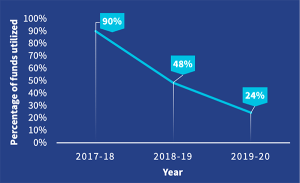
2) Non-utilization of funds: The intermittent evaluations of SABLA conducted by the government have shown that the utilization of allotted funds by various state departments has decreased over the years.[3] In particular, the utilization of funds for delivering service of the non-nutritional component of SABLA is low[4] due to a lack of coordination between various departments when planning vocational training courses, field visits, workshops, and nutrition and health education (NHE).[5]
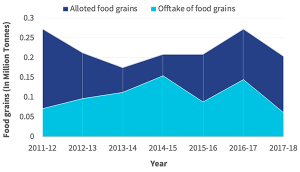
3) Gaps between intended and achieved targets: Under SABLA, the quantity of uptake was lower when compared to the food grains allocated for the scheme. This resulted in an inconsistent supply of supplementary nutrition, which in turn defeated the objective of SABLA to improve nutrition for adolescent girls.
Four main factors result in the gap between the allocation and uptake. These are the government’s irregular cycle of disbursing funds[6],[7], poor utilization of the allocated funds by departments, lack of clarity on financial guidelines for food grain procurement, and lack of storage space for food grains.
4) Limited capacity of AWW and AWC: Anganwadi workers (AWWs)[8] face considerable pressure to perform a variety of tasks. In addition to SABLA, they are also responsible for implementing Integrated Child and Development Services (ICDS) for children from birth through six years of age, and pregnant and lactating mothers.
AWWs have limited bandwidth and receive little beyond basic training and support to carry out all the activities under SABLA[9]. Further, AWCs also lack proper infrastructure and space to store rations, administer counseling sessions, and hold training sessions and activities. This affects the overall delivery of services under the scheme.1
5) Restrictions imposed by parents: Some parents impose restrictions on the movement of adolescent girls after they reach puberty due to cultural and social beliefs.[10] These restrictions hamper access to schools, healthcare facilities, and employment for adolescent girls, and stifle their awareness of available services, thus defeating the purpose of the scheme.1
Way forward
To strengthen SABLA and improve the delivery of service, particularly under the nutritional component, MSC recommends the following:
1) Improving the existing system:
a) Universal data digitization at the AWW level to improve reporting and monitoring: With the introduction of POSHAN Abhiyan, smart phone/tablets have been provided to AWWs in some districts across India to use the Common Application Software (CAS) for real-time data entry and reporting. However, AWWs in many districts across India continue to use physical registers to register beneficiaries and track administered services.[11] Universalization of the use of CAS is needed to ease the process of record-keeping and tracking for every AWW across India.
Once this is done, the data collected can be used to generate a real-time dashboard of program indicators. AWWs can identify the most vulnerable population groups and a list of malnourished children and adolescents. This will help AWWs to prioritize their interventions. The CAS can be further linked to beneficiary who have mobiles, so that they receive regular updates on their health and nutrition through SMS. Together, these can contribute to improving the efficiency of the scheme interventions.
b) Streamlining the flow of funds: The GoI releases funds only after the states submit their action plans and utilization certificate (UC) for the previous year. This is a manual process and often leads to delays in approval and release of funds. The GoI should ensure the timely release of allocated funds to state departments, as well as the timely expenditure of such funds using the principles of “just-in-time funding,” as delays hurt the timely delivery of services. This could be achieved by creating dedicated bank accounts at the state and district levels and by introducing online approvals.
Once the payment is approved, it should be debited directly from the dedicated source account without manual intervention. Such e-payments, with minimal manual interventions, would reduce the transit time for fund disbursements.[12] By digitizing the workflow and by automating the payment and reporting, state governments can submit their UCs on time and streamline their expenditure reporting, while the GOI can accelerate the release of funds.
2) Nutrition literacy and health awareness campaigns to affect behavioral change: Awareness generation that focuses on health and nutrition is the first milestone needed to attain positive health and nutritional behaviors among adolescents. To bring about behavior change, we recommend that parents of adolescent girls are encouraged by service providers to take part in Kishori Samooh[13] meetings. Participation from the families of adolescent girls is likely to result in a greater appreciation and uptake of services provided under SABLA, and the eventual loosening of restrictions placed on adolescent girls due to social norms.[14]
3) Experiment with cash transfers to improve the nutritional intake: Cash transfers into the bank accounts of adolescent girls is another option that the government can explore. This will reduce the physical movement of food items, ease the burden on the administration, reduce leakages, and provide choice to beneficiaries to select their food baskets. Evidence from an experimental study in four African countries suggests that cash transfer is more effective than food transfer to improve nutritional intake. Findings from the study suggest that cash transfer improved both the quality and quantity of food that the beneficiaries consumed.
However, experiments from India do not point to clear evidence yet. Our assessment of a cash transfer pilot in PDS in Chandigarh, Dadra & Nagar Haveli, and Puducherry shows that the preference of beneficiaries for cash over food is 63%, 59%, and 37% respectively. While most beneficiaries agree that cash provides freedom of choice, conclusive evidence of improvement in their nutritional status is missing. SABLA provides additional benefits for adolescent girls while PDS provides basic food items for sustenance. Hence, we cannot compare these two programs on a one-on-one basis.
We suggest that a few experiments should be conducted to see the preference and impact on the outcomes of SABLA through cash transfer. The GoI has operated centrally administered cash-transfer programs, such as targeted unconditional pensions to the elderly, the disabled, and widows through the National Social Assistance Program. It also runs Janani Suraksha Yojana, which seeks to improve maternal and neonatal outcomes by using cash to encourage delivery of babies at hospitals.
The ICDS department can use the positive experiences and lessons from such interventions to design and pilot a cash DBT scheme for adolescent girls under SABLA. To counter the misuse of cash, food-coupons/vouchers may also be explored as an alternative to the current system. Our study on food coupons in Karnataka suggests that the use of coupons helped in improving beneficiaries’ knowledge about their entitlements, reduced malpractices, and improved monitoring.
Conclusion
The SABLA scheme has identified the importance of the all-around development and empowerment of adolescent girls. It provides a nationwide platform to address their challenges, yet the scheme faces many hurdles in implementation, which affect the delivery of services.
Alongside scaling the program in all districts in India, the GoI must continue to focus on outreach and performance—both of which can be improved. It needs to improve the existing system and explore alternative efficient mechanisms of implementation. SABLA has the potential to facilitate a healthy and empowered female adolescent population in India. After all, they are the adults of tomorrow who will determine the country’s future.
[1] Addressing comprehensive needs of adolescent girls in India, ICRW
[2] Performance audit on Empowerment of Women, CAG, UP
[3] Action taken by Government, Rajya Sabha
[4] Evaluation of SABLA scheme, Ministry of Women and Child Development (MoWCD)
[5] National Commission for Women
[7] Health needs of adolescent girls living in an urban slum of a metropolitan city, JFMPC
[8] Anganwadi workers are women selected from within the communities by committees at the project level. They receive a monthly honorarium from the government for their service to the community
[9] Evaluation of Integrated Childhood Development Services (ICDS), International Journal of Research in Medical Science (IJRMS)
[10] Education, poverty and purity in context of adolescent girls’ secondary school retention and dropout, NCBI
[11] Common Application Software (CAS), PIB
[12] Delay in fund flow: Consequences, causes and remedies, Tata Trust & CBGA
[13] Kishori Samooh refers to a group of adolescent girls formed at the AWC. These group serve as peer monitoring groups and help the AWWs to implement various activities of SABLA.
[14] Enhancing Adolescent Participation In SABLA Programme, Gujarat, UNICEF And State Resource Centre For Women
Taking the well-designed SABLA scheme to the next level (Part-I)
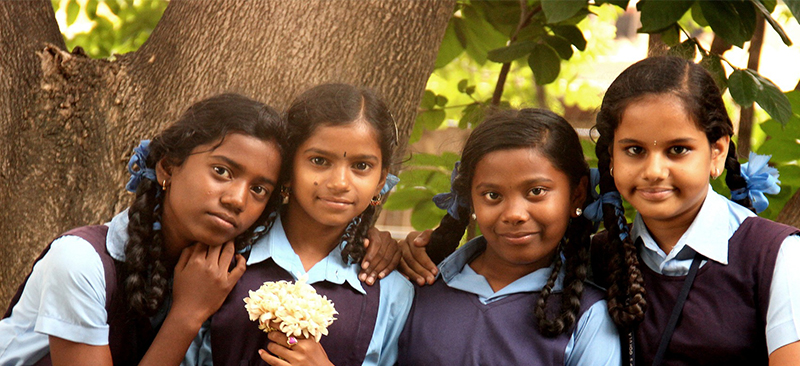
“Adolescence represents an inner emotional upheaval, a struggle between the eternal human wish to cling to the past and the equally powerful wish to get on with the future.”- Louise J. Kaplan, Psychologist and author.
Adolescents around the world face a growing number of physical and emotional challenges that often leave them vulnerable as they embark on their life’s trajectory. India is home to the world’s largest adolescent population—nearly 232 million or 22.8% of the country’s population are between 11-18 years. Adolescent girls in the country constitute nearly 111 million from this age group.
In this first part of our two-part blog series on India’s Scheme for Adolescent Girls (SABLA), we look at the origins of the scheme. We also examine how, in its current incarnation, SABLA works to offer an integrated package of services to adolescent girls for self-development and empowerment.
Adolescence is a period of rapid development. It has a long-term impact on the health and well-being of girls. Adolescent girls need education regarding menstrual hygiene, reproductive and sexual health, nutrition, and health issues, particularly those related to iron deficiencies.[1] For girls in India, adolescence is particularly challenging—besides dealing with the usual tumult that comes from these growing years, adolescent girls have to grapple with poor access to healthcare, education, skills development, nutrition, employment opportunities, hygiene, and sanitation. Besides, they are always at risk of being married young and becoming pregnant.[2],[3]
To address the challenges that adolescent girls face in India, the Government of India (GoI) has designed and implemented several Centrally Sponsored Schemes (CSS)[4] and other programs. These include Kishori Shakti Yojana (KSY), the Nutrition Program for Adolescent Girls (NPAG), and SABLA, all of which utilize the Integrated Child and Development Services (ICDS) infrastructure to deliver associated services. [5] SABLA combines the erstwhile KSY and NPAG to address the issues that adolescent girls face. Below is a brief overview of these initiatives with timelines of their evolution.
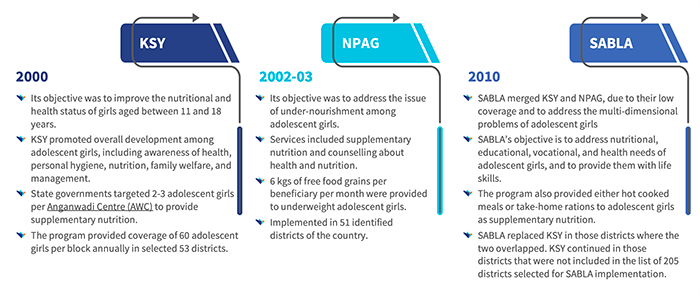 SABLA
SABLA
SABLA was implemented in three phases as follows:
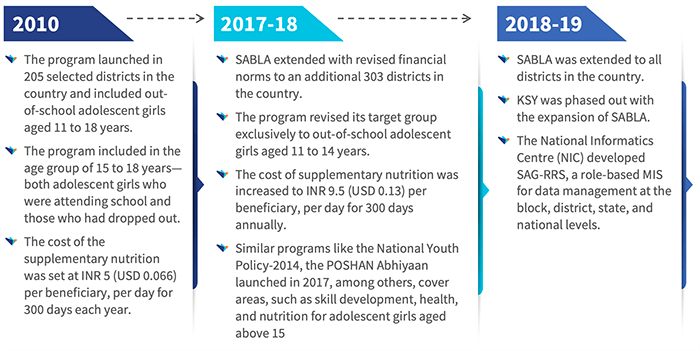
SABLA provides nutritional supplements, health check-ups, and access to education, among other services to adolescent girls.
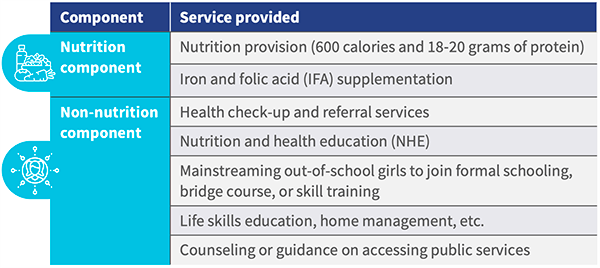
The services offered under the program converge with various programs administered by the health, education, youth, labor, and employment departments of the GoI as explained below.[6]
- Convergence with health systems: The Health Department provides iron and folic acid (IFA) supplements, nutrition and health education, health check-ups, and referral services using the ICDS infrastructure. The IFA tablets are distributed at the AWCs. Anganwadi Workers (AWW) provide adolescent girls information on food fortification, dietary diversification, advantages of IFA supplements, and education on sanitation and personal hygiene.[7] The AWCs organize health check-ups Kishori Diwas[8]to ensure adolescent girls can access health services.
- Convergence with the education system: The Education Department helps to bring out-of-school adolescent girls into the mainstream formal education system. The department helps adolescent girls gain access to schooling through various programs, including Sarva Siksha Abhiyaan, Kasturba Gandhi Balika Vidyalaya, and the Adolescent Education Programme. In school, adolescent girls receive Hot cooked meals (HCM)under the Mid-Day Meal scheme to supplement their daily nutritional requirements. If the provision for HCM is not available, adolescent girls are provided with take-home ration (THR).
- Convergence with the Department of Youth Affairs: The Department of Youth Affairs organizes sessions on life skills, nutrition, and health. Multiple and diverse opportunities strengthen life skills among adolescent girls. These opportunities include cultural activities, social networks, civic action, health, and sports for development. Awareness talks and exposure visits are arranged in collaboration with police personnel, bank officials, postal departments, and health functionaries to make adolescent girls aware of existing public services and their accessibility.
- Convergence with the Department of Labour and Employment (DLE): The DLE organizes vocational training courses under various national skill development programs.
AWW, along with schoolteachers and the school management committees, undertake home visits to identify out of school girls in the age group of 11 to 14 years. To enroll beneficiaries, the personal details, including Aadhaar number, are collected and maintained at the AWC. To monitor scheme implementation and progress, Kishori health cards are issued to all registered adolescent girls. The AWW records the health and nutrition status of adolescent girls on these cards periodically.
Since 2019, the web portal SAG-RRS has been recording all beneficiary details digitally. According to the website, the SABLA has been implemented in 553 districts out of 728 total districts in India. The scheme follows a five-tier monitoring structure with a monitoring committee at the national level, followed by state, district, project, and village levels.
SABLA has evolved over the years to cater to the needs of adolescent girls better. However, areas of continuing concern persist around non-achievement of targets and difference in performance among states. The next blog in this series will discuss the challenges in implementation and recommendations to make SABLA more effective and impactful.
[1] Health needs of adolescent girls living in an urban slum of a metropolitan city, JFMPC
[2] Addressing comprehensive needs of adolescent girls in India, ICRW
[4] CSS are programs implemented by state governments, but are largely funded by the central government with a defined share that the respective state government’s contribute.
[5] Adolescent Girls, UP, CAG
[6] Administrative guidelines, Scheme for Adolescent Girls
[7] The Anganwadi workers are women selected from within the communities by committees at the project level. They receive a monthly honorarium from the government for their service to the community.
[8] Kishori means “adolescent girl.” The Kishori Diwas is a special day that falls once every three months when are medical officers or ANMs conduct general health check-ups of adolescent girls. The Education and Communication (IEC) committee utilizes this day to inform communities, parents, and siblings, and to motivate girls to attend school.