
The Social Safety Net (SSN) program is an initiative of the Government of Bangladesh that caters to the economically vulnerable and socially or physically disadvantaged people. However, the traditional method of stipend disbursement poses some challenges of its own, especially for people who are already in need of assistance. The digitization of this process has ensured the funds are paid in full, to the right person, and at the right time. Currently, 10.2 million people receive their SSN stipend digitally through biometric authentication at Union Digital Centers (UDC). On top of the added convenience in receiving payments, beneficiaries now also have the option to access other financial services through agent banking.
Mobile Money is improving the financial health of people in Bangladesh

While Bangladesh is now recognized as an economy of infinite possibilities, people in its rural areas still lack access to basic banking services. For rural Bangladeshis, money management is a puzzle that needs to be solved. For the banks, it makes little business sense to open up branches in distant rural areas. Mobile Financial Services (MFS) is gradually changing this narrative for millions of underserved Bangladeshis as almost all adults in Bangladesh use a mobile phone. With about 70 million people who currently use mobiles to conduct financial transactions, MFS promises to be the gateway to full-fledged financial services in the future.
Management of savings groups through digitization – Part 2
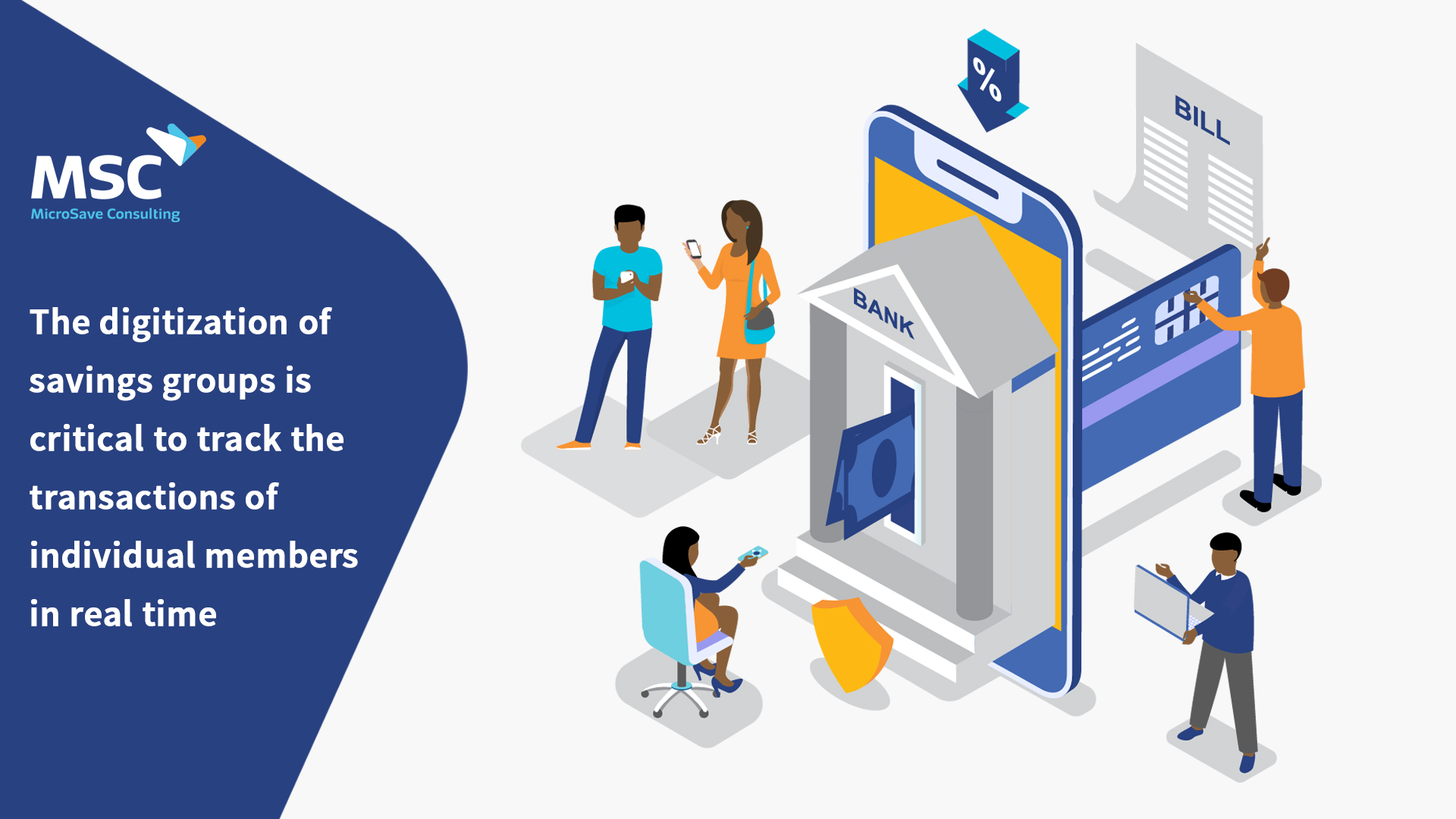
The digital transformation of savings management and credit processes is key to breaking critical barriers around account opening, client onboarding, entrepreneurship training, loan application, analysis, approval, and disbursement. Part 1 of this series focused on why it is important for financial institutions to digitize savings groups and the benefits that these organizations stand to gain by moving away from manual operations toward more digitized solutions. This podcast gives us more insights on the credit cycle for savings groups and how digitizing this process can enhance more efficiency and loan repayments.
Management of savings groups through digitization – Part 1
The digital transformation of savings management and credit processes is key to breaking critical barriers around account opening, client onboarding, entrepreneurship training, loan application, analysis, approval, and disbursement. This podcast examines why it is important for financial institutions to digitize savings groups and the benefits that these organizations stand to gain by moving away from manual operations toward more digitized solutions.
NITI Aayog continues the collaboration with MSC for financial inclusion under the Transformation of Aspirational Districts Programme
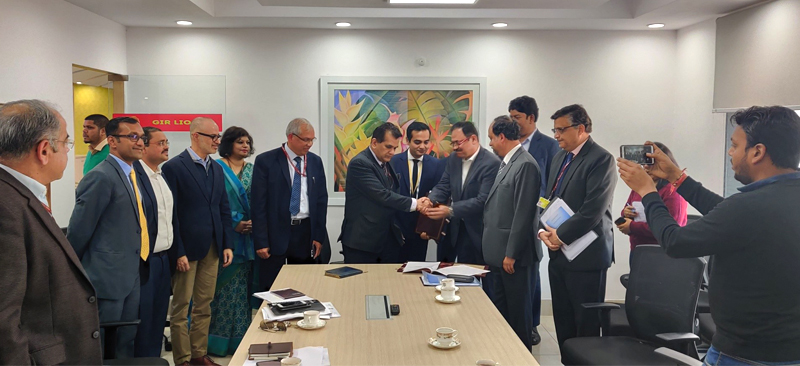
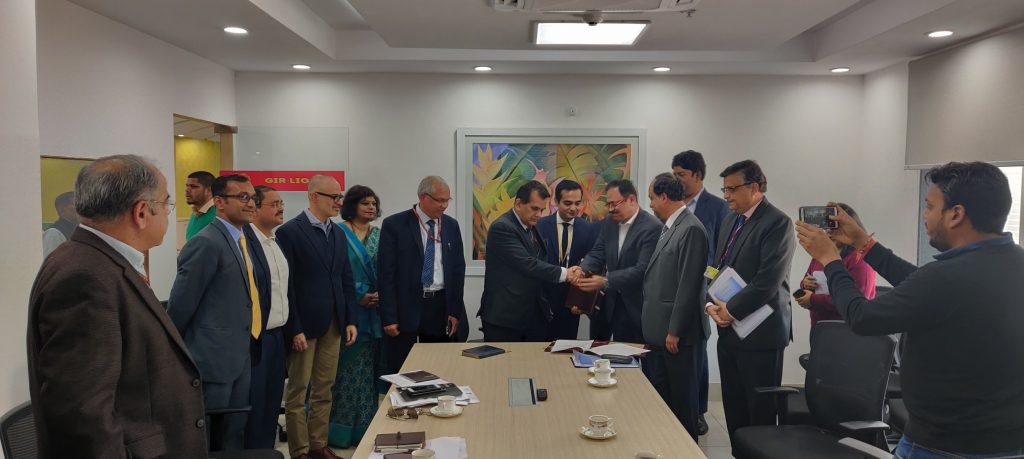
New Delhi, Feb 06: NITI Aayog and MSC signed a Statement of Intent (SoI) to continue the ongoing collaboration and work towards enhancing the status of financial inclusion in 27 districts under the “Transformation of Aspirational Districts Programme (TADP)”.
Mr. Rakesh Ranjan, Advisor in the NITI Aayog, signed the SoI with Mr. Manoj Sharma, the Director of MSC, in the presence of Mr. Amitabh Kant, the CEO of NITI Aayog.
MSC, funded by the Bill & Melinda Gates Foundation, has been providing technical assistance to enhance financial inclusion in 27 aspirational districts across eight states of India since July, 2018. Under this project, MSC works closely with policymakers, the district administration, and various banks. Together, we intend to enhance the adoption of banking products, develop channel innovation strategies, enhance the efficiency and effectiveness of financial inclusion initiatives of the government, and support evidence-based policymaking.
As a part of TADP, the central government, state governments, and the district administration work together to rapidly improve the performance of these districts. The key areas for improvement are health and nutrition, education, agriculture and water resources, financial inclusion and skill development, and basic infrastructure.
Management of savings groups through digitization
For savings groups, the digital transformation of savings management and credit processes is fundamental in breaking the barriers around account opening, client onboarding, entrepreneurship training, loan application, analysis, approval, and disbursement. This video focuses on why it is important for financial institutions to digitize savings groups, challenges that savings groups experience as they go through this transformational journey as well as the benefits that these organizations stand to gain by moving away from manual operations toward more digitized solutions. Watch and learn.