Throughout time households saved: as insurance against emergencies, for religious and social obligations, for investment and for future consumption. This paper highlights some of the reasons behind inaccessibility to formal sector banks by most poor people. It further analyzes the emergency needs of the poor people, their requirement for both liquid and illiquid services and the strategy used by them to build-up large lump sums of money to purchase significant capital assets such as land and houses. Key issues addressed in the paper include – compulsory, locked-in savings, designing savings products and services from an MFI’s Perspective and managing the costs of small savings accounts. The paper discusses the benefits of offering savings services to the poor, while cautioning that there are no magic formulas for designing appropriate savings products for poor people: it requires market research and careful, systematic product development. An example of “The Development of Equity Building Society’s Jijenge Savings Account” is also discussed in the paper.
Reducing Vulnerability: The Demand For Microinsurance
Vulnerability for the poor is an everyday reality and has been described as the inability of individuals and households to deal with risk. While the shocks that the poor experience may be the same as conventional insurance clients, they are more vulnerable because they have fewer reserves to draw upon. This paper seeks to understand what people in Kenya, Tanzania and Uganda are looking for in microinsurance and how attributes that meet the needs and preferences of the poor can be incorporated into the design of microinsurance products. This paper complements another study which examines the lessons from formal institutions currently providing health insurance services.
Signposts to the Provision of Market Led Micro-Financial Services
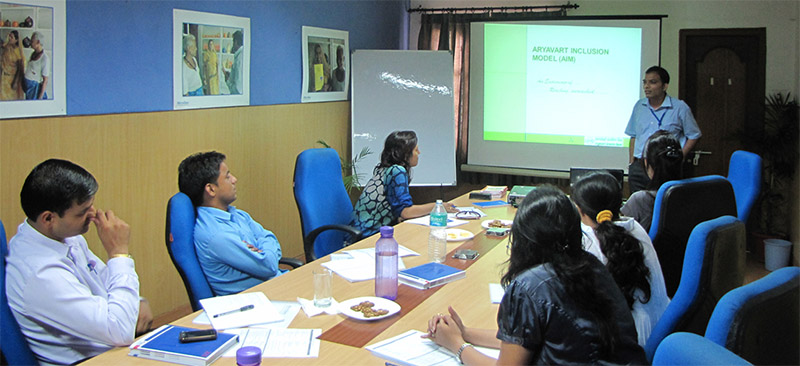
There is increasing discussion of ‘market led’ microfinance, of placing customers first – but how do we know if an institution is becoming market led? The note discusses ‘signposts’ to the provision of market-led microfinance services such as: the organisation having vision and mission statements which are focused on delivering quality customer responsive financial services; the Board that maintains vision and mission; the Executive function which focuses on its customers and takes up supportive activities; the bank that develops and retains customer focused staff through investing in training, internal communications, innovative mechanism to build staff capacity, well-designed incentive schemes; the bank that retains a strong customer focus throughout its “front office” operations and Back office operations that support continually improving products and processes. These signposts reflect MicroSave’s experience with its Action Research Partners
The Provident Financial Model: Innovation in South Africa’s Microfinance Industry
This research paper seeks to explore the options left to clients in the absence of user-owned and managed MFIs, and the clients’ perceptions and attitudes towards this possibility. It explores the entire financial landscape ranging from the informal, semi-formal to formal institutions.
It looks at the losses incurred by poor in the informal sector and attempts to understand the dynamics of the risk in order to develop appropriate policies and regulations governing financial services for the poor. This paper focuses on the comparative risk and describes functional issues only as they influence the relative safety of the users’ money and offers a range of suggestions drawn from discussions with clients and microfinance practitioners.
Poverty Africa Health Programme – Health Microinsurance
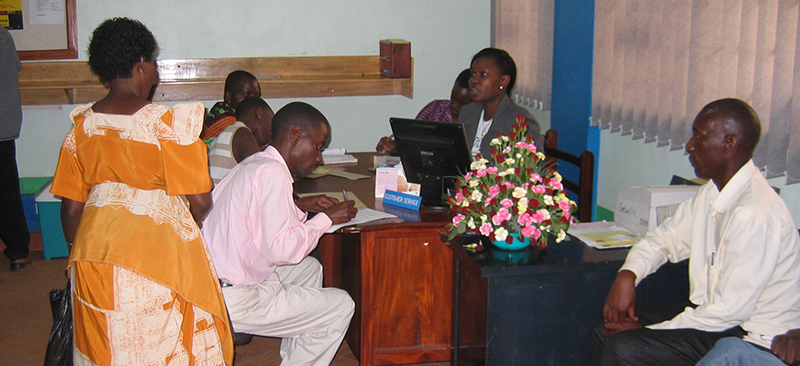
Poverty Africa (POA) is an international Non-Governmental Organisation (NGO) headquartered in Dar es Salaam, Tanzania. This paper highlights POA’s holistic health promotion strategy and institutional structure and describes its microinsurance scheme. It gives an overview of the scheme and analyzes the operating mechanism including – accounting and marketing strategy, sustainability, management and governance related issues and the role of the providers and their relationship with POA. The paper also addresses issues like client’s satisfaction with the product and the quality of health care services offered and problems regarding quality of health care. It highlights client’s concerns and associated risks to partner and includes a SWOT analysis to describe the scheme’s strengths, weaknesses, opportunities and threats.
MEDIPLUS Health Services – Nairobi, Kenya
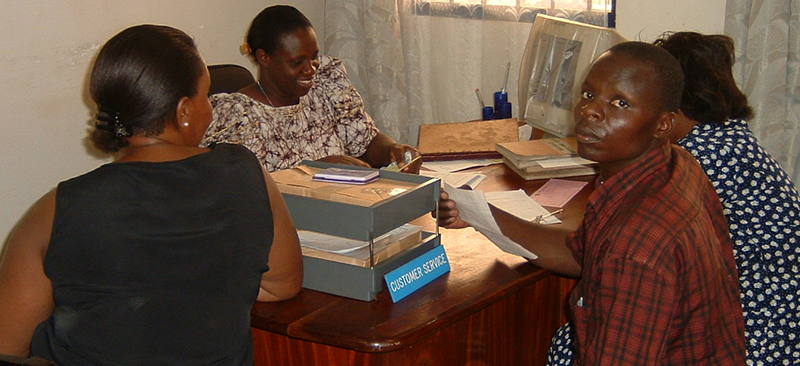
This research study is part of the Micro-Insurance series produced by MicroSave and the Microinsurance Centre. The paper outlines the interventions and strategies adopted by MediPlus, a privately owned, for-profit health maintenance organisation (HMO) in Nairobi. While MediPlus is not involved in the actual delivery of health services, it provides healthcare information including education packages on the maintenance and control of specific health related problems. In addition, MediPlus provides access to preventive healthcare interventions to its customers. This study maps the institutional structure of MediPlus, its health schemes’ operating mechanism, its marketing strategy, management of risk and sustainability issues related to the organisation.