Blog

Solving Indonesia’s sanitation woes

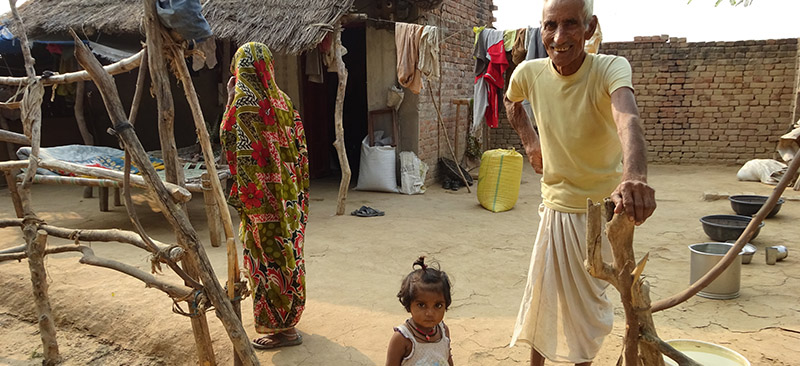
The problem is toilets for the world’s fourth most populous nation. Of the estimated 251 million Indonesians, only 11 percent fall below the poverty line, but in rural areas, a startling 61 percent still practice open defecation. Close to a third of city dwellers do not use or have access to toilets either. A miniscule 2 percent connect to functioning sewerage network.

Indonesia is one of the developing world’s success stories and Southeast Asia’s largest economy. Growth has been a healthy 6 percent or better in recent years; GDP in terms of purchasing power falls right behind Spain and Canada. And yet the government’s allocation for sanitation, previously two U.S. cents per person, is now five cents per person. Both are clearly well below the UN Millennium Development Goal of $6.30 a head for improved sanitation.

The figures above are further complicated by the fact that poorly constructed toilets do exist for many, but waste either goes untreated into open drains or seeps into the groundwater—a country of 17.508 islands obviously has fairly shallow water tables–thereby polluting it.

Designing and building reliable sewer networks for almost 57,000 kilometres of archipelago coastline is also a lot more complicated—and expensive—than it would be for comparable economies. Septic tanks and soak pits are the imperfect, interim solution.

The far more daunting expense, however, is the $250-300 that 40+ percent of the overall population currently without improved sanitation would have to pay to install a household toilet with a safe waste disposal system. No surprise, the bottom fifth quintile (~22 percent) with an approximate net income of less than $2,200 a year have other priorities they deem more pressing.

The government’s solution — two large information-awareness programmes to promote sanitation and hygiene — and similar efforts among international development agencies for Community Led Total Sanitation (CLTS) help underscore the need, but do not actually help finance or build the desired end result.

Some readers might well ask here why the significant cash outlays necessary to design and disseminate these extensive information efforts aren’t simply used to give people the toilets they need. The short answer is that in many poor countries, outside defecation has been the norm for so long that new toilets are viewed only as useful storage or deployed for other purposes completely unrelated to better hygiene.

We also know that, rich or poor, we value what we budget for and purchase ourselves. Free hand outs come with little sense of ownership or pride.

The one option that MicroSave has seen work in India and Kenya is microfinance loans. The $250+ required for toilet and system installation are feasible loans, with easy repayment schedules, for interested applicants. Many are also already MFI loan customers, allowing for speedier authentication, credit assessment, and clearance.

Social and behavioral change is never quite so simple as offering attractive financing for what is still a puzzling innovation for many in the developing world. For a long time, no noticeable change occurs, and then there is what Malcom Gladwell has defined as the tipping pointwhere, suddenly, everyone is doing what no one was doing before.

This transition may happen for sanitation in Indonesia more readily than elsewhere. Household disposable income continues to rise, even in very poor sectors, and close to half goes to domestic consumption, according to a Bank Indonesia summary. Muslims, more than 86 percent of the Indonesian population, emphasise personal hygiene and purification as an integral part of their religion. An even higher majority of the country are literate and own or have access to a mobile phone.

Infrastructure and geography remain problematic, but the social odds are heavily favour of a solution, if not now, then soon.

“Mobile phones and money: Less technology at a much lower cost “

Almost everyone agrees financial inclusion is a worthwhile and important goal. We’re not going to improve health, education, sanitation, and business prospects for the very poor, in India and elsewhere until money moves around more efficiently and safely.

But building and maintaining a workable system for better savings, money transfers, and payments, particularly in rural areas, hinges in large part on the bank agents, or business correspondents (BCs) as they are known in India.  And most agents are not happy with the current model.

In fact, they’re not wrong; it’s not a great business proposition for them at present, especially those far removed from large cities. (For a more detailed analysis of the many reasons, please see MicroSave‘s agent network research in South Asia, East Africa, and elsewhere.)

Their primary gripe is of course costs—outlays they have to make up front to participate and the on-going expenses they incur.  According to India’s Ministry of Finance in 2012-13, the 152,000 BC outlets made 183.8 million transactions for a total value of Rs.165.33 billion/US$2.67 billion. However, in the worst-case scenarios, their overall capital, and operating costs came to Rs.92 billion/$1.5 billion.  (US dollar comparisons are obviously different from the numbers you were seeing last year as the Indian Rupee has lost close to one-fifth of its value  against the dollar and other Western currencies in recent months.)

Normal-case scenarios do not look a lot more favorable. Widespread agent angst is suddenly more understandable.

One seemingly unimportant aspect in all this is the technology banks and network managers impose on agents for cash-in/cash-out, opening accounts, and other operations.  In India, the most prevalent choice—point of sale (POS) devices that work in concert with India’s Universal ID (UID) cards—is also the most expensive to own and operate (Rs.20,000/$324 for the initial “security deposit” to the bank and ~Rs.2,400/$40 a month to maintain).

UID or Aadhaar is a biometric authentication system designed for all of India’s citizens, but its relevance to migrant and poor populations currently without valid papers or identification is particularly important for government benefits and other financial inclusion initiatives.

Kiosk computers which enable direct links to host banks for client transactions aren’t cheap either. Kiosk agents first have to buy the laptop or desktop (Rs. 15,000-25,000/$234-390) and monthly costs run Rs.1,500-3,000/$25-50.00.

In both cases, electricity and power backup to run the devices, internet access, and even printer paper and cartridges are all expensive.  And outside large cities, electricity and online/server access are notoriously unreliable.

Enter the mobile phone. Simple, unadorned feature phones are adequate to most transaction tasks, most notably remittances whereby most agents make most of their money. Monthly phone costs are Rs.50-100/$1-2.00—yes, a surprising number of missing zeroes compared to the figures above—and most agents already own one. Phone replacements every 2-3 years and repairs are expenses most would have to pay anyway.

For authenticating clients, a UID-certified, Bluetooth/USB add-on that couples with a mobile phone or PC, and includes a biometric scanner, printer, and card-swipe slot, will run Rs.15,000/$234.  And though this does not include electricity, server-connection, ID fraud, and related authentication expenses which agents will have to assume, costs are still less than the stand-alone POS devices noted above.

Smartphones are coming, even in very poor countries, even to the small Indian Kirana shop business correspondent. Internet access (average monthly mobile data access subscriptions in India run between ~Rs.100-450/$2-7) may increase these initial and longer-term costs. Although not necessarily. A basic smartphone in many parts of India can be bought for as low as Rs.5,000/US$78, and both agents and their customers may purchase one for personal reasons unrelated to remittances, direct benefits transfers, and other financial services.

Whatever type of phone they have in hand, the majority of agents are likely to see a mobile handset as the most affordable business-transaction option moving forward. Eko, the only business correspondent network so far in India to use mobiles exclusively, and Airtel Money, a leading Indian mobile operator with an advanced payments platform, are particularly interesting examples to follow.

For a more comprehensive analysis of these three technologies, the costs involved, and specific, relevant examples, please see MicroSave’s recent Transaction Economies report.

We’ll conclude where we began. The broad social and economic changes financial inclusion seeks to advance won’t happen without careful attention to the details. Until now, much of our attention has been centered on end-users, the financially excluded and underserved. With good reason. Their trust and participation are critical to the success of any inclusion efforts.

The next step toward widespread adoption, however, is more focus on agents, the technology they use, and the costs they incur providing financial services to the very poor.  And, as is often the case with technology, simple and cheap trump all.

Maybe not for the banks and technology service providers, but neither constitutes the all-important “volume” and “sustainability” necessary to make financial inclusion work. First, we ensure inclusion policies are meeting the needs of agents and their customers and meeting them well. Then we’ll worry about everyone else.

The Aadhaar story in East Godavari

At a time when the country is working to enrol 600 million Indians for Aadhaar by 2014, the East Godavari district in Andhra Pradesh has achieved remarkable results. With over 99.50% Aadhaar enrolments as of 25th December 2012, the district administration has set a remarkable precedent for others to follow. They are now able to leverage Aadhaar to deliver rations (under the public distribution system or PDS) through the fair price shops leased out by the Government.
PDS process in India
Every year, the Indian Government spends nearly Rs.750 billion to provide food security to people below the poverty line, and yet 21% per cent of India’s population remains undernourished.  International Food Policy Research Institute notes that, despite an increase in food production by almost 50%, there is a little change in the proportion of undernourished in India.

There are numerous lacunae in the systems that block the transfer of rations to the poor. Food grains and other essentials are distributed at subsidized prices through the established network of fair price shops (FPS) spread across the country. Families below the poverty line who are eligible visit the FPS with their ration card. The distribution network constituting 5.05 lac (505,879) fair price shops is not without defects. There are several structural shortcomings with the system. These include:

  • malpractices by the fair price shop owners making the food inaccessible to beneficiaries (many FPS are open only for a few days in a month and beneficiaries who do not visit the FPS on these days are denied their right. FPS also use multiple excuses to both charge higher rates and deliver a reduced quantity of food grains);
  • creation of a large number of ghost and bogus cards to sell the goods in the open market;
  • the growing instances of beneficiaries receiving inferior quality food grains;
  • the number of instances where benefits are being availed in the names of rightfully entitled families without their knowledge;
  • irregular and diverse mechanisms adopted to identify households eligible for ration; and
  • the lack of transparency and accountability at all levels making monitoring the system extremely difficult.

Government authorities have made several attempts to address these problems, yet with limited success.

The responsibility for regulating PDS, one of the oldest as well as the longest running, subsidy schemes in the country, rests with both central and state governments. While the central government is responsible for procurement, storage, transportation and bulk allocation of food grains, the state governments are responsible for the allocation and identification of families below the poverty line, issue of ration cards and supervision and monitoring the functioning of fair price shops.

Aadhaar Story in East Godavari

The district administration saw that Aadhaar can be used for the targeted delivery of food and civil supplies to the poor. To this end, the project was rolled out in four phases that covered:

  1. enrolment – in which KYR+ data (including ration card details, bank account information and mobile number was captured);
  2. seeding – which involved updating the ration card database of beneficiaries with the Aadhaar number and other details;
  3. roll out of Aadhaar enabled PDS; and
  4. Aadhaar enabled Ration Card Management System (AeRCMS).

The latter is yet to be implemented and will involve issuing a new ration card based on the Aadhaar number after authentication and de-duplication.

To execute the project in a timely and effective manner, the district administration designed several key processes. To enroll the people for Aadhaar, a detailed village level implementation plan was prepared. Special personnel from the civil supplies department were deployed to carry out the project with well-defined roles and responsibilities. Training sessions were conducted to educate them about the core process related to the project. The Joint Collector of the district, who is the Additional Director of the Food and Civil Supplies Department of Andhra Pradesh, also conducted a few training programmes and monitored the progress and implementation of the project. A private firm was contracted to provide the Electronic Point of Sale (EPOS) machines through which the ration was distributed to the beneficiaries, upon authentication. A special technical team was put in place to address the technical snags that arose during the use of EPOS machines. Feedback mechanisms were set up to accelerate the project and most of the issues were resolved immediately after identification.

Impact of Aadhaar

The district administration has created a well-regarded demonstration model for implementing AePDS, with teams from various other districts visiting East Godavari to study this system. According to the report published by the district administration, the government is already saving up to Rs.44,274 ($800) per month in each of the 47 FPS in which the pilot was launched due to the elimination of the ghost and duplicate beneficiaries.

Aadhaar effectively addressed the problems of identification and distribution that have been hindering the PDS since its inception. It ensured the establishment of an effective system under which no deserving beneficiary is deprived of his/her ration. Alerting beneficiaries about the arrival of ration at the FPS, and about the timing of disbursement for each month, via an SMS to their mobiles has enhanced the transparency and accountability with which PDS operates. Setting up of EPOS machines for validation and authentication of beneficiaries has ensured that rations reach the targeted persons.

Learned and the way forward.

The project was piloted in 47 fair price shops where it has been operational since September 2012. This has now been expanded to 100 of the total 2,561 shops in the districts. The administration faced numerous challenges during the pilot. The administration overcame challenges that included issues related to:

  • training and capacity building of district functionaries involved in the project;
  • low awareness levels of the AePDS among villagers; and
  • network and connectivity issues for EPOS machines.

Effective mitigation strategies were adopted to counter these issues, allowing project achieve its objectives. The district administration is now focused on expanding the project to bring all the 2,561 fair price shops in the district under AePDS. Steps are being taken to manage this expansion and impending challenges like the supply of EPOS machines for all the fair price shops, and the provision of Aadhaar authentication for exceptional cases like old and disabled are already under review.

(A print of this article was published with IBN LIVE).

At a time when the country is working to enrol 600 million Indians for Aadhaar by 2014, the East Godavari district in Andhra Pradesh has achieved remarkable results. With over 99.50% Aadhaar enrolments as of 25th December 2012, the district administration has set a remarkable precedent for others to follow. They are now able to leverage Aadhaar to deliver rations (under the public distribution system or PDS) through the fair price shops leased out by the Government.

PDS process in India

Every year, the Indian Government spends nearly Rs.750 billion to provide food security to people below the poverty line, and yet 21% per cent of India’s population remains undernourished.  International Food Policy Research Institute notes that, despite an increase in food production by almost 50%, there is a little change in the proportion of undernourished in India.

There are numerous lacunae in the systems that block the transfer of rations to the poor. Food grains and other essentials are distributed at subsidised prices through the established network of fair price shops (FPS) spread across the country. Families below the poverty line who are eligible visit the FPS with their ration card. The distribution network constituting 5.05 lac (505,879) fair price shops is not without defects. There are several structural shortcomings with the system. These include:

  • malpractices by the fair price shop owners making the food inaccessible to beneficiaries (many FPS are open only for a few days in a month and beneficiaries who do not visit the FPS on these days are denied their right. FPS also use multiple excuses to both charge higher rates and deliver reduced quantity of food grains);
  • creation of a large number of ghost and bogus cards to sell the goods in the open market;
  • the growing instances of beneficiaries receiving inferior quality food grains;
  • the number of instances where benefits are being availed in the names of rightfully entitled families without their knowledge;
  • irregular and diverse mechanisms adopted to identify households eligible for ration;and
  • the lack of transparency and accountability at all levels making monitoring the system extremely difficult.

Government authorities have made several attempts to address these problems, yet with limited success.

Picture11-300x208

The responsibility for regulating PDS, one of the oldest as well as the longest running, subsidy schemes in the country, rests with both central and state governments. While the central government is responsible for procurement, storage, transportation and bulk allocation of food grains, the state governments are responsible for the allocation and identification of families below the poverty line, issue of ration cards and supervision and monitoring the functioning of fair price shops.

Aadhaar Story in East Godavari

The district administration saw that Aadhaar can be used for the targeted delivery of food and civil supplies to the poor. To this end, the project was rolled out in four phases that covered:

  1. enrolment – in which KYR+ data (including ration card details, bank account information and mobile number was captured);
  2. seeding – which involved updating the ration card database of beneficiaries with the Aadhaar number and other details;
  3. roll out of Aadhaar enabled PDS; and
  4. Aadhaar enabled Ration Card Management System (AeRCMS).

The latter is yet to be implemented and will involve issuing a new ration card based on the Aadhaar number after authentication and de-duplication.

To execute the project in a timely and an effective manner, the district administration designed several key processes. To enrol the people for Aadhaar, a detailed village level implementation plan was prepared. Special personnel from the civil supplies department were deployed to carry out the project with well-defined roles and responsibilities. Training sessions were conducted to educate them about the core process related to the project. The Joint Collector of the district, who is the Additional Director of the Food and Civil Supplies Department of Andhra Pradesh, also conducted a few training programmes and monitored the progress and implementation of the project. A private firm was contracted to provide the Electronic Point of Sale (EPOS) machines through which the ration was distributed to the beneficiaries, upon authentication. A special technical team was put in place to address the technical snags that arose during the use of EPOS machines. Feedback mechanisms were set up to accelerate the project and most of the issues were resolved immediately after identification.

Impact of Aadhaar

The district administration has created a well-regarded demonstration model for implementing AePDS, with teams from various other districts visiting East Godavari to study this system. According to the report published by the district administration, the government is already saving up to Rs.44,274 ($800) per month in each of the 47 FPS in which the pilot was launched due to the elimination of the ghost and duplicate beneficiaries.

Aadhaar effectively addressed the problems of identification and distribution that have been hindering the PDS since its inception. It ensured the establishment of an effective system under which no deserving beneficiary is deprived of his/her ration. Alerting beneficiaries about the arrival of ration at the FPS, and about the timing of disbursement for each month, via an SMS to their mobiles has enhanced the transparency and accountability with which PDS operates. Setting up of EPOS machines for validation and authentication of beneficiaries has ensured that rations reach the targeted persons.

Learned and the way forward.

The project was piloted in 47 fair price shops where it has been operational since September, 2012. This has now been expanded to 100 of the total 2,561 shops in the districts. The administration faced numerous challenges during the pilot. The administration overcame challenges that included issues related to:

  • training and capacity building of district functionaries involved in the project;
  • low awareness levels of the AePDS among villagers; and
  • network and connectivity issues for EPOS machines.

Effective mitigation strategies were adopted to counter these issues, allowing project achieve its objectives. The district administration is now focused on expanding the project to bring all the 2,561 fair price shops in the district under AePDS. Steps are being taken to manage this expansion and impending challenges like the supply of EPOS machines for all the fair price shops, and the provision of Aadhaar authentication for exceptional cases like old and disabled are already under review.

(A print of this article was published with IBN LIVE).

Understanding Over-Indebtedness

This video talks about over-indebtedness. The subject is ranked by microfinance industry stakeholders as the top risk facing the industry in 2012. Simply put, over-indebtedness is a situation where one takes on too much debt beyond one’s capacity to pay. When faced with such situation, the poor takes on further sacrifices in basic quality of life including asset erosion. As if this is not harmful enough, the poor also has to contend with threats and harassment for inability to pay on time from some staff and other clients of financial institutions. Though complex, over-indebtedness need not be considered a debt trap by low-income clients. It can be addressed by an industry with firmer resolve to understand the condition and needs of clients and committed to improving products and services tailor –made to clients’ evolving requirements.

Reducing the vulnerability of grass-roots people in Papua New Guinea: Delivering microinsurance in a particularly challenging environment

Papua New Guinea (PNG) has one of the lowest insurance penetration rates in the world. According to Bank of Papua New Guinea, less than 5% of PNG’s 7 million people have insurance of any kind. Nationwide Microbank (NMB), the South Pacific’s largest microfinance institution, and Pacific MMI, a leading national insurance company, have entered into a partner-agent agreement to launch MiLife, the first microinsurance product in PNG, and the first mobile microinsurance scheme in the South Pacific.

MiLife is the first formal insurance product specifically designed for low-income households in PNG. NMB developed MiLife after extensive market research supported by the Pacific Financial Inclusion Programme (PFIP). Qualitative and quantitative research on existing risk mitigation mechanisms was carried out at a national level to inform the product development process. Focus group discussions identified financial risks that challenge life and livelihoods of the target population and assessed the shortcomings of existing risk mitigation practices. Consequently, MiLife was designed to protect families from the financial burdens following the unexpected death of a family member. Traditionally, during the mourning period, or hauskrai, extended relatives (Wantok) show up—sometimes by the hundreds—expecting to be fed and housed. Funeral costs often oblige the family of the deceased to borrow money or even sell assets, having devastating, long-term negative effects on a household, particularly if the deceased was a breadwinner.

MiLife is marketed as an NMB product and is distributed through it’s growing network of bank branches and mobile banking agents. The one-year term life insurance product covers both husband and wife and is offered in combination with the NMB operated mobile banking service MiCash in return for a competitive one-time upfront premium payment. Registration and initial claims verification is also carried out by specifically trained NMB staff in close cooperation with the insurance partner. The mobile banking service allows premium payments to be made via the mobile money channel. Benefit payouts can be made directly into the MiCash bank account and cashed at any NMB branch or village banking agent.

Tony Westaway, managing director of Nationwide Microbank, says: “Despite the widespread informal support systems (wontoks), we have found that our clients struggle to deal with the financial consequences of shocks to their lives. We believe that MiLife reduces the vulnerability of our clients and gives them peace of mind to invest in a brighter future. The mobile money aspect is an added benefit. People no longer have to travel vast distances to the bank branch, but receive the money directly into their mobile account. For many of our clients, MiLife is not only their first insurance product but also their first real bank account. Although insurance is a new concept to most of our clients, I believe we will see a positive response to this new product.”

PNG is a challenging country to offer any financial service, let alone insurance. Speaking 850 different languages and holding strong tribal alliances, the vast

majority of people still live as subsistence farmers in traditional societies. More than 85% of the people work in the informal economy and lack access to formal financial services. Transport infrastructure is nearly non-existent, the geography is challenging, financial literacy is low and the crime rate notoriously high. While the recent arrival of mobile money promises to overcome some of the daunting distribution hurdles, appropriate client education and establishment of cost-efficient processes to service the low-income market will undoubtedly be a challenge for NMB and its insurance partner.