Give us Some Credit! Meet the Digital Borrowers in Kenya

It is 3 am in Nairobi. The city, known for its vibrant nightlife, is wide awake. Entertainment spots in the bustling capital of Kenya overflow as the night goes on. The streets are a sea of activity, filled with pleasure-seekers. Interestingly, it is between 3 am and 5 am that a third of all the digital loans from providers are taken. Could this be just a coincidence?

MicroSave conducted a qualitative study in Nairobi and Meru to understand the perceptions and motivations of low-income Kenyans to use digital credit. Using our customer-centric Market Insights for Innovation and Design (MI4ID) approach, we identified three profiles of digital borrowers: Repayer (Muthoni), Juggler (Makena) and Defaulter (Nyachae). In this blog, we analyse their use of digital credit and suggest ways to adapt existing products to better serve these customers.

Muthoni, 35, is a trader at Gikomba market. She buys fresh vegetables from Wakulima market at 3 am. She finances this purchase through digital credit. She has a choice pool of seventeen providers, and no longer uses informal lenders, who would charge her 10% interest per day. Her credit limit is $200, achieved through on-time repayment and disciplined saving.

Muthoni is a “Repayer”. Repayers are the premium customers for digital credit providers. They rarely default and can take multiple loans in a month. To reward this customer segment, providers could enable access to shorter or longer term loans, multiple/concurrent loans and increase credit limits. As is the case with Branch, other providers could also implement loyalty programmes that reduce interest rates and facilitation fees based on the size of loans taken, as well as on-time repayment. This would create ‘stickiness’ and reduce customer churn, as they tend to graduate to products with cheaper variable costs.

Makena, 37, runs a grocery shop in Igoji town. She is married and has four children. At any given month, she services over three digital loans in addition to traditional loans. Currently, she uses M-Shwari for emergencies and to boost her business, KCB M-Pesa for ease of consumption and Equitel to pay school fees. Occasionally, she uses Airtel Kopa Cash for sports-betting. She also has an $8,000 land loan from Cicido SACCO and another one from Equity Bank, which was used to restock her shop after it was looted. She usually repays late, but right before being negatively listed to ensure she can borrow again. ‘I prioritise [repaying] the Sacco loan as opposed to digital loans due to the huge penalties on default imposed by the Sacco. In some cases, they take your personal assets.’

Makena belongs to the “Juggler” segment of digital borrowers, who face capital scarcity leading to the use and “animation” of different credit instruments to meet various financial needs. In this context, we recommend that providers cater to such customers by offering more flexible repayment periods and options to borrow in tandem and pay in instalments. The providers should also have clear incentives for on-time repayment (such as simultaneous access to multiple loans).

Nyachae, 26, is a savvy entrepreneur who runs an African fashion attire business in Nairobi. In 2015 he took a $5 M-Shwari loan to test the product but has not repaid it. He claims that reminder SMSs from the provider cannot scare him: “I delete the reminder messages. They don’t know me so they can’t find me”. Something about borrowing digitally feels less serious to the defaulter. Nyachae postponed the repayment until he was negatively listed with the Credit Reference Bureau (CRB). He would now have to pay $22 as clearance fees on top of his outstanding $5 loan to pass a credit check. Nyachae is currently servicing a $700 loan from the church SACCO. Recently, he managed to get a $20 loan from a provider despite being negatively listed.

Nyachae is a “Defaulter”. To better serve this segment, providers could include a personal dimension in the digital collection process. This could be done, for instance, through follow-up calls or through agent engagement in the case of larger loans. In addition, providers should better understand the defaulters’ intentions for borrowing as well as motivations and abilities for loan repayment. CRB regulations should accommodate the realities of digital credit, for example, by having different tiers of clearance fees that are commensurate with the loan amounts.

While interacting with Muthoni, Makena and Nyachae, we came upon a number of insights. These are enumerated below:

  • Borrowers only had a limited understanding of the terms and conditions. This was because these were presented in legal jargon and accessing them through a weblink created real technological, cost-related, and psychological barriers. There is, therefore, a need for salient and simple terms and conditions presented before a customer accepts the loan (that is, through pop-up messages for STK, or inbuilt messages for mobile apps). It would also be ideal to separate the interest rate from the principal. This will limit confusion and enhance understanding of the repayment amount.
  • There is clearly an element of gaming the system to influence loan limits. In this regard, providers can use interactive SMS to understand the context of customers’ loan uptake. Is it taken in an emergency? Is the loan availed as a trial without consideration for long-term implications? Or is the borrower trying to “game the system”? Engaging customers before they take the loan can reduce uninformed borrowing and delinquency. It can help avoid a situation like Nyachae’s unrepaid $5 loan.
  • Reminders messages sent at different times of the day do not elicit repayment behaviour (Nyachae and Makena ignore messages sent in the morning). Providers should instead customise repayment reminder messages and incentives in terms of the customer segment and ensure that the reminders are goal based, so customers may see the value of timely repayment. Including a personalised touch, such as follow-up calls, can also drive repayment. This has been seen in the case of providers like KCB M-Pesa that uses a dedicated call centre to follow up with loan defaulters, Tala, which uses a collection agent, and Nimble Kenya, which also call to follow up with defaulters.
  • Ultimately, to encourage timely repayment from customers like Makena and Nyachae, there is need to use behavioural levers to drive repayment. These could include the following:
    • Priming ‘good borrower’ identities during the loan application stage. (‘Only prompt repayers take this loan, do you wish to proceed?’);
    • Framing loan default as having serious consequences (‘You will not be able to borrow in future if negatively listed on the CRB’);
    • Using social proof to elicit on-time repayment (see the adjoining Tala chat screen).

There is a clear demand for digital credit. A growing range of providers experimenting with approaches to respond to this demand bodes well for the future. However, to serve the wide range of borrowers better, providers should design products that leverage both rigorous data analyses as well as demand-side customer-centric research to understand the wide range of behaviours, contextual challenges and client experiences. Over time, they should incorporate learning within the product to educate customers on personal savings goals, and make these accessible to customers before and/or after disbursement.

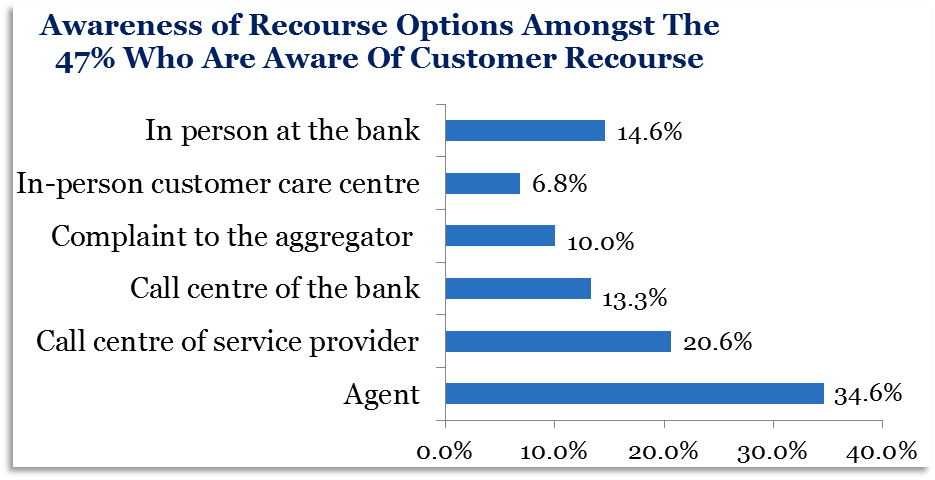
Regulators also have an important role to play and should make it mandatory for all providers (including app-based lenders located outside the country) to use Credit Reference Bureaus to share data on digital borrowers. Regulators should set minimum standards for customer recourse channels and coordination by partners to address issues/complaints raised by customers and drive long-term usage and customer loyalty.

Digital credit is still a nascent industry with much scope for learning. Understanding the needs, aspirations, perceptions, and behaviour of customers should allow providers to design products and ‘lend smarter’, rather than depend on the risk premium-inflated interest rates to secure their business case.

Digital Credit – Have We Not Been Here Before With Microfinance?

I worry that I may be getting old and cynical; but I am quite sure I’m suffering déjà vu.
As we continue to celebrate the important breakthrough that digital credit provides in efforts to lend to the poor, I cannot help myself comparing it with microfinance. The parallels are clear to see:

  1. Insufficient emphasis on savings,
  2. Loan amounts too small to make a real difference,
  3. Reliance on repayment behaviour,
  4. Drop out patterns,
  5. Multiple borrowing to get a useful sum,
  6. One loan used to settle another and
  7. Rising delinquency.

We seem set to have to learn the same old lessons all over again, the hard way.

I got into microcredit (for that is really what “microfinance” usually is) I could not believe that the industry could place such little emphasis on the importance of savings. Savings that were mobilised by microcredit institutions were typically compulsory, and used as a basis to determine loan size and to act as collateral. Digital credit offerings, when backed by a bank (for example M-Shwari, EazzyLoan or M-Pawa), mercifully do not make savings compulsory and inaccessible to the client, but (when you examine the literature or press coverage) they are still the secondary service that feeds the algorithms that dictate loan amounts. While many customers do indeed use the savings services (and some are thoughtfully designed and structured), many potential borrowers deposit and withdraw in an attempt to game the system to raise the loan amount for which they are eligible.

In common with microfinance, the initial digital credit loans are typically too small to be of any real value – except for consumption smoothing, very short-term trading or responding to emergencies. These are all very valid and important reasons to use the service; but the rhetoric and hype around financing enterprises and lifting borrowers out of poverty seems optimistic. This is confirmed by Julie Zollman’s analysis of the FinAccess 2016 data (see graph below) which shows that less than 16% of these loans are used for enterprise.

This leads us to another similarity. For too long microcredit had lived the lie that loans were used for enterprise and simply assumed that microcredit’s impact was beneficial: borrowers were repaying and taking more loans, so there must be positive impact. We seem to be falling into the same trap in our romance with digital credit – perhaps it is time for some rigorous evaluation?

Microcredit institutions have had to simplify and shorten their on-boarding (“training”) processes as competition grew. We can safely expect a similar trend in digital credit. In contrast to the relative simplicity of applying for a loan from M-Shwari, EazzyLoan and other SMS-based systems, app-based lenders’ lengthy and complex application steps discourage many from taking up the product.

The rhetoric around using big data to make loan assessments also seems misleading. Our recent experiment involved working with low income people to apply for loans from all the major providers in Kenya. This allowed us to assess the customer journey, the levels of disclosure of terms and conditions and the resultant loan amounts offered. This exercise demonstrated that (perhaps because of their very limited digital footprints) a poor borrower can put almost any numbers they want into the app-based lending sign-up screens in Kenya and they will receive a standard loan of Ksh.2,000 (US$20) or Ksh.1,000 (US$10) depending on the provider. Thereafter, in common with M-Shwari, EazzyLoan and other SMS-based systems (and indeed microcredit institutions), it is probably your repayment history that will, above all else, determine the size of your next loan.

I strongly suspect that the analysis of “1,000 data points”, social networks and behaviour will be largely incidental to this key indicator of credit worthiness. This may, of course, be different for micro and small business owners using social media to market and digital channels to effect transactions. But for a typical low income consumer who only tops his/her mobile up with a small amount twice a month, and uses a limited number of apps, their digital footprints are probably too light to add much value over and above repayment history. This may evolve with time, as it has done in the United States, where the correlation between Lending Club’s credit rating grade and the borrower’s traditional FICO credit rating score has dropped from 80% in 2007 to 37% in 2015. But this will be highly dependent on low income people beginning to participate more in the digital economy.

When I first arrived in Uganda, all MFIs were offering loans repayable over four months and living with drop-out rates of 30-60% per annum – hardly the basis for a sustainable business! Analysis showed that, many of the drop-outs occurred after the first loan cycle. These were people who had tried a microfinance loan – often out of curiosity or under peer-pressure – and decided that it was not for them. We see exactly the same challenge with digital credit. Our initial analysis of TransUnion credit reference bureau data showed that over half (57% or 1.4 million) of negatively listed digital borrowers had taken digital loans for the first (and only!) time. And over 30% of the first-time borrowers between July 2016 and March 2017 were negatively listed by the end of March 2017.

However, there is one important difference. With digital credit the lack of personal touch, group guarantee and peer pressure means that the loan losses in this first cycle are extraordinarily high, and is driving many digital lenders to set their interest rates at rates that rival those of informal sector moneylenders. Worse, these interest rates typically do not drop as the borrower builds his/her credit history.

In addition to the drop-outs and default after the first loan cycle, Ugandan MFIs saw a rapid growth in drop-outs in the 5-7th loan cycles. The explanation was simple – many borrowers taking larger fourth, fifth and sixth cycle loans are unable to come up with the larger amounts they needed to meet their weekly repayments. While our analysis of the credit reference bureau data does not show this trend, our recent research in Kenya did highlight some instances of similar issues for regular borrowers eligible for larger loan sizes from digital lenders. The requirement to repay the large lump sum within one month is likely to become increasingly difficult as loan sizes increase. In Uganda, MFIs quickly learnt to extend the loan repayment term to 6 and then 12 months – will digital credit providers follow?

One of the major drivers of repayment crises (for example in Bolivia, India and Morocco) has been MFI staff aggressively pushing loans onto customers. This means that customers who do not want, (or need) to borrow take credit for less important uses, or hand it to their friends and family to use. We see similar trends amongst providers of digital credit who aggressively market their loans (particularly through SMS). As a result, our research showed, some borrowers take digital credit out of curiosity or for frivolous uses such as Friday/Saturday night entertainment or sports betting.

In common with microcredit we are also seeing the rise of two dangerous phenomena in digital credit: 1. Borrowers taking multiple loans to cobble together the lump sum they feel that they need; and 2. Borrowing from one lender to pay off the loans of another. Both, of course, increase credit risk. The better MFIs have tried to deal with these issues by better understanding and segmenting their clients. This allows them to make micro-small-medium enterprise (MSME) loans to those who need, and can repay, larger loans; and to support and manage those who are stressed and borrowing from others to repay. This requires personal interaction, and (for larger loans) a revised approach that involves visiting and assessing the borrower’s business.

It may be that digital credit providers will need to start to learn from the lessons of microcredit organisations and introduce a personal touch into the process, at least for the larger loans. This could be done through involving agents (thus providing them with valuable additional commissions for loan initiation). MicroSave’s work in India has shown that agents are willing to take responsibility for, and get involved in the collection of, loans that they have referred. But they are unwilling to burn social capital by chasing loanees for whom they have not vouched. Without this personal touch digital credit loans will remain last on the list to repay.

Let’s be clear, digital credit is an important, high potential and often valuable financial service for the mass market. We need to work to optimise the delivery and the recovery of these loans, for both consumers and providers. There are plenty of opportunities to tweak and significantly improve the current digital credit offerings. It is clearly time for digital lenders to review the hard lessons learned by microcredit institutions over the past 30 years – if they don’t, we’ll continue to see the alarming numbers of “digital delinquents” and people blacklisted on the credit bureaus.

Learnings from Transforming Villages into ‘Less-cash Villages’: Part Two

MicroSave has been working with National Payments Corporation of India (NPCI) and leading Public Sector Banks (PSBs) to create a less-cash ecosystem in select villages across the country. The initiative aims to digitally enable villages across the country, and encourage people to adopt digital payment solutions. This focus note captures the lessons learnt during the intervention and highlights the key steps involved in creating less-cash villages.

Learnings from Transforming Villages into ‘Less-cash Villages’: Part One

MicroSave has been working with National Payments Corporation of India (NPCI) and leading Public Sector Banks (PSBs) to create a less-cash ecosystem in select villages across the country. The initiative aims to digitally enable villages across the country, and encourage people to adopt digital payment solutions. This focus note captures the lessons learnt during the intervention and highlights the key steps involved in creating less-cash villages.

Mobile Banking Stumbles on Challenges in the Ugandan Market

The introduction of mobile banking in Uganda set expectations of overall improvement in customer experience. Mobile banking would ensure that customers spent less time in the bank since the queues would be significantly reduced. Customers would also enjoy convenience in transacting from wherever they wished. Unfortunately, both adoption and use of this channel have been slow. Long queues are still a common sight especially at the beginning of the school term when school fees have to be paid, and at the end of the month when salaries are usually paid out.

MicroSave conducted a survey to understand why customers continue to queue up at banks, as seen in this photo when they can use mobile banking. The survey pointed to a number of reasons. In this blog, we discuss three reasons that found frequent mention – high transaction costs, unreliable systems, and preference for human contact.

High Transaction Costs

28-year-old Birungi, one of the respondents explained: “For us to deposit UGX 20,000 on our account using mobile banking, we have to incur a charge of UGX 900. This is too much for such a small amount”. The banks do not charge Birungi or other customers like her for over-the-counter transactions, especially while depositing money. It is natural that they opt to queue up instead. Elyjoy, et al, 2013 indicate that the financial cost is likely to directly influence the customer’s decision to use mobile money and banking services. Banks, therefore, need to price mobile banking services in such a way that they are able to meet their operational costs while making deliberate efforts to ensure that mobile banking remains an attractive option for their target market.

Unreliable Systems

Cases of transactions failing and monies not being credited also affect the continued use of the mobile banking channel. We spoke to one of the customers, Wamala, who complained, “three months ago, I used the mobile banking option to send money to my account. It was never credited. I followed up with the branch manager and he said it would be sorted. Even today, my account has not been credited.” We talked to the branch manager, who informed us that he had tried in vain to follow up with the staff in charge of alternate banking channels. As a result, he had decided to advise customers that it was best if they transacted at the branch in case they faced such challenges.

Other customers interviewed indicated that they had, on several occasions, tried to deposit money into their accounts via mobile banking, but were unable to complete the transaction. They kept getting error messages that read: ‘Connection problems or invalid MMI code’. We confirmed this when we tried to send money via mobile banking to one of our bank accounts for three days in a row without success.

Studies have shown that reliability of the system increases customer confidence and chances of repeat use. Over the years, major networks like MTN and Airtel that have partnered with banks to deliver mobile banking services have devoted resources to minimise system downtime with significant success. However, occasional (and often extended) system down times that affect the convenience of accessing one’s account do negatively impact the customer’s confidence in using alternate banking channels.

Preference for Human Contact:

From the survey, we observed that older customers were more comfortable transacting at the branch. This can partly be explained by the fact that we drew respondents from a bank whose major clientage is on average over 40 years old. They indicated that they preferred to physically hand over their money to a teller because it is the only way they could be sure that the money has been deposited. In addition, while at the branch, the respondents could easily engage with the bank staff in case they had any issues with their accounts or required clarification. One of the respondents explained that every time he used mobile banking, he had to go to the branch to confirm that the money had actually been deposited. To him, therefore, this was double the effort and it was best if he actually transacted at the branch. A publication by Webber, (2016) noted that while younger people prefer digital solutions, the older ones opted for person-to-person contact. It is therefore important that banks maintain human interaction until when their customers can comfortably transact without it.

Way Forward:

Mobile banking is a relatively new concept in the Ugandan market. Banks offering this service, therefore, ensure that customers can access the service with minimal challenges. Firstly, banks should price the transactions conducted over mobile banking competitively, so that customers are attracted to use them.

They should also address in a timely manner the technical challenges related to system-failure that often lead to uncredited monies. This can be achieved by ensuring that an efficient complaints resolution mechanism is in place.

The need for physical contact, which is partly precipitated by the low literacy levels and minimal familiarity with technology, can be addressed by ensuring that a simpler and more user-friendly interface is designed. These efforts can be supplemented by actively informing customers about toll-free lines that they can call should they need further clarification.

There is little doubt that mobile banking will create a pleasant banking experience for Ugandans. The banks, however, need to ensure that they address the challenges that may hinder usage of the service.

First digitally enabled panchayat in Kerala

As the Government of India, under its “Digital India” campaign, continues to promote accessibility and usage of digital modes of payments across India, MicroSave partnered with National Payments Corporation of India (NPCI) to transform a panchayat near Munnar, Kerala into “less-cash” Panchayat. AEPS and BHIM Aadhaar are the two products users are using in this panchayat.