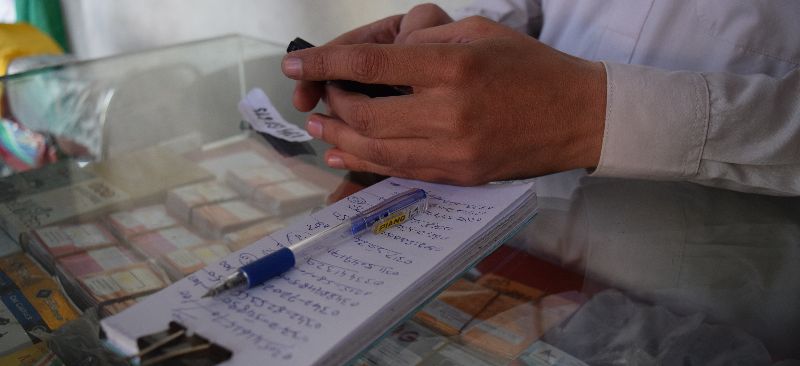
Our second Kenya Country Report is based on over 2,000 mobile money agent interviews carried out in 2014 all over the country. The survey report highlights findings on the mobile money landscape in Kenya, covering agent profitability, transaction volumes, liquidity management and other important strategic issues, whilst comparing these insights to our 2013 Kenya Country Report.
Since the launch of M-PESA in 2007 the story of digital finance in Kenya has been synonymous with that of the story of M-PESA. However, data just released from The Helix Institute of Digital Financeshows that this now seems to be changing, which is exciting to watch, and also important understand. In 2013, The Helix Institute survey of over 2,000 agents in Kenya showed that 90% of the agents in Kenya were providing services for Safaricom‘s M-PESA. However, as shown in the below chart, that percentage has declined to 79% in 2014, a drop of 11%. This means other providers in the market have been growing their agent networks at faster rates than that of M-PESA. Who has been doing this and how, help us understand what this might mean for the future of digital finance in Kenya.
Phenomenal Transmutation
The first interesting insight is that the shift is not from one mobile network operator (MNO) to the other, which is most common in other markets given MNOs’ ability to scale quickly. Airtel Money in Kenya only increased market presence by one percentage point between 2013 and 2014, and the rest of the top six providers are banks. The shift is a transmutation of the network itself, from a network of almost purely mobile money agents, to one where bank agents also have a significant market presence. The below chart shows banks’ market presence grew threefold from 5% to 15% during the period. This aggressive expansion has been led by Equity bank, which single handily improved its market presence from 1.3% in 2013 to 8% in 2014 as well as Co-operative bank and KCB.
Where and how the banks are expanding is also informative. There has been an accentuated transmutation in Nairobi, where banks have increased market presence four-fold, jumping from just under 6% in 2013 to 24% in 2014. Currently 50% of bank agents are located in Nairobi. Further, while 73% of bank agents were exclusive in 2013, only 26% percent were in 2014, likely showing a new strategy to recruit existing M-PESA agents, as opposed to new retailors, which may have been a major catalyst for growth during that year. However, banks usually manage agents from their bank branches and therefore recruit in areas surrounding them, and it is unclear now how much longer a strategy like this will be sustainable, as suitable agents near bank branches become harder to find.
What’s on the Horizon?
While some may think that Kenya is headed in the same direction as Tanzania, with multiple providers holding significant market presence, we think the story is more complicated than that, as eluded to above. It does seem that banks will continue to grow larger agent networks in Kenya, and there was a similar trend in Tanzania of shared networks emerging first in the capital city and then expandingoutwards. However, the big differences between what has happened in Tanzania, and what is happening in Kenya, is that the subsequent movers in Kenya are banks, while in Tanzania they are telecoms. This is important because banks in Kenya have very different abilities for continued growth, and also a great potential to create a more sophisticated ecosystem of service offerings.
Are Past Gains Indicative of Future Growth?
Banks usually have different business objectives for building networks, are subject to more restrictive regulation, and tend to design their networks differently in Kenya, commonly using a hub-and-spoke model based on their branches. In terms of business objectives, some banks just want to decongest their branches, and do not have the ambition for big scale that telecoms do. Further, regulation often makes it harder for banks to register new customers, which is the fuel they need to sustainably grow large numbers of agents quickly. Lastly, the hub-and-spoke methodology might work fine for a first tier of expansion around branches, however, expanding to the rest of the country becomes an issue at some point and requires a shift in strategy to scale further. Therefore, while there was an impressive growth of bank agents relative to mobile money agents between 2013 and 2014, it is unclear if this trend can or will continue moving forward.
The Potential for Real Evolution
The other real difference with what is currently happening in Kenya, is that this market shift has the potential to be an actual evolution in the utility of the system as opposed to just having more players competing to offer the same services, to the same people, over the same channels. The new bank players in Kenya seem to be expanding the transactional pie, as opposed to just further fracturing the existing one. Kenyan bank agents offer a different array of services to customers through the agent channel, as shown in the chart below, and transactional data shows that bank agents conduct significantly higher transaction values than mobile money agents, which means customers are using them differently. Hence, bank and mobile money agents do not necessarily compete. Therefore, banks and MNOs might be able to find ways in which they actually prefer to complement each other to further increase available services in the ecosystem and reduce the costs of offering them.
Conclusion
The shift in market dynamics in Kenya is exciting given how long it has been the story of a single player. However, it is still unclear if it will continue, but if it does, it seems that it will likely lead Kenya down a different more dynamic path than other countries which have multiple players competing. Hopefully the new services banks are offering to customers will be seen as beneficial to a more digital ecosystem and partnerships as opposed to price wars will emerge. There is hope for this given the recent partnerships between Safaricom and CBA to offer M-Shwari, Safaricom and KCB to offer KCB M-PESA Account, and Airtel and Equity on the MVNO. Given the difficult strategic operations and expenses associated with managing an agent network, areas like liquidity management, agent training, and monitoring might be good places to extend partnerships, effectively spreading the spirit of co-opetition between banks and MNOs offering mass market finance in Kenya.
Having tasted success with the Modified Direct Benefit Transfer for Liquefied Petroleum Gas (MDBTL) through Pahal (though sceptics have their doubts), the Government of India is dropping hints that it plans to expand the ambit of DBT further to other subsidy programmes. At about INR 460 billion ($7.4 billion), MDBTL seems to be huge, but it pales in comparison with subsidies through the “Public Distribution System (PDS)”, which are about INR 1,150 billion ($18.6 billion). The Shanta Kumar Committee, which was set up to look into the PDS system, has recommended “Direct Benefit Transfer (DBT)” for PDS. The committee believes that DBT can take care of many “ills”, the biggest of which is diversion of food grains – alleged to be to the tune of 50-60 per cent of entire stocks intended for distribution. The government has decided to pilot a few alternative distribution models, including:
1. Digitisation of the PDS beneficiaries’ database and digitised stocks of commodities – allowing commodities to be issued to individuals on the basis of biometric identification – thus eliminating leakages to bogus beneficiaries.
2. Issuing food vouchers through which PDS beneficiaries can buy commodities from fair-price shops.
3. Direct benefit transfer of a certain amount of cash (fixed for a certain period, inflation-adjusted) to the bank account of individual beneficiaries to enable them to buy commodities from the shop of their choice.
While so much is brewing in this immensely large cauldron of pilot and implementation, one key stakeholder is conspicuous by his/her absence. The beneficiary, who should have been at the centre of design of all these programmes, has, again, been simply ignored. MicroSave has been quite vocal about this for long (see, for example, Communication: Achilles heels of DBT I and II).
Since its inception in 1998, MicroSave has advocated (and practiced) basing all product and delivery channel design on customers’ needs. The refined customer-centric approach through “Market Insights for Innovation and Design (MI4ID)” is core to MicroSave’s philosophy, to ensure that consumer insights drive design. Using this approach, anchored on behavioural sciences, we conducted research to explore: “What will make PDS beneficiaries opt for direct benefit transfer (DBT) of cash in PDS?”
We collected insights into beneficiary behaviour to understand: i) why, if at all, would beneficiaries shift to DBT from the current PDS system? and ii) how are they likely to use it?
We conducted the research with three different segments:
1. The poorest Antodaya Anna Yojna (AAY) beneficiaries are eligible to avail 35 kgs/month of food grains (rice and wheat) along with 3 kgs of sugar and 3 litres of kerosene for a total of Rs.180-190 ($3).
2. The Below Poverty Line (BPL) beneficiaries are eligible to avail 35 kgs/month of food grains (rice and wheat) along with 3 kgs of sugar and 3 litres of kerosene for a total of Rs.280-290 ($4.60).
3. The Above Poverty Line beneficiaries can avail only 2.5 litres/month of kerosene for Rs.45 ($0.73).
The research examined the drivers likely to shift beneficiaries under the current PDS system to the third alternative delivery model — DBT. The insights provide a glimpse into the design considerations that the Government will have to consider in designing/launching a DBT programme for PDS.
Challenges with the current PDS
Challenges with the current PDS are common for all, irrespective of the category they belong to: the service standards of PDS dealers are, almost universally, lamentable. The quality of food grains is, at best, sub-standard. The quality of rice is such that typically beneficiaries can consume it only after grinding it to powder form. Another major challenge is that, despite the all-day, every day opening hours mandated by the government, FPSs often open only for two-three days in a month – at the convenience of the FPS dealer. Beneficiaries unable to avail their commodities in the window when the FPS is open have to let go of their allotted rations for the month and are not entitled to get their forfeited quota in the next month.
Dependence on PDS ration is the anchor
Our research tells us that AAY beneficiaries, who are the most dependent on PDS, are anchored to the volume/value of their PDS benefit. Thus, they use this as their reference point when thinking about any proposed changes, because of the reassuring certainty of getting a specific amount of cereals, sugar and kerosene at a fixed and well-subsidised price. The BPL category customers, although they get a similar quantity and range of commodities at a marginally less subsidised price through FPS, are less dependent on the PDS given their better financial status. When it comes to APL, eligible to avail only kerosene through FPS on regular basis, there is no love lost for PDS. They are ready to shift to DBT immediately.
It is easy to conclude that as dependence on PDS goes down, inclination towards receiving the DBT rises. However, in order to make sure that all the categories of beneficiaries are ready to shift, it is imperative to move their reference points with regards to PDS. In case of AAY beneficiaries, the new reference point will be “choice” and “assurance”. It will be choice of shop from which to buy, and the assurance of being able to buy an equivalent quantity (unaffected by “leakage” or price fluctuations) and better quality of commodities. For BPL beneficiaries, the new reference point will be the ability to choose to buy the equivalent quantity/quality of commodities at a convenient time – without the fear of forfeiting rations because they are unable to visit the FPS in the brief window it is open. APL beneficiaries will be focused on the convenience of choosing the time and place to buy their kerosene without the hassle of standing in queues.
Thus, to make shift to DBT for PDS attractive to all beneficiary categories, the government will have to highlight the benefits that DBT offers. A carefully crafted communication campaign to this effect should highlight that with DBT for PDS, beneficiaries will have the choice of shop from which to buy, as well as the ability to select the commodity on which they spend the money. They will also be able to choose the quantity/quality trade-off on what they buy – all at a time, and in the shop, of their choice.
Take away for Government
PDS is a hugely important and sensitive programme given the large and vulnerable population dependent on it. Accordingly, it is essential that the government designs, tests and communicates the delivery of DBT in PDS engaging the end-customer at every stage – pre-design exploration, pilot-testing, launch and post launch! Looking at the complexities involved in PDS, it is imperative for the government to conduct a detailed market and behavioural research before changing the existing system. The proposed pilots are an important first step. However, the end user’s perspective is key to their success (or failure) – they are not passive recipients.
This Note highlights one of the least recognised success factors – the careful pilot testing of the M-PESA solution. This took place for an eighteen month period prior to the commercial launch of M-PESA in 2007. The Note highlights the key lessons learned through the pilot-test. The value and importance of operational testing and active lesson learning is not fully and adequately recognised by those seeking to replicate M-PESA’s success. Pilot testing remains as relevant to launching successful digital financial services today as it was for Safaricom in launching M-PESA
It is first quarter results and investors briefing season in Kenya, providing a chance to see how the market is evolving. And for the country’s leading financial services players, that evolution has been a profitable one. But behind the celebration of M-PESA’s remarkable payments revolution, and the continued growth of M-Shwari’s mobile banking services, there are two other important developments in the Kenyan market.
First, the new Kenya Commerical Bank (KCB) M-PESA account, offered through a partnership with Safaricom, seems to be taking off rapidly. Chief Executive Officer Joshua Oigara said that over 50,000 people are now registering for the account every day, and that 1.5 million customers had registered by early May, 2015 – just two months after launch. With KCB’s extensive branch and ATM infrastructure, more people are likely to entrust their savings to KCB than they have to Commercial Bank of Africa (CBA) – the bank that partners with Safaricom to offer M-Shwari. (For a nice comparison of the offerings, see FSD-K’s M-Shwari vs KCB M-PESA: convergence or divergence?)
“We see the partnership with Safaricom as a game-changer in the financial services sector. For us, such partnerships are meant to make financial services more accessible to the general population.” – Joshua Oigara
Furthermore, the KCB account also offers fixed deposit and targeted saving options with interest rates ranging from 3-6 percent. However, only $1.2 million (a measly average of $0.77 per account) was deposited in these accounts in the first two months, suggesting that many of the 1.5 million who have registered to use the accounts have not yet done so. KCB however, claims that 75 percent of those registered are active users (ie: they’ve used the account in the past 30 days). So one wonders how many of those active users are just testing the system, how many are struggling to use it – and how many are considered “active” simply because they opened the account in the last month. KCB, sadly, have not told us the net deposits remaining in the accounts.
The KCB M-PESA account also offers a more flexible range of loans (from one to six months in duration) that are much more reasonably priced than CBA’s M-Shwari loans. Interest rates range from 2-4 percent per month – a significant improvement on M-Shwari’s single offering of a loan for a month at 7.5 percent interest. Two months after launch, KCB has already issued $11.6 million in loans, with an average loan size of $40 – suggesting that they have issued some 290,000 loans and thus, that the product is very credit-led at present. This appears to be reflected in the bank’s recent press release, which scarcely mentions savings and focuses on the ease with which registered users can access credit.
“KCB-M-PESA account holders are required to dial the USSD code *844# to see how much they can borrow and follow the prompts to secure the loan which will be sent to their KCB M-PESA accounts instantly. The loan amount is determined by the amount of savings that the customer has made, M-PESA balance, and their savings on both Safaricom and KCB platforms and usage of their suite of products.” – KCB May 6, 2015 Press Brief
The second important development is, almost inevitably, Equity Bank, which is beginning to deploy a Bank 3.0 approach, offering 24/7 “contextual engagement” services. Under Bank 3.0, banking is no longer something customers do or somewhere they go. It is an experience they completely control – in whatever place or “context” they are. This strategy will only really come of age when smart phone penetration is significantly deeper in Kenya (say in three to five years) and so for now it still depends largely on agents. Equity Bank’s agent network grew by 60 percent to 19,336 in the year to March 31, 2015 and now handles 45 percent of the bank’s transactions (compared to 8 percent in 2011).
Meanwhile, the bank has launched Equitel, its mobile virtual network operator (MVNO), even while the “thin SIM” card technology that would let M-PESA users access this network on their current phones remains mired in a high court case. By the end of March it had activated 665,661 “normal” (i.e. not thin) Equitel SIMs, of which 81 percent (539,185) had activated the m-banking facility. These m-banking customers had conducted 4 million transactions worth $52 million by the end of March 2015. In addition, the bank has started issuing loans on the Equitel system. Progress is modest to date – 34,501 loans totalling $1.1 million – at an average of $32 per loan. This average loan size is already markedly higher than M-Shwari’s loans (still only averaging $10 outstanding balance according to the data in the excellent CGAP/FSD-K analysis). That said, of course, the loan book is terribly small compared to M-Shwari’s 1.8 million loans outstanding at the end of December 2014. Indeed, to put it all in perspective, M-PESA has 13.9 million monthly users (a 14 percent increase over 2014) and M-Shwari issues 50,000 loans a day!
So what does all this tell us?
1. Kenya is showing the beginnings of mobile enabled financial inclusion through two different models – one through a bank-MNO partnership, the other through a bank running an MVNO. This is extremely important since, for all the assertions that mobile money is driving the rapid growth in financial inclusion, most mobile money systems remain payment systems and little else. Banks are all too rarely involved, and even when they are, they have often struggled to overcome the prevalence of over the counter (OTC) payments as the predominant transaction.
2. There is a growing focus on small-scale, consumer loans, not only from banks, but also from non-bank finance companies such as afb, many of which have their roots in payroll lending. But as more ambitious lenders with higher risk tolerance come into the market, it is fair to anticipate that it will be easy for people to get multiple larger loans via their mobile money accounts … and the results could be disastrous. The default based credit reference bureaus in Kenya are post hoc, and really just create blacklists of people with poor credit history. So they don’t provide much help with curbing creeping over-indebtedness until it has engulfed and overwhelmed the borrower. (And I still worry about blacklisting someone for non-repayment of a $5-20 M-Shwari loan). Further, as India has discovered, even comprehensive credit reference bureaus do not pick up the underlying informal sector borrowing that is so prevalent in many countries.
“Finserve is a mobile channel that seamlessly integrates and converges bank accounts and other financial products and services while providing value-add telecoms products and services and is among the technologies adopted to help the company move forward as it transitions to Equity 3.0.” – AllAfricaOctober 2014
3. Savings are still very much an after thought. Relatively few people save on M-Shwari – the average balance, according to Cook and McKay was USD $5.56 for all accounts, and $10.06 for those active in the past 90 days. Intermedia’s FII survey found that the single biggest reason customers deposit into M-Shwari is to increase their loan limit. The very initial signs are that the same may apply to KCB’s M-PESA account, which would be disappointing. Equity Bank has already developed a range of savings products – many of which are aimed at bringing young customers into the bank – and all of which are designed and ready for delivery on their Eazzy24/7 and Equitel systems. Equitel’s SIMs also provide a beautifully elegant system of “pockets,” based on Ignacio Mas’ ideas of characterising money for goals. So Equity may yet focus more on offering a full suite of financial management services, including user-friendly savings products, as part of Equity 3.0. Let’s hope so!
Based on over 2,000 mobile money agent interviews carried out in 2014 all over the country, the Pakistan survey report highlights findings on the mobile money agent landscape in Pakistan covering agent profitability, transaction volumes, liquidity management and other important strategic considerations.
We use cookies to ensure your experience on MSC Global is secure, reliable, and optimized. By continuing to browse www.microsave.net, you agree to our use of cookies as described in our Cookie Policy.
Strictly Necessary Cookies
Always active
Required for website security, authentication, and essential functionality to provide a secure and optimized experience on Microsave.
Preferences
The technical storage or access is necessary for the legitimate purpose of storing preferences that are not requested by the subscriber or user.
Performance and Analytics Cookies
Used to improve website usability and reliability through anonymous analytics and usage insights on Microsave.The technical storage or access that is used exclusively for anonymous statistical purposes. Without a subpoena, voluntary compliance on the part of your Internet Service Provider, or additional records from a third party, information stored or retrieved for this purpose alone cannot usually be used to identify you.
Functional Cookies
The technical storage or access is required to create user profiles to send advertising, or to track the user on a website or across several websites for similar marketing purposes.
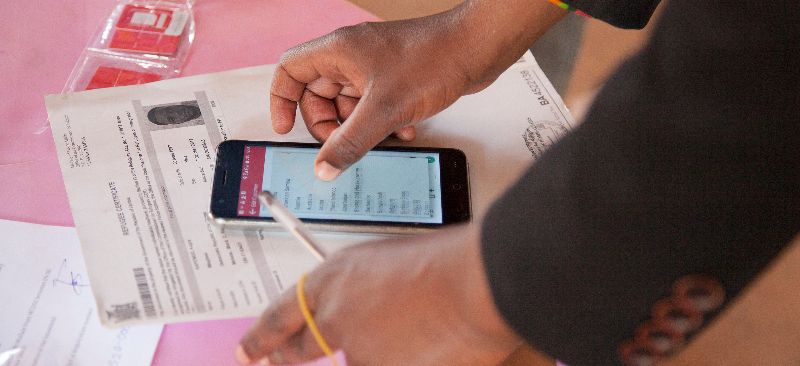
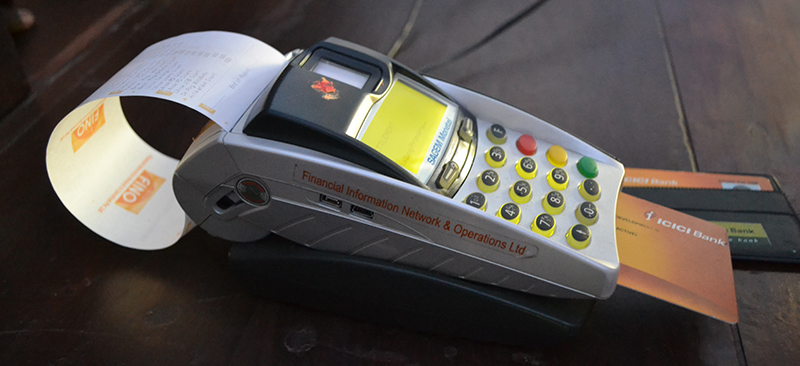

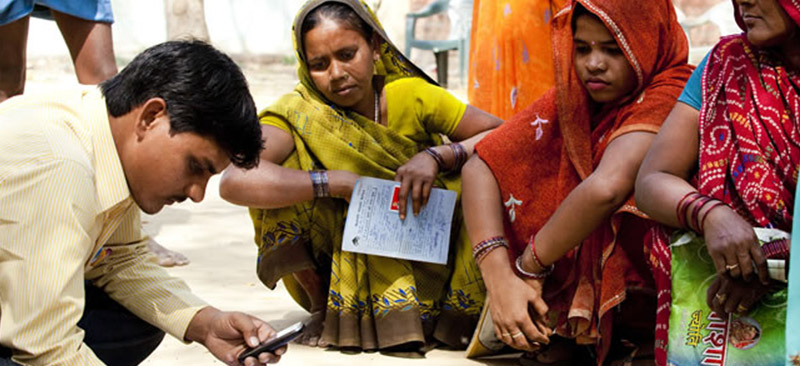
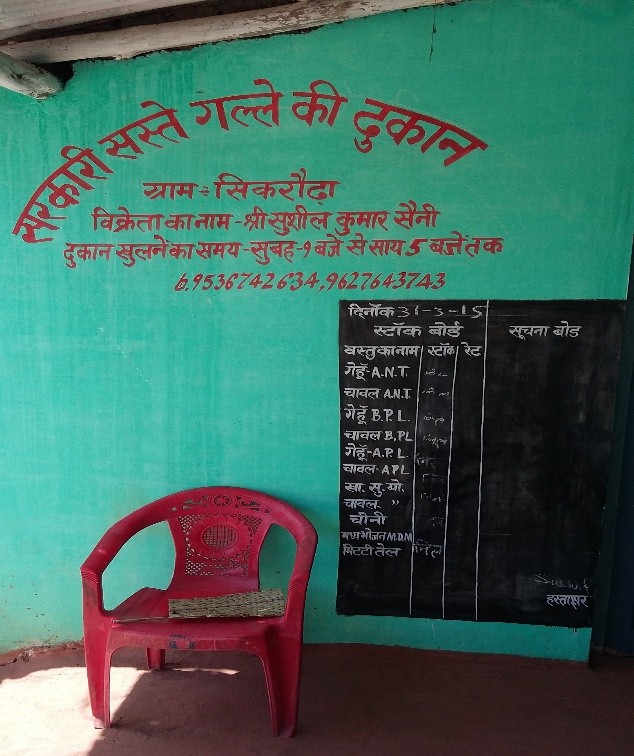 It is easy to conclude that as dependence on PDS goes down, inclination towards receiving the DBT rises. However, in order to make sure that all the categories of beneficiaries are ready to shift, it is imperative to move their reference points with regards to PDS. In case of AAY beneficiaries, the new reference point will be “choice” and “assurance”. It will be choice of shop from which to buy, and the assurance of being able to buy an equivalent quantity (unaffected by “leakage” or price fluctuations) and better quality of commodities. For BPL beneficiaries, the new reference point will be the ability to choose to buy the equivalent quantity/quality of commodities at a convenient time – without the fear of forfeiting rations because they are unable to visit the FPS in the brief window it is open. APL beneficiaries will be focused on the convenience of choosing the time and place to buy their kerosene without the hassle of standing in queues.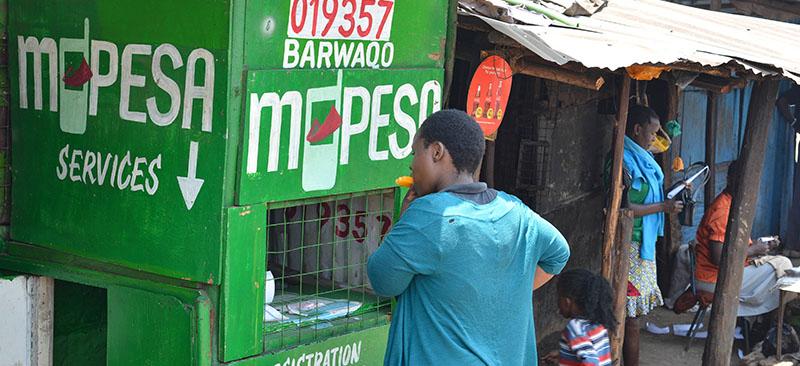
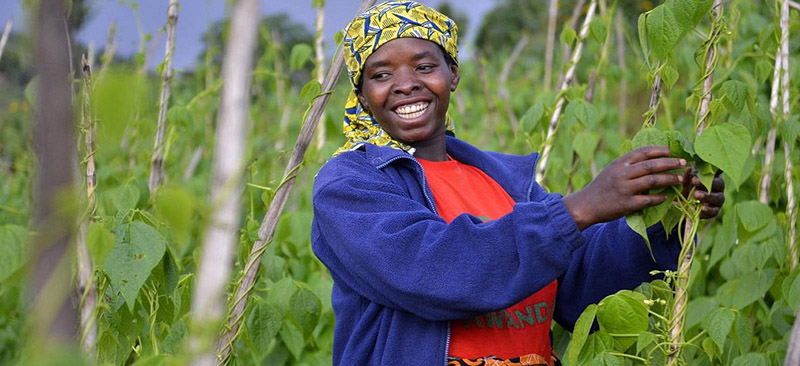
 First, the new Kenya Commerical Bank (KCB) M-PESA account, offered through a partnership with Safaricom, seems to be taking off rapidly. Chief Executive Officer Joshua Oigara said that over 50,000 people are now registering for the account every day, and that