
A key challenge for financial institutions serving the low-income market is how to optimise branch networks to serve high volumes of depositors – to provide high quality financial services at a low unit cost. This note examines branch infrastructure for serving depositors. Key issues such as importance of branch and its location, delivery strategy adopted for different locations, regulatory environment, operating space, facilitating branch based sales are discussed.
Blog
Catalysing Capacity Development: Micro-Finance in India – Training Needs Assessment
With the exponential growth of the microfinance sector in India, there is an increasing realisation of the need to address the aspect of (lack of) sufficient capacity building and assistance in order to manage this growth.This study focuses on the training and capacity building requirements among low income financial services providers in India. It also examines and assesses the potential capacity development institutions, training courses/toolkits and other resources available in India.The study categorises MFIs on the basis of their age and institution type and prioritises the training focus areas accordingly. It recommends the users in careful selection of priority training areas; selecting synergetic training courses; adopting adult learning best practices; developing comprehensive and easy to use training packages; and working with stakeholders to develop a national curriculum for microfinance in India besides regional centres of training.
Catalysing capacity development: Microfinance in India – Training needs assessment

With the exponential growth of the microfinance sector in India, there is increasing realisation of the need to address the aspect of (lack of) sufficient capacity building and assistance in order to manage this growth.This study focuses on the training and capacity building requirements among low income financial services providers in India. It also examines and assesses the potential capacity development institutions, training courses/toolkits and other resources available in India.The study categorises MFIs on the basis of their age and institution type and prioritises the training focus areas accordingly. It recommends the users in careful selection of priority training areas; selecting synergetic training courses; adopting adult learning best practices; developing comprehensive and easy to use training packages; and working with stakeholders to develop a national curriculum for microfinance in India besides regional centres of training.
“Market Research for MicroFinance” – 7 Cautions and a Recommendation
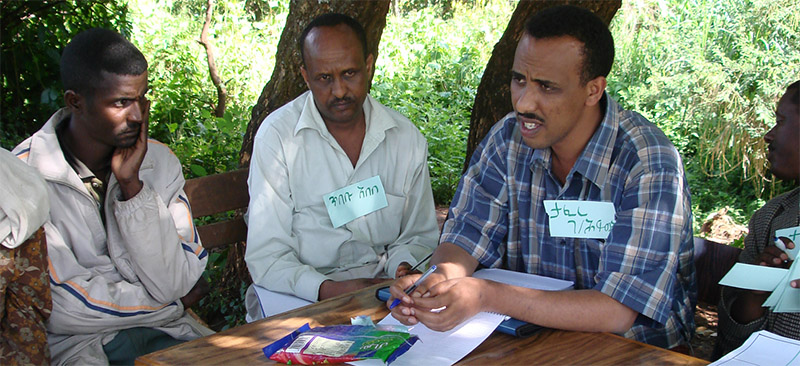
The origins of the MicroSave “Market Research for MicroFinance” (MR4MF) approach to product development lies in the belief that a market-led financial institution must assess its clients’ needs. The MR4MF approach requires careful planning and technical skills. This note outlines the complexities and challenges associated with market research and lists seven cautions, which should be kept in mind while undertaking a research. MR4MF is used for a wide variety of application, which is discussed in the note. In order to get the best of the MR4MF approach, training is essential. An overview of the MR4MF training given by MicroSave is also outlined in the note.
Designing Innovative Products, Processes and Channels for the Promotion of Microfinance
The microfinance industry has traditionally seen poor people’s needs for financial services only as “credit for enterprise”. However, due to their various life cycle needs, low income clients need a range of “financial services” and not just the traditional mono-product of working capital loan. In response to this emerging need of the sector, growing numbers of financial institutions are developing and delivering a range of financial services customised to cater to client needs. This paper examines some of the products designed (many in collaboration with MicroSave) as a respond to these needs, as well as some of the innovative delivery processes currently under testing. It also reviews the MicroSave approach to product design. It concludes with comments on NABARD’s Kisan Credit Card and implications of the changing face of microfinance for the “massification” of financial services for the low income market in India.
Designing innovative products, processes, and channels to promote microfinance
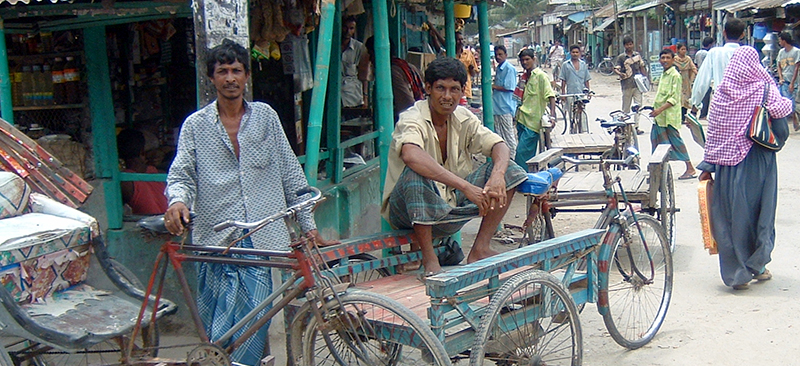
The microfinance industry has traditionally seen poor people’s needs for financial services only as “credit for enterprise”. However, due to their various life cycle needs, low income clients need a range of “financial services” and not just the traditional mono-product of working capital loan.
In response to this emerging need of the sector, growing numbers of financial institutions are developing and delivering a range of financial services customised to cater to client needs.
This paper examines some of the products designed (many in collaboration with MicroSave) as a respond to these needs, as well as some of the innovative delivery processes currently under testing. It also reviews the MicroSave approach to product design. It concludes with comments on NABARD’s Kisan Credit Card and implications of the changing face of microfinance for the “massification” of financial services for the low income market in India.