In this video Richard Rosenberg, consultant to CGAP, discusses the interest rate debate in the microfinance sector and what role it played in Compartamos Bank Mexico controversy – one of the leading MFI in Latin America. He also explained the institutional arrangement of Compartamos that governed the money flow. Explaining further, Richard says the political and general view on interest rate makes microfinance institutions vulnerable to fixing higher interest rates. Sharing the events in India where microfinance managers were publically criticised over interest rates, Richard says interest rates is a sensitive subject when it comes to microcredit.
Diagnosing Financial Stress in Group Methodology
The recent past has seen instances in the south of India where groups refuse en masse to repay, which has, unsurprisingly, challenged MFI operations. The reasons for this are many, including the competitive environment, multiple borrowing, the perceived threat from MFIs to the SHG movement and the increasing attention being focused on the sector. This focus note presents the learning from a study conducted by MicroSave in collaboration with Grameen Koota to look at the group lending methodology and assess the drivers of financial stress in the kendras, and if/how this can be diagnosed.
Compartamos Controversy Leadership and Responsibilities Part 1
In this video Richard Rosenberg, consultant to CGAP, speaks about the controversy around the IPO of Compartamos Bank Mexico, one of the leading MFIs in Latin America and the interest rate debate it fuelled. Going behind the controversy, Richard says Compartamos problem began when it went into private hands. Before that the bank’s proceeds were used for development. However, the bank needed a license to expand and was converted into a private concern. In a basic model of microfinance, interest rates charged is high and when the bank was privatised the profit money started going into private hands or private parties that led to Compartamos controversy.
M-Banking Liquidity Management

Managing liquidity is critical to the success of any electronic banking initiative because in most emerging markets payment systems are still evolving and most transactions are still in cash, “cash is king”. Ensuring agents have either e-money or cash when customers require it, is the essential challenge of m-banking liquidity management. This Briefing Note examines how to design successful liquidity management systems and the issues that arise.
New Trends in Agriculture Micro Finance Focus on Poverty Part 2
In this video Renée Chao-Beroff, Director, Microfinance Department, CIDR; General Manager, Pamiga gives an overview of the ways in which rural markets are segmented and how financial intermediaries can develop appropriate products and delivery mechanisms to navigate the risks of agricultural and rural lending. She emphasises on the importance of market segmentation and analysing risk profile for each segment that helps in designing products and design appropriate delivery mechanism for each segment. She adds that this allows for an inclusive approach to rural market and benefits the poor. Taking the example of Tanzania Spices, she highlights the importance of contract farming.
Listening to Agents of M-Banking in India
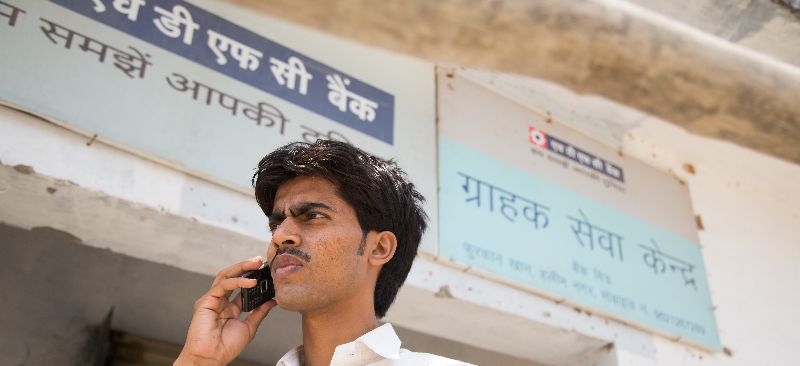
This note examines the perceptions and demands of agents – the front-line of m-banking solutions. It concludes that although present mobile banking solutions as currently provided in India do offer value to agents in terms of increased footfall, some increased revenues, opportunity to cross-sell etc., they still have a long way to go in terms of value offered to make it really attractive business proposition for agents to encourage mass uptake. That would require: 1. scale to bring more customers on to the m-banking platform; and 2. that those customers are transacting regularly. Driving regular transactions would require a strong and wider customer value proposition like remittances, savings products, payment products etc. in addition to the current basic savings account offering deposit and withdrawal facilities.