Blog

Agent Network Accelerator survey: Bangladesh report 2016

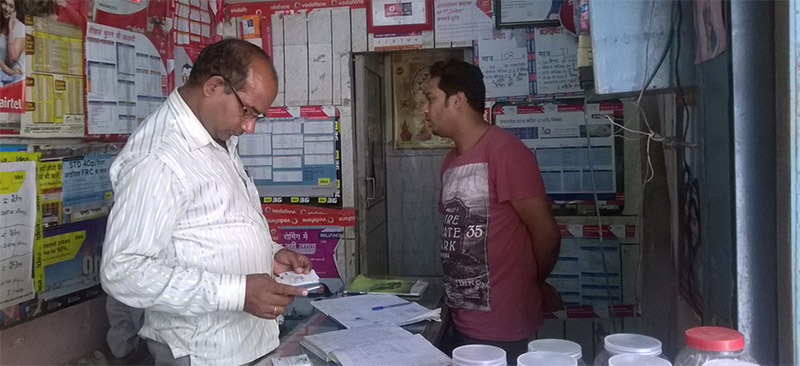
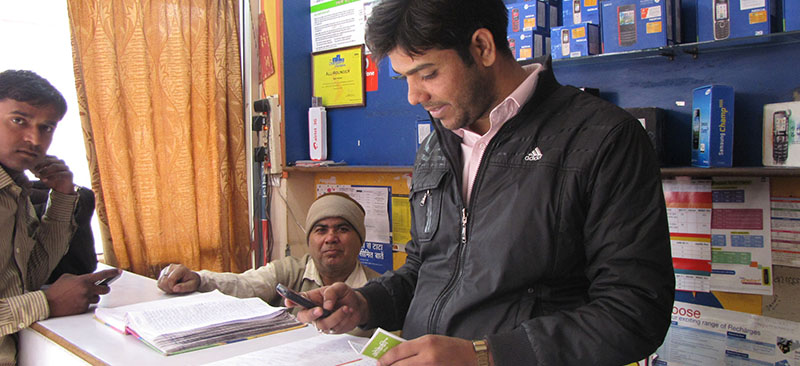
Based on over 2000 agent interviews conducted between March and April 2016, the ANA Bangladesh report, funded by the Bill & Melinda Gates Foundation and the United Nations Capital Development Fund (UNCDF) highlights findings on the DFS agent landscape in Bangladesh covering agent profitability, transaction volumes, liquidity management and other important strategic considerations.

The findings highlight that Bangladeshi providers continue to offer superior liquidity and agent network management services and agents are more profitable and optimistic than they were in 2014. The number of DFS providers has increased, however, the market is still anticipating sophisticated products. Though the market is in nascent stages, third party agent network managers are performing well on operational metrics such as training and service downtime. The newly introduced bio-metric identity registration of SIM cards, which has initially decreased DFS accounts, will likely influence agents’ behaviours towards the illegal over-the-counter (OTC) transaction methodology and customer enrollments. This may spur changes in providers’ agent network management practices. Please click the download button to read the full report.


Private Sector Engagement in Financial Inclusion

“As per Global Findex Database 2014, 2 billion adults – about two out of five of the word’s adults – do not have access to formal financial services. Families at the base of the pyramid need financial services to manage economic decisions and risks. Financial services must extend well beyond just payments or indeed the traditional microcredit. There is a real risk that the very poor at the base of the socio-economic pyramid are excluded from digitally-enabled financial inclusion because they are unable to afford or use the mobile handsets or data packages to transact.

Financial inclusion in present times is seen as a viable business opportunity by private sector. If Governments create an enabling environment, the private sector will leverage digital technology to meet the needs of the majority of the currently unbanked / under-banked.

Governance is the Weight Around MGNREGS’s Neck: Technology May Offer a Way Out

Mahatma Gandhi National Rural Employment Guarantee Scheme (MNREGS) is the world’s largest public employment generation scheme with a budget of US$ 6 billion per annum. Despite its enormous potential and the safety net it provides, questions about the programme remain. However, MicroSave’s experience, gained through engagement with the deployment of MGNREGS across various states, highlights that lack of focus on governance and/or the inadequate administrative capacity of state governments, limits potential of the programme. They can achieve this by automating a few key processes. Given disproportionate impact, states should not miss the opportunities provided by relative simple applications of technology to optimise the administration of MGNREGS.

Institutionalising Social Performance Management In Financial Institutions: What Does It Take? – Part 2

Implementing social performance management (SPM) in microfinance institutions (MFIs) has challenges. MicroSave has considerable experience in implementing SPM in MFIs across Africa and Asia. We feel that unless there is adequate support from the Board and the senior management of the MFI, SPM initiatives do not move smoothly. Our understanding is that the effective implementation of SPM initiatives in any MFI is possible only when all these four pillars work in unison: Board commitment and support, management involvement and commitment, staff buy-in and adequate investment in resources. It is these 4 elements which differentiate an MFI with good SPM initiatives (working) versus a not so successful one.

The Part 2 of this Briefing Note (BN) explains the last two pillars viz. staff involvement and investment in resources. Please see the Part 1 of this Briefing Note (BN) which explains the first two pillars viz. Board commitment and management’s role.

However a key point which needs to be kept in mind is that the benefits / fruits of SPM are not immediate. Building SPM oriented products and processes takes time but it is worth the effort.

Institutionalising Social Performance Management In Financial Institutions: What Does It Take? – Part 1

Implementing social performance management (SPM) in microfinance institutions (MFIs) has challenges. MicroSave has considerable experience in implementing SPM in MFIs across Africa and Asia. We feel that unless there is adequate support from the Board and the senior management of the MFI, SPM initiatives do not move smoothly. Our understanding is that the effective implementation of SPM initiatives in any MFI is possible only when all these four pillars work in unison: Board commitment and support, management involvement and commitment, staff buy-in and adequate investment in resources. It is these 4 elements which differentiate an MFI with good SPM initiatives (working) versus a not so successful one.

The Part 1 of this Briefing Note (BN) explains the first two pillars viz. Board commitment and management’s role.

Please see the Part 2 of this Briefing Note (BN) which explains the last two pillars viz. staff involvement and investment in resources.

OTC: A digital stepping stone or a dead end path?

In this paper, we want to look more closely at OTC model, with the help of data from The Helix Institute, InterMedia and the GSMA, which provide an analytical perspective on the pros and cons of the OTC model. This will allow us to propose some recommendations on how to manage OTC going forward.