Over the counter transactions – Liberation or a trap? Part III

The first blog in this series Over The Counter Transactions – Liberation Or A Trap? (Part I) highlighted that over the counter (OTC) transactions alone cannot deliver the digitally enabled financial inclusion many of us are working towards. The second Over The Counter Transactions – Liberation Or A Trap? (Part II) noted that despite this OTC transactions have been growing rapidly and offer benefits for providers, customers and especially agents. This blog looks at the not inconsiderable drawbacks of OTC-based operations for providers and customers … concluding that value proposition for agents means that they are unlikely to promote wallet-based alternatives, thus blocking perhaps the most important sales channel for these offerings.

So what’s not to like about OTC?

Providers: While it is a short-term expedient (see Beware the OTC Trap), OTC causes significant problems for providers. As highlighted in the customers’ and agents’ perspectives in Over The Counter Transactions – Liberation Or A Trap? (Part II), the freedom afforded by OTC-based systems means that there is no customer (or often times agent) loyalty. Indeed, in Pakistan, providers are now facing a situation where, in order to promote the use of their system over those of their competitors, they are paying agents as much as 110% of the commission received from the customers making the transaction. Yes, you read that right, and I did not make one of my usual typos, “110% of the commission received from the customers making the transaction” … other providers find themselves having to offer incentive awards such as fridges, air conditioners and even trips to perform Haj to their high performing agents.

The lack of a wallet also limits options for providers to offer additional products and services. Absent wallets, providers are largely unable to develop the digital ecosystem, thus stranding them in a cash intense environment with the inevitable attendant liquidity management problems. Furthermore, OTC transactions reduce providers’ income – MicroSave estimates that OTC transactions are cost the Ugandan providers around $220 million in lost revenue in 2013 (assuming that all transactions made OTC would have been made on a wallet-based P2P basis). And this amount is rising with the number of mobile money users. OTC transactions are also illegal under most central banks’ regulations, and so providing the services remains a significant regulatory risk. And as providers in Pakistan and elsewhere have found out, once customers are used to OTC, it is very difficult to get them (or indeed agents) to register and use wallets.

“An OTC business can breakeven and yield modest margins, but it is vulnerable to getting stuck in a high-growth remittance phase, where it is difficult to improve overall profitability. In some cases, profitability may actually decrease with agent commission wars between different providers.

Almazán Mireya and Nicolas Vonthron, “Mobile Money Profitability: A Digital Ecosystem to Drive Healthy Margins”, GSMA-Mobile Money for the Unbanked, November 2014.

Agents: As highlighted above, agents benefit enormously from OTC transactions, which crown agents as the kings of “agent money” systems. There is little not to love about OTC for agents, with one important exception – they are more likely to fall victim to fraud when using their own phones to conduct transactions. See Survival of the Fittest: The Evolution of Frauds in Uganda’s Mobile Money Market (Part-I) for a discussion of this.

Customers: OTC transactions are very often linked with agents charging customers additional fees above the “on the board” price. Furthermore, OTC transactions raise more customer protection issues as they are more prone to fraud, and can be used to avoid KYC/AML requirements in environments where identification is not required. But, in many ways, the most dangerous aspect of the OTC trap is that it leaves customers only able to send remittances and to make basic payments. Trapped in a low equilibrium “financial inclusion” without access to the savings, credit or insurance services that you and I depend on, and take for granted.

So what to do?

We should examine this in the context of two broad market segments – those that are functionally literate and those that are not. For those that are functionally literate, providers should apply Safaricom’s approach and insist that all users register and use the wallets that will eventually allow them to access a much broader range of services (thus yielding higher revenues for the providers).

Regulators need to introduce tiered KYC requirements that allow poor people to register (and start to use) wallets easily and Governments need to route all G2P payments through digital channels – whether cards or mobile wallets.

For those that are illiterate, I suspect that we need to look much more carefully at two options immediately, and another in the long run. Right now we need to look again at whether USSD strings (of numbers of course) are in fact relatively easy (or at least feasible) for illiterate people to use. When MicroSave looked at this briefly in India in 2010, we concluded that this indeed the case with Eko’s carefully simplified system. We also need to see if advances in voice recognition technology will allow the use of interactive voice recognition to allow illiterate people to navigate transaction menus. When this was tried in India 2-3 years ago it was not tremendously successful – the ambient noises in crowded housing or markets made it very frustrating and error-prone. In the future, as smartphones are rolled out and allow better graphic user interfaces, we need to look at using these to guide illiterate people to make transactions.

And, in the interim, of course, we should not forget that in many cases trusted agents (or trusted relatives) can (and indeed do) help illiterate customers use their wallets to make transactions. The agent navigates the menu until the transaction is to be confirmed and the PIN is to be entered … whereupon he hands the customer’s phone back to allow the customer to confirm and complete the transaction.

Of course, all of this also requires providers to develop and rollout products that add real value to the end customers, thus pulling them to register and set up their own wallets. Without real customer value proposition, the lure of the OTC trap will continue.

Over the counter transactions – Liberation or a trap? Part II

In the previous blog Over the counter transactions – Liberation or a trap? (Part I) I looked at why over the counter (OTC) transactions alone cannot deliver the digitally enabled financial inclusion many of us are working towards. A later blog in the series will examine the implications of OTC for providers and customers – many of which are negative. All of which begs the question … why are OTC transactions so prevalent in so many markets?

The growth of OTC

When M-PESA launched in Kenya, Safaricom made strenuous efforts to stamp out any form of OTC transactions. Agents found to be directly crediting the mobile money accounts of customers were penalized and even discontinued. M-PESA did this to protect its precious P2P revenue (which yields the lion’s share of profit particularly at the start-up phase) and to maximize the use M-PESA wallets (which were the gateway to a growing range of additional payment services).

In Uganda and Tanzania MTN, Vodafone, Airtel, and Tigo all sought to replicate Safaricom’s approach and to eradicate, or at least minimize OTC transactions. Despite this, the recent Agent Network Accelerator (ANA) surveys in these two countries suggest that OTC is growing – with 30% of agents in Uganda and 23% of agents in Tanzania admit to offering “money transfer” or OTC transactions. And a small sample survey of agents in peri-urban Kampala suggested that around 50% of their transactions were OTC.

In his excellent blog, “The Paradox of Calling Mobile Money ‘Mobile’ in Asia”, Brad Jones highlights how the larger Asian deployments are all dependent to a greater or lesser extent on OTC transactions. Brad reports that 90% of WING’s transactions in Cambodia, 70% of EasyPaisa’s transactions in Pakistan and 50% of bKash’s transactions in Bangladesh are OTC.

So what is driving this?

Providers: OTC transactions can kick-start providers’ digital financial services (DFS), allowing them to achieve scale and transaction volume quickly, without the challenges and costs of incentivizing agents to open wallets for customers. See Beware the OTC Trap.

Agents: In Bangladesh and Uganda agents charge customers an extra, unofficial amount for OTC transactions despite receiving a commission from the providers. This means that the agent is earning twice (from the customer and the provider). In markets, such as urban India as well as Pakistan, where each agent is offering the services of many providers, the agents send the money using the provider that offers the best commission, rather than the provider preferred by the customer. Furthermore, OTC transactions are quick to perform, and agents do not have to spend their precious time registering wallets which may also eventually be used to dispense with their services to buy airtime and/or conduct transactions such as remittances and payments. OTC transactions are thus, in many cases, the lifeblood of agent networks – in the words of Brad Jones, “Whilst all operators are keen to migrate customers to mobile wallets over time, the ability to reward their agent network with transaction volume and income from OTC transactions means that the agent network will continue to be far more important than the mobile channel in emerging markets in Asia for the next few years.

Customers: The popularity of OTC transactions lies in the benefits they offer – particularly for the poorer segments of society. A recent study conducted by MicroSave in Bangladesh showed that 85% of the respondents who use mobile money had not registered their own accounts. The reasons for this were that people (42% of whom are illiterate in Bangladesh) find it difficult to navigate the transaction menu, which is either informal Bengali or in the English language and thus prefer to take help from a trusted agent. The recent Bangladesh ANA study conducted by The Helix highlights another important reason for OTC: people lack acceptable KYC documentation. OTC also offers some protection against inadvertently sending the money to the wrong number – the sender can call the receiver to confirm the money has been received before paying the agent. Some experts have suggested that customers prefer to remain unregistered and use OTC so that, in the absence of interoperable systems, they are not locked into using services from one provider.

Over the counter transactions – Liberation or a trap? – Part I

The cause for concern

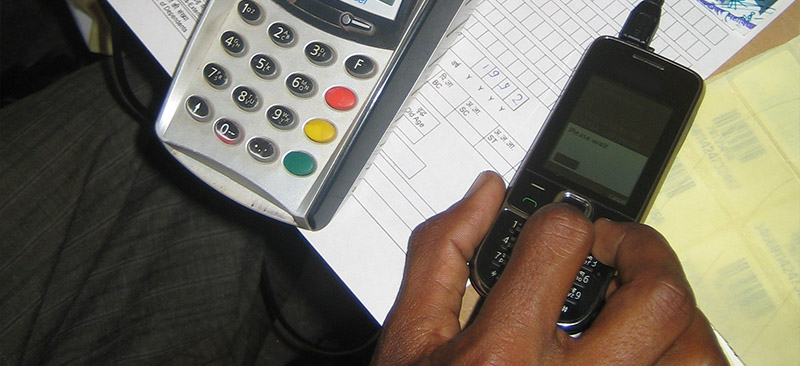
I am back obsessing about over the counter (OTC) transactions again. Before we dive in let’s quickly define OTC transactions as they come in many forms in different markets – from the direct deposit by the agent into theend user’ss wallet in Kenya to the transfer of money from one agent to another agent, with or without identification, in Pakistan and Bangladesh respectively. The common factor is that at least one end of the transaction is conducted without involving the wallet of the user – either the sender or the receiver.

There are clearly very good reasons for agents and customers, and even some go-to-market reasons that might entice providers to want an OTC service; but the long-term downsides for all, except agents, concern me greatly.

In their December 2012 paper “A Digital Pathway to Financial Inclusion”, Dan Radcliffe and Rodger Voorhies of the Bill & Melinda Gates Foundation outlined how basic mobile connectivity and digital remote payments are the first two necessary steps towards an inclusive digital economy. I believe there is a very real risk that providers which leverage OTC transactions to reach massive scale will get caught in the OTC trap. They will find (and in many case have found) that:

  • their services and the customers using them are entirely dependent on agents;
  • very few users register and fewer use wallets; and as a result
  • no ecosystem develops.

They and their customers will then be stuck in Stage 2, the payments only step of Radcliffe and Voorhies’ stairway to an inclusive digital economy.

This is not the financial inclusion we are all seeking through digital financial services. Payment services are immensely valuable for the poor, no doubt – but access to payments does not result in what most people would define as “financial inclusion”. And yet access to basic mobile money payments is already effectively being touted as “financial inclusion” (see box for one example of many). Once again, we are risking what a leading expert cited in Do the M-PESA Rails Contribute to Financial Inclusion? described as “low equilibrium financial inclusion”. We have already seen how ineffectual it is to ask the poor to run the marathon out of poverty on one leg through the growing body of short-term RCT studies that suggest microcredit alone has limited impact. Countless studies, most notably The Portfolios of the Poor, have documented the poor’s needs for a range of financial services encompassing savings, credit, payments and insurance. Offering the single leg of payments and asking the poor to run the marathon will have similarly limited results.

“According to Finscope Tanzania 2013 survey, a nationally representative study of consumers’ perceptions on financial services and issues, the number of adults using financial services in the country has more than doubled from 27% to 57.4%, over the course of the last four years.” – TanzaniaInvest

The root of the problem?

Indeed it may be the lack of credible wallet-based product offerings that are driving the predominant use of OTC transactions in many countries. If providers are unable to build and rollout products that offer real value to customers, then registering a wallet may well be an unnecessary and time-consuming exercise, not just for the agent, but for the end user as well. The most obvious use of wallet-based services (for MNOs at least) after airtime top-up is bill payment. So the limited use of these services by Kenyan adults (of whom 68% are registered users) according to Intermedia’s Financial Inclusion Insights from September-October 2013, is surprising and alarming (see Table). The same survey noted that for all the publicity only 15% of active mobile money users had used M-Shwari. Clearly, sign-up and use are very different things, as we had surmised when we wrote M-Shwari: Market Reactions and Potential Improvements.

As Mike McCaffrey and Anastasia Mirzoyants concluded in their blog The Human Touch Required to Evolve Digital Finance, “After several years of development in the industry we do seem ready to make the leap to more sophisticated services, however, given the business models the telecoms have developed that encourage channel detachment, it might just be the banks – slow and steady – that invest correctly in the human touch that brings the needed trust.”

Mobile Money – Specific Uses Total
Send Money to Others 42%
Receive Money From Others 46%
Buy Airtime Top-Ups 48%
Pay School Fee 4.5%
Pay Medical Bill 1.0%
Pay Utility Bill 5.8%
Pay Government Bill (Tax, Fine, or Fee) 0.2


The Ebbs & Flows of Liquidity Management

Advanced Liquidity Management:

While liquidity management is consistently cited as one of the most challenging elements of managing an agent network, there are times when it is more difficult than others.  People’s need to deposit, withdraw and send value fluctuates quite considerably, and so while an agent might understand how much e-float and cash to carry on an average day, that still means that on high volume days, they, and therefore the entire system, are exposed to having inadequate stocks of value.

In Uganda and Kenya agents rank the “fluctuations in client demand” as the greatest impediment to float management, and in Tanzania it is ranked second (out of seven possible major impediments).  Ironically, providers are usually already analyzing transactional data and know exactly when and why many of these fluctuations are occurring.

So what is the problem?

The answer really depends on which type of fluctuation in demand is causing problems and how the provider has developed systems to manage them.  Foremost, agent network managers need a system for monitoring float and cash levels, which can start gathering this data for them.  For predictable fluctuations, the two important dimensions of analysis are 1) the magnitude and 2) the frequency of the fluctuation.  Understanding how the dimensions interact is important to selecting the proper solution for them.  Below, the chart maps different fluctuations in client demand based on their magnitude and frequency. We interviewed the major providers in Uganda to illustrate these drivers, but as discussed below, providers will have to make their own chart for their own roll-outs.

Advice for Addressing Fluctuations:

Agent Support: All leading agent networks have a support system where agents are visited regularly to check on their business, but also to provide them with market information.  This is when the drivers of fluctuations in demand need to be clearly explained, so agents understand when more extreme levels will occur.  We recommend focusing on the extra commissions they can earn if they are prepared, because a two-fold increase in demand usually translates to a similar increase in revenue for them, and that is what will pique their interest.

Further, a more sophisticated reward structure can also be developed around motivating agents who prepare themselves by increasing their liquidity holding to better manage these fluctuations.  This is going to work best for drivers in quadrants one and three, where events are frequent enough for the agent to remember them.

Agent Reminders: For drivers that occur more infrequently, say less than monthly (quadrants two and four), even if these occasional drivers are explained during support visits, agents will still need reminders to prepare.  SMS campaigns and call centers can be used to give agents a friendly reminder of the business opportunities approaching.  These can be done in two rounds, a week before the event, and then again the day before the occurrence.

Liquidity Top-ups: Regardless of the frequency of the occurrence, the magnitude is also important, since an agent can potentially be aware of an upcoming fluctuation, but just not have access to the capital to provision for it. These drivers are shown in quadrants one and two, and are in need of special attention.

Some providers and master agents have developed stronger relationships with key agents and provide these agents with float on credit.  These top-ups should be easy to access, have reasonable interest rates, and short terms for repayments, usually less than a month, and sometimes the next day.  It should be viewed like more of an overdraft than a loan.  It may be a good idea to help your topped-up agents advertise that they have float during these high traffic events, which will help signal to your customers where they can easily transact.

Developing Your Own Diagram:

Unfortunately one cannot just copy and paste this framework from Uganda.  There will be different drivers in your ecosystem that will happen on different frequencies and definitely with different magnitudes.  Further, where these divisions occur (the red-dotted-lines on our chart), will have to be monitored for your individual roll-out and will depend on the character and structure of your network and individual agents.  Decisions like minimum float levels, the level of monitoring of them, the time and money it costs agents to rebalance, and the quality of training and support services given to agents will all effect their ability to react to these fluctuations.

Practical First Steps Forward:

Look for these fluctuations in your transactional records, and talk to your agents regularly to find out when they are most struggling with high traffic days.  Focus on fluctuations in transaction levels in the highest performing 20% of your network since these are much more likely to be agents that are preparing for these events, and actually doing more transactions during them.  Compare these statistics to the performance of the rest of the network during these periods to gauge how many transactions you might be losing during these high demand periods where agents are unprepared.  Use your support staff to ask about this in visits to low performing agents.  Is it a result of the need for better education during support visits?  Are agents aware but just forgetful; or are they simply unable to increase liquidity levels due to capital constraints?

Liquidity management is one of the hardest tasks in agent network management, but hopefully these simple tips can help increase transactions during the times when it is toughest, as those are also moments of great opportunity.

Keeping the channel happy for quick scale-up: A case from the Mumbai remittance market

Remittances have emerged as the most common anchor product offered by alternate banking channels, (banking channels used by the unbanked such as money transfer agents), particularly in large Indian cities like Delhi and Mumbai. Huge unmet demand for sending money home efficiently and quickly, combined with a willingness to pay for the service, has made over the counter (OTC) remittances an attractive proposition for many digital financial service providersCompetition in this space has increased tremendously and every provider is keen to hold on to an increase, their share of the pie.

The delivery channel for remittance services comprises a range of stakeholders from the bank to the front-line agent and all the managers and facilitators in between. Such is the importance of the channel offering remittances that the provider chosen to make the remittance is often not decided by the customer, but rather by the front-line agent, who makes the decision based on the commission he/she will receive. Customers sending money using OTC are often oblivious of the provider used to send their money. Their primary concern is confirmation that money has reached the intended beneficiary.

Recently the OTC remittance business in Mumbai has caught the eye of First Rand Bank (FRB) a multinational bank, which has entered into this arena with an innovative and disruptive business model that focuses on keeping the channel happy. The business model, which is still in its nascent phase, has been (according to transaction agents and distributors) efficient enough to wrest nearly 20% of the business from well-established Business Correspondent Network Managers (BCNMs) within six months of the bank entering the OTC market.

Practices adopted by the new entrant (what we observed)

·   Competitive channel compensation: One of the reasons for M-PESA’s remarkable take-off in Kenya was the generous commissions Safaricom paid to their channel in the start-up years in order to gain traction. For example, in 2010 the average agent received $420 commission per month. Since M-PESA has become so well entrenched, and with the growth of the agent network, this had fallen to $129 by 2013. In Mumbai FRB gained much-needed traction and, in turn, made in-roads into the well-established remittance market by offering better compensation to channel partners. Master agents or “distributors” and front-line agents were offered lucrative commissions to attract the early adopters among them. Below is a brief comparison based on the feedback we received from the field.

Direct involvement of the bank in channel recruitment: In this model, the bank has done away with BCNMs and is directly recruiting distributors and agents in the field. The bank carries out extensive due diligence prior to finalizing the distributors. They target distributors who have worked with other providers since they already have an agent network working for them. This experience of distributors is then leveraged for agent selection. A team from the bank is deployed on the field to monitor the agent selection process, conduct background checks, and assist the distributor in finalizing agent recruitment.

Advance credit limit to agents: Shortage of e-float at agent counters is a perennial issue that every provider grapples with – this has been repeatedly highlighted in The Helix’s agent network assessments (ANA) surveys across the globe. This problem becomes even more acute when the agent is unwilling to increase his/her liquidity with increasing business volumes. To ensure that a shortage of liquidity is no more a roadblock to scale-up operations, the bank has given a credit limit of Rs.5,000,000 (US$8,333) to its agents. This is given to the agents without any physical collateral or security deposit. And as the conservative eyebrows rise, it is worth mentioning here that there are a few (but only a few!!) mechanisms to prevent fraud.

Hourly reports: Distributors and the agents get hourly reports of all transactions. These reports keep the distributor informed of the cash position of the agent. The distributor’s field staff collects any excess cash from the agent. Instead of the traditional method of liquidity rebalancing, where the field staff member visits the agent counter only once a day, the frequency of visits to agent counter is not fixed and varies depending on the volume of business. This helps the distributor to collect cash and not leave the agent overloaded with cash. While in principle this collection exercise should be religiously followed on an hourly basis, non-adherence to this leaves the bank exposed to the risk of flight by the agent with large amounts of cash exchanged for e-float that has been taken on credit.

Distributor’s personal guarantee: Since this model is inherently exposed to cash risk, the bank has adopted some control measures. The bank has communicated that any fraud committed by the agents will be the distributor’s responsibility and reinforces this through constant in-the-field monitoring. This ensures that distributors are cautious during agent recruitment and also in cash management. Thus they recruit only those agents with whom they have an existing business relationship and can trust. The bank, through these measures, leverages the existing relations of the distributor and the agents to its benefit.

The bank, through its real-time monitoring framework, keeps a bird’s eye view on the entire business landscape. Whenever the cash balance increases beyond an acceptable level with any distributor, the bank intervenes to ensure that the cash is deposited in a timely manner.

MicroSave’s presentation to RBI in January 2014 highlighted that agent commissions and liquidity management are among the most important aspects that contribute to a sustainable agent network. With minor tweaks in the business model, FRB has made major in-roads into the well-established remittance market of Mumbai. This was made possible also because a portion of the channel commission is sourced through higher customer charges. MicroSave’s prior research suggests that customers are willing to pay for the service this sector offers.

Potential implications

The market share that the bank was able to capture in such a short span of time guarantees that the tactics adopted has been observed by the competition. We are yet to see how the competition will react to the erosion of their market share. In the meanwhile, what we can assess are the potential implications for the sector. The figure below examines these in two eventualities – 1. Where the model succeeds and 2. Where it fails.

Lessons from informal financial systems: Indonesian perspective

Over the past few years, MicroSave has conducted several research studies in Indonesia[1] to understand the household level financial ecosystem. Through focus group discussions (FGDs) and participatory rapid appraisal (PRA) tools, we gained insights on access to, and use of, financial products in communities across Indonesia.

This blog focuses on the role of informal institutions in providing financial services to the members of the community and concludes by highlighting the opportunities these present for formal financial service providers. The following are some of the financial products/services we observed in the field.

Savings

Savings with Arisan/RoSCA

Arisans are very commonly used in all communities across the country. As with most of the ROSCAs (rotating savings and credit associations) that are so common in other parts of the world, members contribute a fixed amount on a periodic basis. The arisan group meetings (typically weekly or monthly) are held at a time and location convenient for the members. The meetings also provide a platform for members to socialize and bond with family, friends, and neighbors. The amount collected at the meeting is given to one member at the end of the meeting based on a lottery. In Indonesia, the administrators – an agent or a local institution – usually charge 5-10% of the collected amount.

Example: In a group of 30, each member contributes IDR100,000 (US$8.5) per week for 15 weeks. Each week, a lottery is held and one member receives the total amount collected, net of the administrator’s fee of IDR100,000 (US$8.5). Thus, the lottery winner leaves the meeting with IDR1,400,000 (US$ 115).

Pyoh scheme

Pyoh is an advanced version of ROSCA prevalent in the coastal regions of West Java. The scheme allows members to access a given month’s contribution by bidding for a discounted amount of the total pool of money available. It is largely offered/managed by members of the ethnic Chinese community who are perceived to be trustworthy and reliable in managing bigger amounts of money. As Ibu Ayoh, a Pyoh member says – “Chinese are good at managing money and they never default”.

Ibu Ayoh, along with 40 others, contributes IDR1,000,000 (US$83) on a monthly basis for 40 months in the Pyoh scheme. At the end of the tenure, she is entitled to receive IDR40,000,000 (US$3,290). However, after 20 months, she needed cash for her business and decided to bid for that month’s contribution. Ibu Ayoh won the bid for IDR35,000,000 (US$2,880) a discount of IDR5,000,000 (US$410). This money (IDR 5,000,000) was equally distributed among the members at the end of the meeting.

Package saving schemes

Offered by individual agents or/and local grocery stores, this product is popular among women. Members use these schemes to “save-up” enough funds for large events such as Eid-el-Fitr and family functions. At the end of the savings period, members receive grocery packages such as rice, syrup, sugar, cookies, flour, meat etc. Agents charge anywhere between 5-7% of the amount collected from the members. They also make a good margin on the grocery packages. The product really adds value because Eid is the biggest event of the year where family members/friends meet, celebrate and exchange gifts, which requires large-scale expenditure on groceries. So members prepare for the expenditure by savings as little as IDR 3,000 (US$0.25 – to put things in perspective a pack of cigarette costsUS$1 – 1.5!) on a daily basis. Further, enrolment is easy and collections are typically made at the saver’s doorstep – either at home or at their place of work.

Cash savings with individual agents

Under this scheme, members save periodically (daily, weekly or monthly) to build up a lump-sum amount. But members receive cash instead of a gift package upon redemption. Savings range from as low as IDR3,000(US$0.25) to as high as IDR100,000 (US$8.5) per installment. Agents do not provide interest on the savings collected. Indeed they charge an administration fee of 5-10% on the total amount collected. This fee increases if a member wants to withdraw funds before the scheduled date of redemption. Agents visit the members’ residence or business to collect savings. Further, members have the flexibility of skipping or prepaying installments depending on their liquidity position. Despite apparent benefits of convenience and flexibility, there have been instances of agents cheating and disappearing with customer’s hard earned money. In one research in West Java, we observed a local level, sub-prime crisis, where the agent had disbursed risky loans using the savings mobilized. When the loans defaulted, he could not honor the savings redemptions and took to his heels.

Savings with schools

In some areas, schools collect savings to inculcate savings habits among their students. The savings are used for specific needs such as to buy books/uniform, pay the examination fee, recreation etc. Product features in terms of amount, interest rate, a frequency of collection, tenure, administration fee, etc. differs from one school to the other. For example, we learned that some schools in Bogor, West Java charged 5-10% administration fee or IDR50,000 (US$4) whichever is less for withdrawals, but paid interest on savings deposited. In some other instances schools do not charge the administration fee and in turn, do not pay any interest on savings.

Loans

Money Lenders:

Ubiquitous money lenders have a field day because there is virtually no competition for them in much of the country. They offer hassle-free loans with limited documentation. To get a loan, all you need is a local identity card as proof of identity. Money lenders charge eye-wateringly high-interest rates. For example, for an IDR1,000,000(US$83) loan, the borrower pays an upfront fee of IDR50,000 (US$4) and IDR30,000 (US$2.5) for daily for 40 days. The annual percentage rate of interest is a whopping 336.12%! People still borrow from these money lenders because they do not have any alternatives.

Fish traders in Cirebon

Fishermen communities depend on the fish traders for their credit needs. Traders usually buy fish from the fishermen,

process and sell it in domestic or overseas markets. They also provide soft loans to fishermen to meet their business or household needs. The amount varies between IDR10-50 million (US$822-4,112) depending on the need and repayment capacity of the fisherman and his relationship with the trader. Even though no interest is charged, fishermen who avail these loans are obligated to sell their catch to the trader usually at 5-10% lesser than the market rate. On the positive side, borrowers need not repay the loan till the time they decide to sell the catch to other traders. Effectively, this is like a retainer loan to ensure that a trader gets a steady supply of fish at a 5-10% discount to the market rate.

Loan from local warungs (mom & pop) stores

Fishermen usually purchase diesel for fishing boats, cigarettes and other essentials from local warungs (mom and pop stores) on credit. They usually pay higher rates (10-15%) for the goods purchased. However, they still prefer taking loans from these stores because there is no documentation and the loan is very flexible so they can repay based on their household cash flows, which are largely determined by their catches at sea.

Remittances

With rapid urbanization, domestic remittance services are in high demand in Indonesia. A nationwide survey performed by Gallup shows that 24% of the population sent money to family/friends living in a different location. Banks seem to be predominant remittance channel with 43% off remitters using this method. However, it is interesting to note that the bank channel is often being used in an inefficient manner. Workers based in Jakarta and other urban centers usually have a bank account but use this to send money to an agent who has a bank account at the receiving location. This agent, in turn, hands over cash to the recipient and charges around IDR5,000 to 7,000 (US$0.40-0.60) per payment. However, for international and large value remittances, these charges may exceed IDR10,000 (US$0.82).

So what does this all mean?

Our research confirms that people use a diverse set of informal financial products. And why not? They offer value:

  • Trust and familiarity (Almost everything works on trust!)
  • Easy and hassle-free enrolment with limited documentation
  • Doorstep delivery of service
  • Product/process design that meets the needs of the community such as flexible schedules, small value payments, easy withdrawals, receipts/passbooks as physical evidence, etc.

However, along with benefits come strings attached. These include:

  • High cost of the transaction in terms of interest rates, fees, and charges
  • Risk of fraud and misappropriation of fund

Insights from the research begin to answer compelling questions that digital finance service providers so often grapple with, particularly for providers in the launch phase (which is largely the case in Indonesia).

  • Considering the household financial ecosystem, on which financial activities/streams should providers focus?
  • How to seamlessly digitize these cash streams without radically changing the financial behavior of the customers?
  • How to ensure that there is value to all the stakeholders (and more so for customers) in shifting from cash to cashless?

By doing a deep dive into the communities and understanding their financial activities and needs, we have helped some of our partners in Indonesia come up with relevant DFS products/concepts. Pilots are underway with leading telcos, banks and agent networks, and seem promising. Watch this space for further updates.


1]Research studies were conducted for individual clients and therefore not available in the public domain.