In this video Graham A. N. Wright, Group Managing Director, MicroSave, talks about the need for marketing in E-/M Banking. He emphasises that marketing needs to work on educating customers and create trust and awareness for product uptake. Following his presentation, M Yasmina McCarty, Mobile Money for the Unbanked Senior Manager, GSMA, highlights the challenges faced while marketing mobile money and driving customer usage. She throws light on best practices as they have emerged for mobile network operators as they address these challenges.
Saddling Up a Dead Horse: Financial Inclusion in India
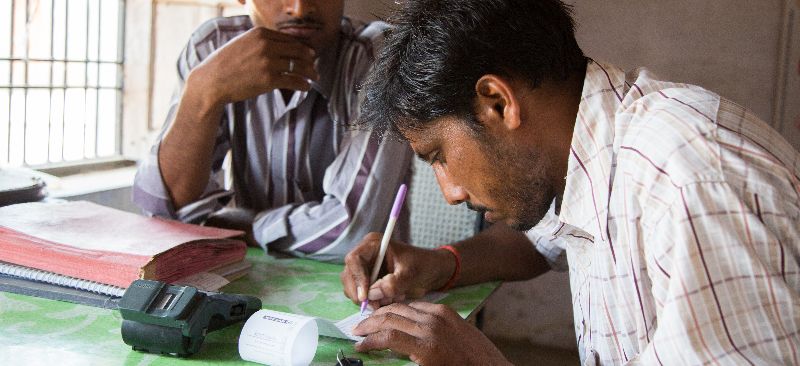
The no-frills accounts (NFA) focussed approach to financial inclusion has so far been largely ineffectual. What is really needed is a change of perspective. Providers need to think of the BC model as a “distributed banking model” rather than as a “financial inclusion drive” to meet regulatory compulsions or social objectives. In a branch of a nationalised bank in India, where all credit and savings products were being delivered through the BCs, there was not just an increase in business due to what was directly brought in by the BCs, but even an increase in regular walk-in business. Financial inclusion will naturally follow the establishment of an efficient, distributed banking channel.
Responsible Finance
The Responsible Finance is the ninth publication under the Optimising Performance and Efficiency (OPE) Series. The OPE Series brings together key insights and ideas on specific topics, with clear objective of providing microfinance practitioners with practical and actionable advice.
This Responsible Finance Booklet brings together a set of brief publications which dredge into Client Protection Principles, poverty measurement and promoting client centric delivery models which lead to sustainable development. MicroSave’s rich sectoral expertise and extensive knowledge database of publications in the booklet highlights many of the opportunities, needs, issues and challenges of the poor.
Clients Speak on Client Protection- Findings from ASKI- the Philippines
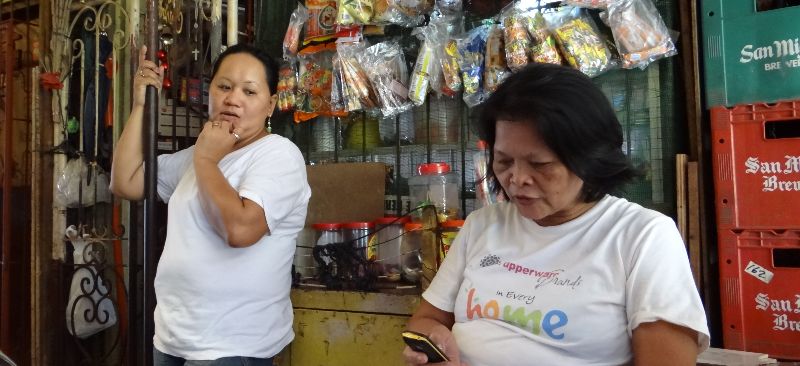
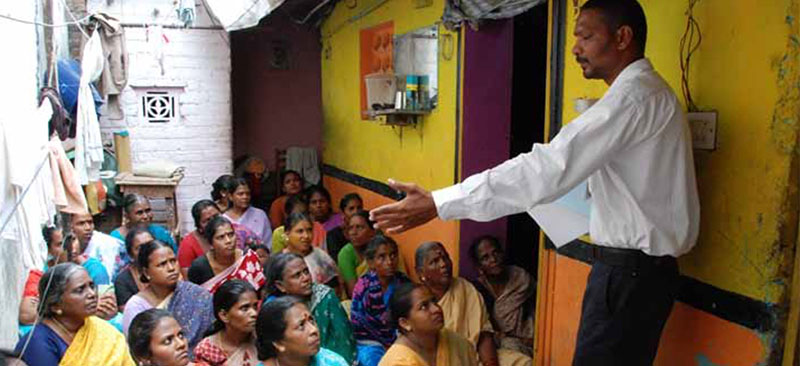
Research team from MicroSave and ASKI conducted 24 FGDs with both urban and rural microfinance clients in the Philippines to measure the importance and relevance of client protection principles. Clients were also asked to rate ASKI on its adherence to each of the 7 CPPs. The key findings were- clients affirmed the importance of all seven CPPs. ‘Fair and Respectful Treatment of the Clients’ and ‘Appropriate Product Design and Delivery’ are the two most valued CPPs. ASKI was highly rated by clients on its adherence to CPPs with a high score of 2.91 on a 3.0 point rating scale.
Remittances through M-Banking Customer Perspectives: Observations from India

MicroSave studied major remittance corridors in India – Bihar/UP – Punjab, Orissa/Bihar – Gujrat, and found that multitude of players exist in the domestic market, though the banks are preferred channel. The presentation highlights findings from the study, including product features that will drive product use. Mr Manoj Sharma, Director, MicroSave, presented findings of the research at a workshop conducted by Axis Bank and Asian Development Bank in Mumbai.
Assessing Agent Profitability: MicroSave’s Agent Journal Studies

Profitability of the agents is at the foundation of a successful agent network. For the agent, the profitability not only determines her/his loyalty to the agent network manager (ANM), but also motivates her/him to provide better customer service, endeavour to increase the business and accept the inevitable challenges as the business proceeds. All these factors, in turn, drive the profitability of the ANM and the bank. Profitable agents also help in the recruitment of new agents by spreading a positive word of mouth about the business. In nutshell, the profitability is the major source of optimism about, and belief in, the business model. Hence, it is very important for all stakeholders to understand the drivers of agent profitability and try to make them work in the favour of the agents. However, developing a precise and realistic estimate of profitability necessarily requires understanding the drivers of profitability.
Profitability is an elusive target for most of the Business Correspondent agents. This is true for all the agents irrespective of the services offered by them. However, the remittance focussed agents are closest to the breakeven level, enabled by high transaction volumes. Transaction volume also explains why No Frills Account focussed agents, including the ones doing G2P payments, are typically so far away from breakeven. Such agents have too few transactions to result in a viable business case for the agents.
In case of remittance focussed agents, the small gap between current performance and a profitable performance can be filled in through specifically targeted measures to address issues such as technology downtime and marketing support. In case of NFA focussed agents, the key issue that needs to be addressed is the low volume of transactions. A key step towards doing this is improving the value proposition. This can be done by increasing the range of products to include a larger variety of banking products such as various categories of banking products, insurance and investment products. Value added services such as bill payments can also be added to the product bouquet.